

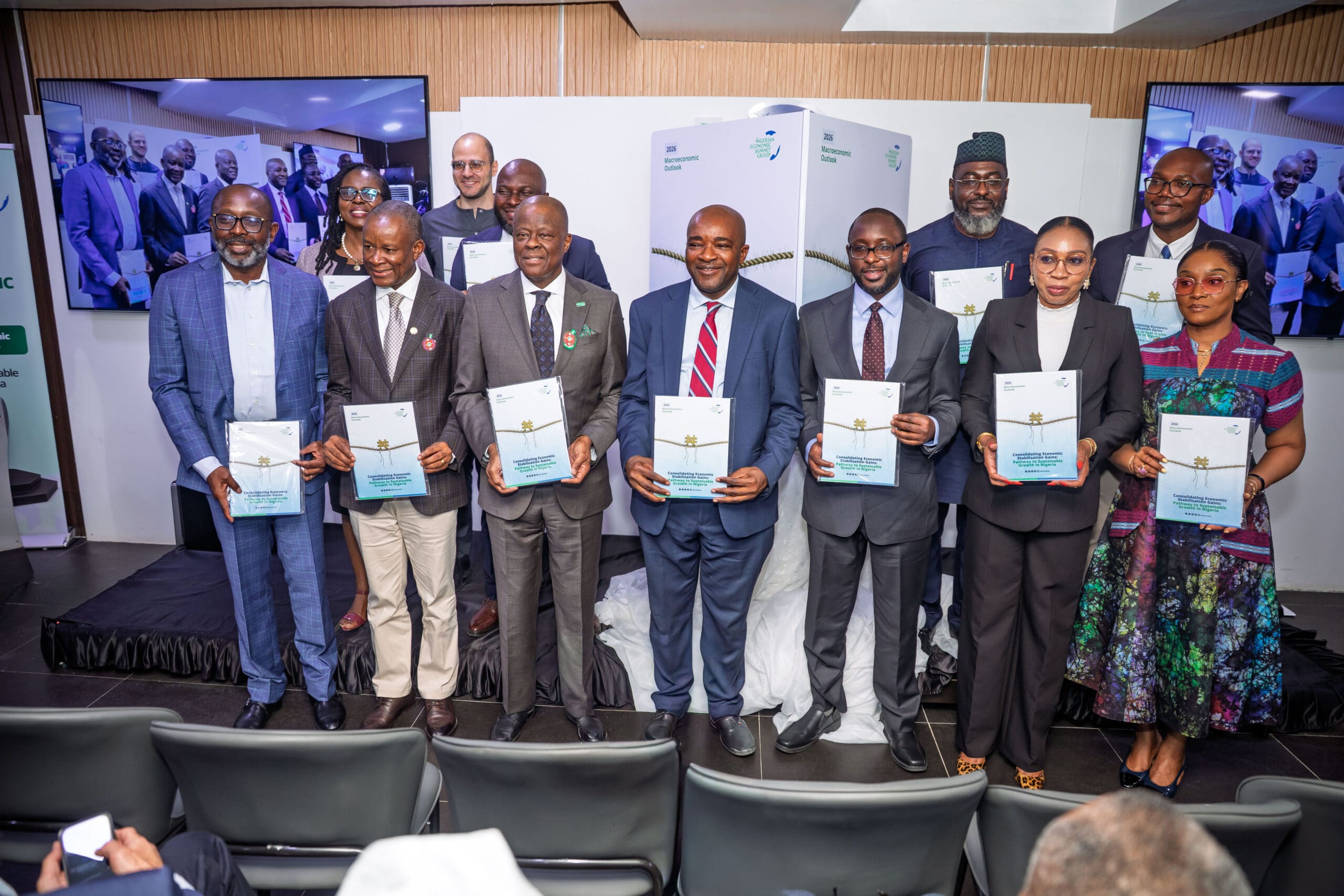
The Nigerian Economic Summit Group (NESG) has projected a 5.5 per cent growth in the Gross Domestic Product (GDP), declaring that the country has exited a period of “acute economic crisis”.
It said Nigeria is now on the path to a stronger growth trajectory as economic reforms transition from stabilisation to consolidation.
It made this known on Thursday at the launch of the 2026 Macroeconomic Outlook at the NESG Summit House in Lagos.
The outlook, themed “Consolidating Economic Stabilisation Gains: Pathway to Sustainable Growth in Nigeria”, highlighted a shift from crisis management to economic consolidation.
NESG said recent reforms have helped restore stability. The focus must now move to growth that creates jobs and improves household income.
Delivering the keynote address, the Minister of Finance and Coordinating Minister of the Economy, Mr Wale Edun, said Nigeria has crossed the stabilisation stage after two years of tough reforms.
He disclosed that inflation, which peaked at 33.18 per cent in 2024, fell to 14.45 per cent by November 2025. He added that pressure in the foreign exchange market has eased, while external reserves have risen to about $45.5 billion.
According to Edun, these improvements show that policy reforms are beginning to work.
Debt Figures Clarified
Addressing concerns over Nigeria’s rising debt, the minister explained that the headline figures do not reflect new borrowing alone.
He said Nigeria’s debt-to-GDP ratio stands at 36.1 per cent, one of the lowest in Africa and far below global averages.
Edun clarified that about ₦30 trillion of the debt came from previously unrecorded Ways and Means advances, which have now been properly recognised. Another ₦49 trillion resulted from the revaluation of foreign loans after exchange rate changes.
He stressed that these adjustments improved transparency rather than increasing borrowing.
In his opening remarks, NESG Chairman, Mr Niyi Yusuf, said Nigeria has just come out of one of its most difficult economic adjustment periods.
He warned that stability alone does not guarantee prosperity.
“Economic transformation is not a one-time event,” Yusuf said, adding that “it is a continuous process.”
He noted that growth remains uneven and has not yet translated into enough jobs or higher incomes for many Nigerians.
2026 Growth Outlook and Risks
Presenting the technical outlook, NESG Chief Economist and Director of Research, Dr Olusegun Omisakin, said Nigeria is now positioned to move from crisis response to growth acceleration.
He projected GDP growth of 5.5 per cent in 2026, with average inflation of about 16 per cent. He added that NESG is targeting single-digit inflation by 2029.
However, Dr Omisakin cautioned that reforms must be sustained. He warned that countries that fail to consolidate reforms within 18 months often suffer economic setbacks.
ALSO READ:
- Nigeria’s Economic Survival Hinges on Productivity, NESG Advisory Council Warns
- Nigeria Must Lead Africa’s Economic Integration, Says NESG Chairman
- Broaden Non-oil Tax Base, NESG Tells FG as Debt Service Gulps Revenue
- Nigeria Charts Ambitious Reform Agenda to Achieve Prosperity and Inclusion by 2030
The outlook stressed the need to rebalance Nigeria’s economy toward productive sectors.
While services account for nearly 60 per cent of GDP, NESG said stronger links between agriculture and manufacturing could drive manufacturing growth of 6 to 8 per cent.
Such growth, the group noted, would support job creation and promote inclusive development.
Dr Omisakin urged the government, private sector, and other stakeholders to remain committed to transparent and disciplined reform implementation.
“Nigeria has turned the corner,” he said. “The task now is to sustain momentum and turn stability into long-term growth.”
The 2026 Macroeconomic Outlook reinforces NESG’s commitment to evidence-based policy advocacy and broad stakeholder engagement in support of Nigeria’s economic transformation.

Esther Ososanya is an investigative journalist with Pinnacle Daily, reporting across health, business, environment, metro, Fct and crime. Known for her bold, empathetic storytelling, she uncovers hidden truths, challenges broken systems, and gives voice to overlooked Nigerians. Her work drives national conversations and demands accountability one powerful story at a time.