

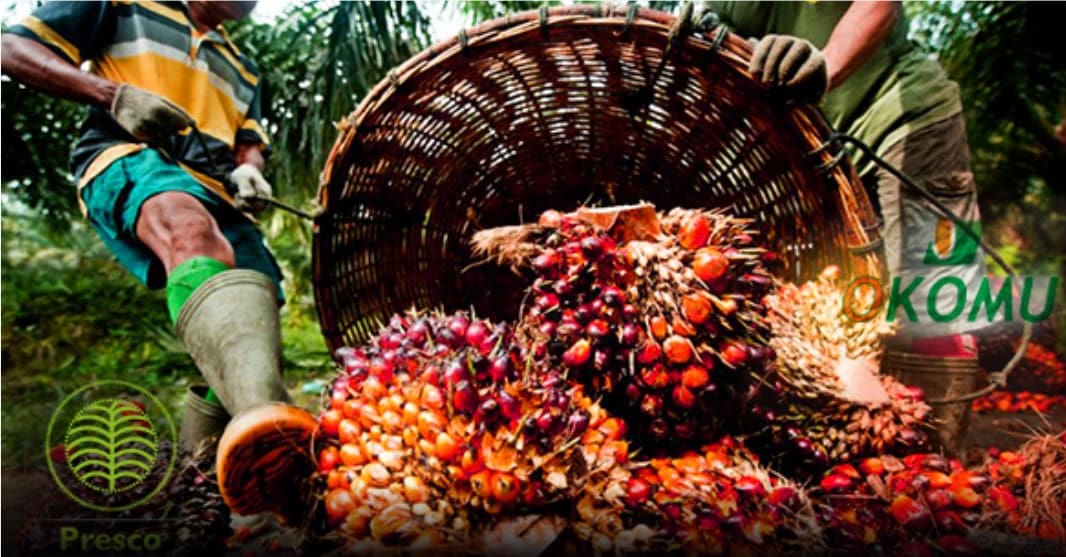
Presco and Okomu Oil Palm Company delivered another strong operating performance in the first half of 2026; however, higher taxes under Nigeria’s new tax regime and strategic balance sheet adjustments reduced their net profits, despite resilient margins, stronger balance sheets, and rising investor confidence.
An analysis of the companies’ half-year (H1) financial results shows that, although both reported slight declines in profit after tax compared with the earnings recorded a year earlier, the underlying performance remained robust.
Investors largely looked beyond the earnings slowdown, driving both stocks higher as the companies strengthened their finances, maintained healthy cash positions and continued investing for future growth.
The results also reflect how Nigeria’s changing macroeconomic environment is reshaping corporate earnings, with exchange rate stability reducing foreign exchange losses while tax reforms weigh more heavily on bottom-line performance.
Higher taxes overshadow resilient operations.
Presco’s revenue was broadly unchanged at ₦198.75 billion, while Okomu’s revenue slipped 3.5 per cent to ₦125.29 billion. Even with softer sales growth, both companies maintained exceptionally strong profitability.
Presco posted a gross margin of 83.4 per cent and operating profit of ₦126.48 billion, while Okomu recorded a gross margin of 64.4 per cent and pre-tax profit before fair value adjustments of ₦59.94 billion.
However, stronger operating earnings did not translate into higher net profits for both companies.
Presco’s profit after tax fell to ₦82.27 billion from ₦88.7 billion a year earlier, while Okomu’s declined to ₦39.73 billion from ₦47.5 billion.
The major reason was the higher tax burden arising from the Nigeria Tax Act 2025.
Presco’s total tax expense rose sharply to ₦39.9 billion from ₦23.1 billion in the corresponding period of 2025, including a ₦3.65 billion provision for Education Tax under the new 4 per cent Development Levy. Okomu also made a ₦1.19 billion education tax provision.
For Presco, the impact of the higher tax burden is that while profit before tax increased from ₦111.9 billion to ₦122.2 billion, the higher tax expense prevented the stronger operating performance from translating into higher earnings after tax.
Basic earnings per share also declined. Presco’s EPS dropped to ₦71 from ₦89, while Okomu’s fell to ₦41.65 from ₦49.83.
Despite the lower earnings, both companies maintained generous returns to shareholders. Presco declared an interim dividend of ₦10 per share, while Okomu paid ₦14.3 billion in dividends during the first half of the year.
Debt reduction and naira stability strengthen balance sheets.
Beyond earnings, the financial statements show that both companies spent the first half of the year strengthening their balance sheets.
Presco undertook one of the largest debt reductions, cutting total borrowings by about ₦197.8 billion.
READ ALSO:
- Presco Cuts Debt, Boosts Efficiency as Okomu Relies More on Borrowing in Q1
- Türkiye and Nigeria Launch Maritime Forum to Deepen Shipbuilding and Investment Ties
- Stakeholders Call for Stronger Women’s Participation in Nigeria’s Capital Market
- Banks Raise ₦4.65trn as CBN Wraps Up Recapitalisation Exercise
- SEC Digitises Registration Process for Capital Market Operators
Its total debt fell from ₦317.3 billion at the end of December 2025 to ₦119.5 billion by June 2026 after the company used its substantial cash reserves and ₦68.1 billion generated from operations to repay loans.
The strategy significantly reduced its exposure to Nigeria’s high interest rate environment. Finance costs declined from ₦19.5 billion in the first half of 2025 to ₦13.3 billion during the review period.
Okomu also maintained a conservative financial position, supported by a current ratio of 2.09, leaving it less exposed to rising borrowing costs.
The stabilisation of the naira also eased pressure on both companies.
Presco’s exchange loss declined slightly to ₦3.4 billion from ₦3.7 billion, while Okomu recorded only ₦276,135 in exchange losses, suggesting that the sharp foreign exchange shocks that affected many companies over the past two years have largely subsided.
Although revenue growth slowed, both companies increased inventory significantly. Presco raised inventory by 64 per cent, while Okomu doubled its stock levels.
Presco said the higher inventory was intended to ensure uninterrupted supply during the coming lean season, suggesting that management expects demand to remain strong in the second half of the year.
Both firms also maintained healthy liquidity despite their investments and shareholder payouts.
Presco ended the period with ₦129.9 billion in cash and a strong current ratio of 3.45 even after repaying almost ₦200 billion in debt.
Okomu increased its cash balance to ₦21.4 billion from ₦12.9 billion despite paying ₦14.3 billion in dividends.
The companies also continued investing for future expansion. Presco spent ₦4.4 billion on property, plant and equipment, while Okomu invested more than ₦6 billion in its palm and rubber plantations.
Investors back long-term growth despite earnings dip.
The market reacted positively to both companies’ financial strength rather than their lower net profits.
Presco’s share price rose from ₦1,450 at the beginning of the year to ₦2,300 at the end of the first half, representing a gain of 58.62 per cent. Its market capitalisation climbed by 85.06 per cent to about ₦2.68 trillion, adding more than ₦1.23 trillion in value.
Okomu’s share price also appreciated strongly, rising from ₦1,095 to ₦1,418, while its market capitalisation increased by 29.5 per cent to ₦1.35 trillion.
The stronger market performance suggests investors are focusing more on the companies’ long-term earnings potential, healthy balance sheets and dominant positions in Nigeria’s agricultural sector than on the temporary decline in profit after tax.
Their vertically integrated operations, spanning plantations to refining, continue to provide a competitive advantage that many manufacturers lack.
The decision to build inventory also positions both companies to benefit from stronger demand during periods of tighter supply.
Presco is also expected to strengthen earnings further through its expansion in Ghana and the recent acquisition of NCI in GOPDC, which is expected to consolidate more profit at the group level during the second half of the year.
Commenting on the results, Reji George, managing director/chief executive officer at Presco, stated, “Our H1 2026 performance underscores the strength of our operational model in a challenging environment. The 9.3% growth in profit before tax, driven largely by a 31.9% reduction in financing costs, reflects our deliberate focus on cost optimisation and balance sheet discipline.
“With equity up 13.8% and liabilities down 42.5%, we have further fortified our financial foundation. The proposed interim dividend of ₦10 per share signals our confidence in the business’s trajectory and our commitment to rewarding shareholders.”
The company also disclosed that its 2025 Annual General Meeting has been postponed because of pending appeals arising from court rulings related to the 2024 and 2025 AGMs.
Presco added that it is awaiting the judgement of the Court of Appeal and reaffirmed its commitment to corporate governance, regulatory compliance and shareholder transparency.

Alex is a business journalist cum data enthusiast with the Pinnacle Daily. He can be reached via ealex@thepinnacleng.com, @ehime_alex on X