

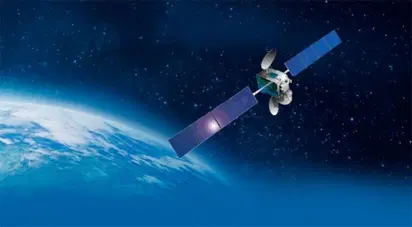
The Federal Government has advanced Nigeria’s next-generation satellite programme into the execution stage, with NIGCOMSAT-2A and NIGCOMSAT-2B slated for launch in 2028 and 2029 to strengthen connectivity, national security and digital economic growth.
Managing Director of NIGCOMSAT Limited, Mrs Jane Nkechi Egerton-Idehen, disclosed this during the opening of the Satellite Week 2026 in Abuja. She said the initiative reflects Nigeria’s growing commitment to deploying space technology as a tool for national development, sovereignty and security.
Egerton-Idehen explained that the satellites will significantly improve real-time communication, intelligence gathering and connectivity in remote and underserved communities. According to her, the infrastructure will support key sectors, including precision agriculture and rural broadband expansion.
She revealed that procurement processes have been concluded, with the project now transitioning into financing and full implementation.
“When operational, the satellites will strengthen security within Nigeria and neighbouring countries, while supporting agencies with critical data and intelligence,” she said.
READ ALSO:
- FG Launches Lenacapavir Injection to Strengthen HIV Prevention in Nigeria
- FG Defends Dismissal of NCoS Officials, Reaffirms Anti-Corruption Drive
- FG Alleges Plot to Embarrass Tinubu During UK State Visit
- How FG Can Ease the Burden of Rising Petrol Prices on Businesses – Centre
The event, themed “Harnessing Space for an Extraordinary Nigeria,” convened government officials, industry stakeholders, researchers and innovators to explore opportunities in space technology and digital infrastructure.
Also speaking, Minister of Communications, Innovation and Digital Economy, Bosun Tijani, said the programme marks a transition from policy approvals to tangible delivery, supported by investments in fibre optics, telecom towers and space-based systems.
He described satellite technology as vital to bridging Nigeria’s connectivity gaps and strengthening national resilience, noting that Nigeria remains the only West African country operating its own communications satellite.
Tijani added that beyond infrastructure development, the government is prioritising the creation of a robust ecosystem that fosters innovation, research and practical applications across critical sectors of the economy.

Esther Ososanya is an investigative journalist with Pinnacle Daily, reporting across health, business, environment, metro, Fct and crime. Known for her bold, empathetic storytelling, she uncovers hidden truths, challenges broken systems, and gives voice to overlooked Nigerians. Her work drives national conversations and demands accountability one powerful story at a time.