

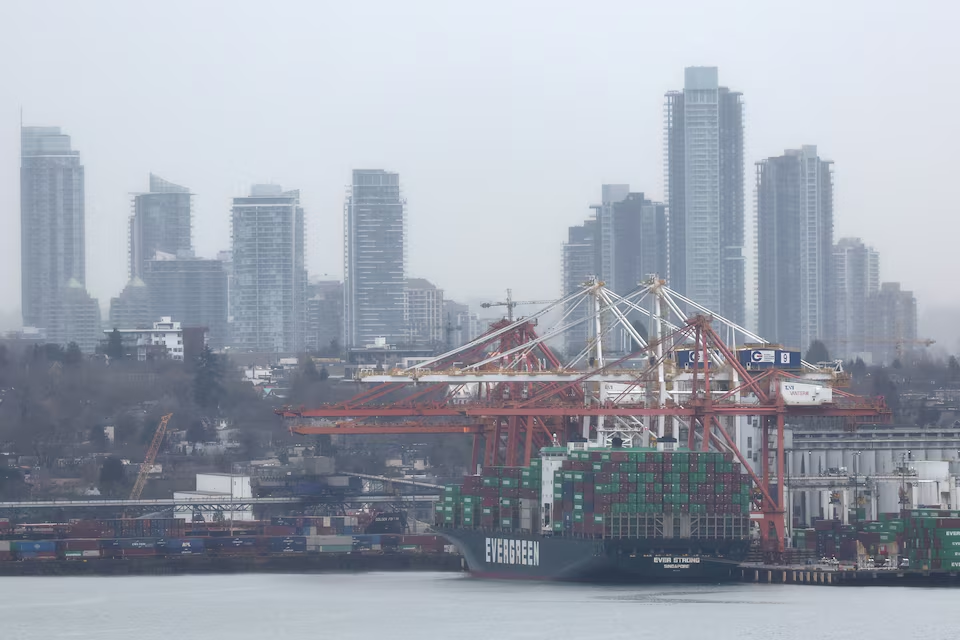
Canada’s economy grew at a far faster pace than expected in the third quarter, expanding year-on-year by 2.6%, Statistics Canada reported Friday.
The data provides a relief from fears of a recession after the economy contracted 1.8% in the previous quarter, and comes despite continued challenges from U.S. tariffs that have affected Canadian exports and business sentiment.
Analysts had forecast a modest 0.5% growth for the quarter, making the surprise expansion a notable boost to economic confidence. Monthly GDP data for September also met expectations, showing 0.1% growth driven primarily by a 1.6% increase in manufacturing output. However, preliminary estimates suggest the economy may decline 0.3% in October, indicating a slow start to the fourth quarter.
READ ALSO: Tuggar, Canadian Politician Trade Blame over Nigeria’s Religious Violence Statistics
Key drivers of the third-quarter growth included a 6.7% jump in crude oil and bitumen exports, which also contributed to higher corporate income. Government capital investments rose 2.9%, boosted by spending on hospitals, non-residential structures, and weapon systems. Residential resale activity and home renovations added further support, providing a counterbalance to subdued private-sector activity.
Despite the overall growth, the report highlighted weaknesses in domestic demand. Business capital investment remained flat, household consumption fell 0.1%, and new residential construction dropped 0.8%. The impact of U.S. tariffs on critical sectors continues to depress hiring and dampen consumer and business confidence, reinforcing caution among economists.
The GDP figures strengthen expectations that the Bank of Canada will maintain its key interest rate at 2.25% during its December 10 policy meeting. “The report should quash recession chatter for now,” said Doug Porter, chief economist at BMO Capital Markets. The central bank has previously indicated it will act on interest rates only if there is a significant shift in the economic outlook.
Following the release, the Canadian dollar rose 0.34% to 1.3982 per U.S. dollar (71.52 U.S. cents), while the yield on two-year government bonds climbed 31.4 basis points to 2.402%, reflecting market optimism.
READ ALSO: E-Passport Revolution: 10 Countries Leading the Global Shift to Next-Generation Travel Documents
While the economy avoided a technical recession, uncertainties remain. Analysts warn that continued trade tensions, coupled with slow business investment and weak household consumption, could constrain growth in the near term. Exports of crude oil and government spending have so far provided a temporary cushion, but sustainable expansion will require stronger private-sector activity and consumer confidence.
Statistics Canada noted that the third-quarter GDP figures may be subject to a larger-than-normal revision in February, as trade data for foreign merchandise was delayed due to the U.S. government shutdown.

Esther Ososanya is an investigative journalist with Pinnacle Daily, reporting across health, business, environment, metro, Fct and crime. Known for her bold, empathetic storytelling, she uncovers hidden truths, challenges broken systems, and gives voice to overlooked Nigerians. Her work drives national conversations and demands accountability one powerful story at a time.