

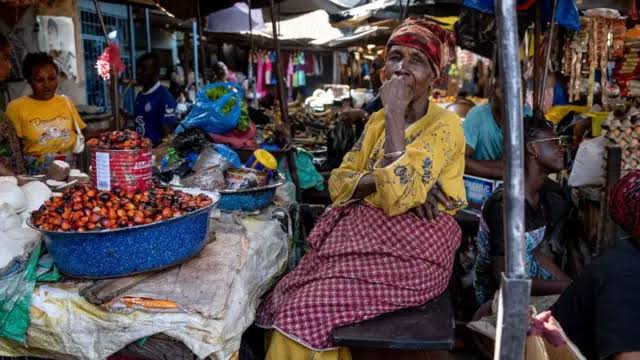
As Nigeria celebrated its 65th Independence anniversary on Wednesday, parades, fireworks, and official speeches hailing signs of economic recovery, but residents of the FCT insist the numbers do not reflect their everyday struggles
The National Bureau of Statistics (NBS) reported that headline inflation had “slowed modestly”, with food inflation showing its first signs of easing in months. To policymakers, this signals that reforms are beginning to take effect.
But across the Federal Capital Territory, residents insist their experience does not corroborate the numbers.
At the stalls of Kubwa Market, in salons of Wuse, and even among salaried civil servants, daily survival tells a different story: goods and services remain beyond the reach of many Nigerians.
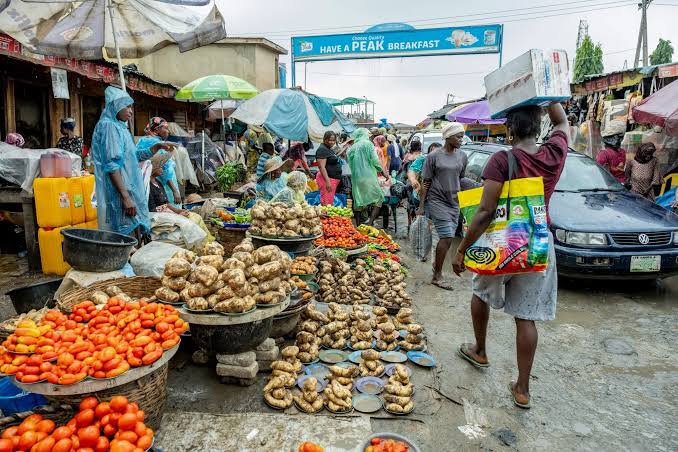
Market Voices: “Figures Don’t Cook Soup”
At her fish stall in Kubwa market, Mrs Aisha Mohammed shook her head when asked about official inflation reports.
“Nothing has changed. A carton of panla fish is still ₦50,000. One fish is ₦500, and three small ones go for ₦1,000. Customers complain, but I can’t reduce the price. How do I sell cheaper when I buy expensive?”
For many traders like Aisha, the gap between official statistics and market realities deepens mistrust.
“The numbers they announce don’t feed us. Figures don’t cook soup,” she said. Service Sector Strain: “I Had to Triple My Charges”
The pressure is not confined to food vendors. Mr Sola Ogunjimi, a hairstylist in Abuja, explained how rising costs have forced him to raise service charges, even when customers provide their own products.
“Five years ago, I made a simple packing gel for ₦2,000 or ₦3,000. Now I charge ₦6,000 just for my service. Transport, food, rent – everything has gone up. If I don’t adjust, I can’t survive.”
Energy costs compound the problem. Chinadu Eze, another salon owner, said, “I bought a 1.5-horsepower air conditioner for ₦380,000 yesterday. Power supply is unstable. Things are getting more expensive.”
Even those with steady employment feel trapped. Mrs Ngozi Buchi, a civil servant in Abuja, described the challenge of stretching her salary.
“By the 15th of the month, my salary is finished. Transport alone takes nearly half of what I earn, food is another burden, and school fees are rising. When the government says inflation is going down, I wonder: for whom?? Because for me, nothing has gone down.”
Her experience reflects a wider frustration among wage earners: macroeconomic statistics rarely match the reality of managing day-to-day expenses.
READ ALSO: Nigeria’s Health Sector in Intensive Care — Experts
Expert Analysis: “Slowing Inflation Doesn’t Mean Prices Are Falling”
To understand the apparent contradiction, Pinnacle Daily spoke with Sidiku Olayinka Oscar, investment banker, economist, and policy expert.
Oscar explained that tracking inflation over time provides essential insight:
“I have been following this for a long time because it keeps us up-to-date on the economy. We have inflation reports for June, July, and August. People think the economy is like lights – when it’s off, it’s bad; when it’s on, it’s good. It doesn’t work like that. Recovery takes time.”
READ ALSO: CBN’s Dilemma: Union Bank’s Uncertain Future After Controversial Takeover
He clarified the numbers: core inflation was 3% as of June 24th, food inflation was 37.75%, and transportation inflation was 7%. After adjustments, food inflation now hovers around 21–22%.
“That’s progress, but it doesn’t mean the economy suddenly improves overnight. People must understand that numbers are just numbers. Economic indicators are empirical; we cannot manufacture figures,” he stressed.
Oscars noted that explaining this can be politically sensitive:
“When you start explaining, some think you are defending the administration. But as economists, we must tell the truth. Recovery is real, but the gains need to be sustained.”
READ ALSO: Pinnacle Daily Wishes Nigerians a Happy 65th Independence Anniversary
Oscar outlined key measures for Nigeria to consolidate its economic recovery:
- Government borrowing and fiscal discipline: Loans must be carefully structured, with reasonable interest rates and appropriate moratorium periods.
- Balance of payments: Nigeria currently operates in surplus, with exports exceeding imports and strong foreign exchange reserves.
- Revenue growth: Transaction taxes coming into effect in January 2026 will provide more funds for federal, state, and local governments.
-
Targeted relief: Cash transfers reduce the impact of inflation and devaluation, though they do not eliminate poverty entirely.
He also projected that 2026 could bring tangible improvements:
“By the first and second quarters, people will start enjoying more. Government projects will employ Nigerians, not foreign workers. Payments will be more substantial; many could see up to ₦200,000. Relief is coming, but patience and resilience are key.”
At 65, Nigeria’s story is one of resilience shadowed by fragility. While policymakers celebrate easing inflation, ordinary Nigerians measure independence in the kitchen, the market, and the household budget, areas where things has changed
“Independence should mean economic freedom,” Mrs Mohammed reflected at her Kubwa stall.
“But when you can’t feed your children without borrowing, are we really independent?”
READ ALSO: Nigeria @ 65: Tinubu Highlights 12 Economic Milestones Achieved in 2 Years
| Indicator | Reported | Market Reality |
|---|---|---|
| NBS Headline Inflation (Sept 2025) | Slowed slightly | Still affects daily prices |
| Food Inflation | Reported easing | Carton of panla fish: ₦50,000 |
| One Panla Fish | – | ₦500 |
| Three Small Fish | – | ₦1,000 |
| Packing Gel (Hairstylist) | – | ₦6,000 (was ₦2,000–₦3,000 five years ago) |
| Civil Servant Reality | – |
Salary spent by mid-month on transport, food, school fees |
Nigeria’s 65th Independence Day is marked by a paradox: celebration in corridors of power and frustration in markets and offices across Abuja. Official data signals progress, but citizens continue to navigate high costs that erode their income and sense of freedom.
For millions, true independence will not be measured by NBS figures but by the price of fish in Kubwa, salon services in Wuse, and the ability of a civil servant’s salary to last the month. Until then, Nigeria’s sovereignty remains a flag to wave, not yet a freedom to feel.

Esther Ososanya is an investigative journalist with Pinnacle Daily, reporting across health, business, environment, metro, Fct and crime. Known for her bold, empathetic storytelling, she uncovers hidden truths, challenges broken systems, and gives voice to overlooked Nigerians. Her work drives national conversations and demands accountability one powerful story at a time.