

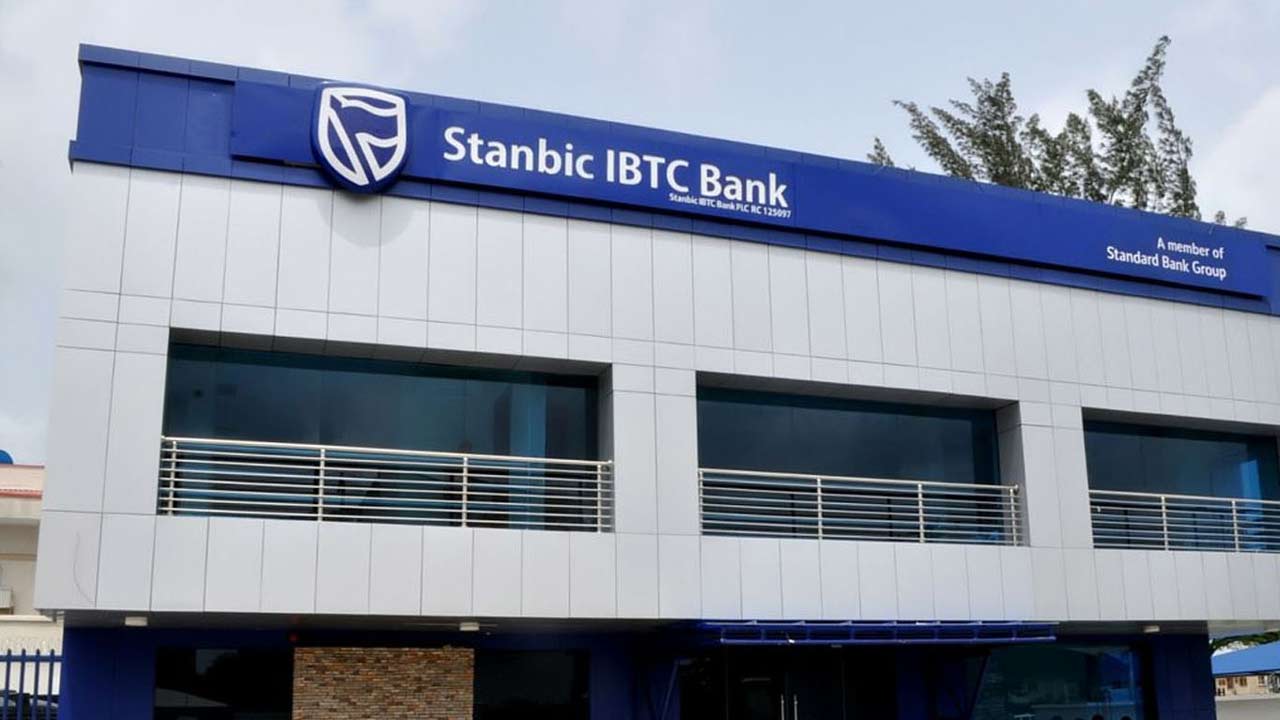
Stanbic IBTC Holdings Plc paid ₦119 million in regulatory fines in 2025 over reporting failures and disclosure issues, even as the bank posted one of its strongest financial performances on record.
The fines were linked to various infractions, including failures to report cyber incidents and incorrect disclosures in fund statements, according to details in its audited financial statements, Pinnacle Daily can report.
The penalties come at a time when the group is also battling a heavy load of legal claims estimated at ₦525 billion and $1.3 billion.
Despite these challenges, the bank delivered robust growth across key financial indicators.
Profit before tax rose sharply by 81.62 per cent to ₦551.76 billion, while profit after tax increased by 69.01 per cent to ₦380.80 billion.
The strong performance was driven largely by interest income as net interest income climbed by 42.5 per cent to ₦585 billion, supported by high yields on loans and investments.
READ ALSO:
- Wema Bank Hit with ₦32m Cybersecurity Fine, Loses ₦847.6m to Fraud
- CAPPA Slams Lagos Over ‘Secret’ Water PPP Deals
- Paying for Darkness: Power Revenue Hits ₦2.3trn As Nigerians Grapple with Outages
- CBN Tightens Cybersecurity Oversight, Demands Compliance from Banks
While gross earnings also rose by 38.09 per cent to ₦1.14 trillion, non-interest income contributed significantly, growing by 31.4 per cent to ₦310.7 billion.
This was boosted by trading income of ₦77 billion as well as fees and commissions from asset management and broking services.
Shareholders also benefited from the strong results as earnings per share rose to 2,368 kobo from 1,394 kobo, while directors proposed a final dividend of 400 kobo per share.
The group’s balance sheet expanded during the year, with total assets rising by 24.7 per cent to ₦8.62 trillion.
Lending to customers increased aggressively, with net loans and advances jumping 60 per cent to ₦3.84 trillion. Customer deposits also grew by 45.2 per cent to ₦4.37 trillion, reflecting strong liquidity and continued customer confidence.
Asset quality improved despite the rapid loan growth as the non-performing loan ratio dropped to 3.40 per cent from 4.18 per cent in 2024, remaining within regulatory limits.
Across its business segments, corporate and investment banking remained the main profit driver, contributing ₦281 billion.
The business and commercial banking unit returned to profit with ₦26.2 billion after recording a loss in the previous year, while insurance and asset management added ₦61.1 billion.
However, beyond the headline numbers, the bank continues to face significant risks.
Auditors flagged key concerns around the Group’s accounting estimates, especially the ₦84.2 billion set aside for expected credit losses.
This figure involves complex assumptions about the likelihood of borrowers defaulting and the potential losses involved.
Similarly, the valuation of ₦72.4 billion in insurance liabilities was highlighted as highly sensitive to factors such as inflation, mortality rates and discount rates.
The bank’s legal exposure remains another major concern, as it is currently involved in 456 court cases, with total claims running into hundreds of billions of naira and over a billion dollars.
Although management believes the chances of losing these cases are low, the size of the claims poses a significant risk.
One of the unresolved cases involves the Asset Management Corporation of Nigeria (AMCON), which is seeking to claw back ₦5.7 billion from a 2012 loan transaction.
Regulatory and tax pressures also weighed on the Group as a new windfall tax introduced under the 2024 Finance Act led to a ₦7.36 billion charge on profits from foreign exchange transactions.
In addition, the bank had to strengthen its capital base, with its parent company injecting ₦140 billion to meet new minimum capital requirements for national banks.
The Group also had to manage the transition from the global LIBOR benchmark to alternative interest rate systems such as SOFR and SONIA, a process that required major operational adjustments.
The results indicate that, looking ahead, the bank may face further pressure from new tax laws expected to take effect in 2026, which could increase compliance costs and affect profitability.
While Stanbic IBTC’s 2025 results show strong growth and improved financial strength, the fines, legal claims and regulatory changes highlight the complex environment in which the bank continues to operate.

Alex is a business journalist cum data enthusiast with the Pinnacle Daily. He can be reached via ealex@thepinnacleng.com, @ehime_alex on X