

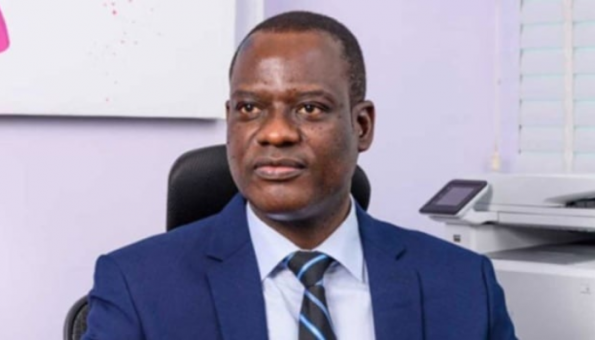
Nigeria is positioning itself to secure cheaper financing and potentially refinance costly existing debt the Minister of Finance and Coordinating Minister of the Economy, Taiwo Oyedele, has said.
This is as improving market conditions and growing investor interest create new opportunities for the country, he stressed.
Speaking in an interview with Bloomberg recently, Oyedele explained that the government is prioritising concessional financing but remains open to commercial borrowing where it offers favourable terms and supports the country’s development objectives.
“We know the size of the deficits we need to finance. Our priority first is, can we get concessionary loans? If I get something at 2% I don’t have to pay anything for five years. I love that, of course,” he said.
According to the minister, while concessional funding remains the preferred option because of its lower cost, such facilities are limited, making it necessary for the government to explore alternative funding sources.
“That’s not limitless, so if that doesn’t happen, then you move to maybe a Eurobond commercial,” Oyedele said.
READ ALSO:
- Afreximbank Commits $2.5bn to $4bn Financing for Dangote Refinery
- Tinubu Sacks Edun, Dangiwa in Major Cabinet Shake-Up
- Banks Funnel Cheap Credit to Oil and Gas, Squeeze Agriculture, Manufacturing
- Nigeria’s Capital Market Yet to Deliver Full Value, SEC DG Warns
He noted that Nigeria is seeking to establish a financing benchmark that ensures any commercial borrowing remains competitive with rates available in the international debt market.
“For us, we’re trying to establish a benchmark that if we have to do any commercial financing, it shouldn’t be worse than what we’ll get from the Eurobond market,” he said.
The minister disclosed that Nigeria’s borrowing costs in the international market have improved significantly, with yields on the country’s five- to 10-year Eurobonds currently ranging between seven and eight per cent.
“I think, as of today, we have a five to 10-year Eurobond in the range of seven to 8%, much lower than it used to be,” he said.
The improvement, he added, presents an opportunity not only to raise fresh funds for development projects but also to refinance expensive debts accumulated in the past.
“So, for us, we think that the timing is good for us to be able to maybe even refinance some of our expensive past debts, but also to raise more funding for our development at this critical time,” Oyedele said.
He explained that the choice between Eurobonds and other commercial financing options would depend on several factors, including market conditions, speed of execution, funding requirements and the purpose of the borrowing.
“Sometimes it’s about the speed to market, how much you want to raise, and market conditions. So we’ll balance that at the time,” he said.
Oyedele also revealed strong interest from a wide range of investors and development finance institutions seeking opportunities in Nigeria.
“We have a lot of offers. There’s a lot of interest in Nigeria by investors, which is good for us,” he said.
According to him, potential financiers include institutional lenders, development finance institutions and bilateral partners.
“We have also institutional lenders. We have these various organisations, from AFC to AfDB to Afreximbank. We also have those where it’s other countries, so we have many options,” he said.
The minister stressed that the government would continue to evaluate funding options based on cost, risk and alignment with national development priorities.
“For us, it’s to take a step back and say, what’s the cost? What’s the risk? How does it fit into what you want to do? Is it project finance or is it just general project funding?” he said.
“So, what we ultimately want is to get the best results from every dollar or every naira that we spend.”
Pinnacle Daily reports President Bola Tinubu had signed the 2026 Appropriation Bill into law, authorising total spending of ₦68.32 trillion for the fiscal year.
The budget includes ₦32.2 trillion for capital expenditure through the Development Fund, ₦15.8 trillion for debt servicing, ₦15.4 trillion for recurrent expenditure and ₦4.799 trillion for statutory transfers.
The President had also approved an extension of the implementation period for the 2025 budget from March 31 to June 30, 2026.
The large spending plan is expected to require significant financing, placing renewed focus on the government’s borrowing strategy, debt management efforts and ability to secure funding on favourable terms.

Alex is a business journalist cum data enthusiast with the Pinnacle Daily. He can be reached via ealex@thepinnacleng.com, @ehime_alex on X