

Nigeria’s biggest banks are increasingly generating income from businesses that have little to do with traditional banking, Pinnacle Daily can report.
From pensions and asset management to payment services, insurance brokerage and digital lending, Tier-1 banks are quietly building new revenue streams that are becoming an increasingly important part of their growth strategy.
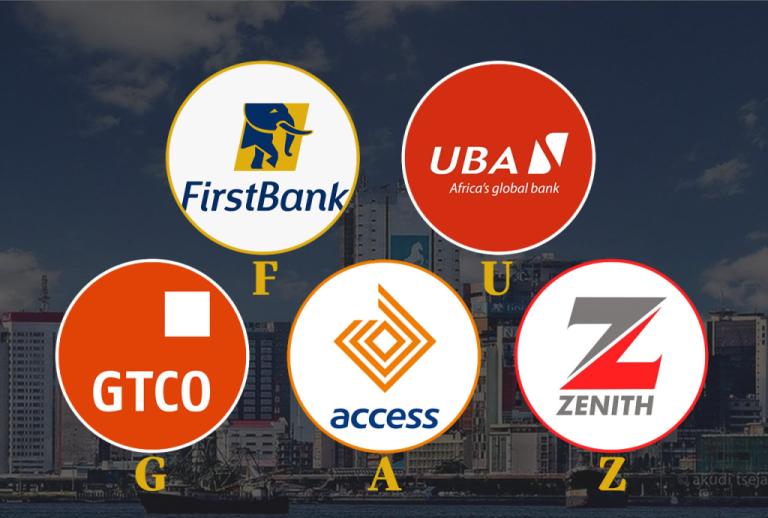
An analysis of the audited financial statements of GTCO, Access Holdings, Zenith Bank, First HoldCo and United Bank for Africa (UBA) from 2021 to 2025 shows that although core banking still accounts for the overwhelming share of earnings, non-banking businesses are growing rapidly under the holding company model adopted by the lenders.
The shift is positioning the banks for a future in which stable, fee-based income complements traditional interest income from loans and investments.
The diversification drive has been most visible at GTCO and Access Holdings, whose non-banking businesses have expanded much faster than their core banking operations over the review period.
GTCO has built one of the industry’s broadest financial services platforms through GT Funds Management (GTFM), GT Pensions (GTPM) and HabariPay.
While its banking subsidiaries remained the group’s biggest earnings engine, generating about ₦2.07 trillion in gross revenue in 2025, its non-banking businesses contributed an estimated ₦82.9 billion, up from ₦5.93 billion in 2022.
Their contribution to the group’s profit before tax also rose from 0.9 per cent in 2023 to 1.7 per cent in 2025, reflecting the growing importance of businesses outside conventional banking.
The group’s asset management business has become one of its fastest-growing segments, with assets under management rising to ₦1.32 trillion by the end of 2025. HabariPay has also emerged as a key growth platform, strengthening GTCO’s position in digital payments and expanding transaction-based income.
Access Holdings has pursued perhaps the most aggressive diversification strategy among the Tier-1 lenders, using acquisitions and new businesses to build a broad financial services ecosystem.
READ ALSO:
- Banks Must Move Beyond Traditional Lending to Win Africa’s Trade Boom — Bank Executive
- CBN to Banks: Keep Payment Data in Nigeria
- 23 States Yet to Adopt Pension Law, Leaving Retirees at Risk — PenCom
- FCMB Pensions Disburses Over N200bn to RSA Holders, As AUM Reaches N1tn
- PenCom Cracks Down on PFAs, Orders Immediate Reclassification of Personal Pension Contributions
Its banking business generated ₦4.81 trillion in gross revenue in 2024, but its non-banking businesses are becoming increasingly significant. Revenue from pensions, payment services, digital lending and insurance rose from about ₦2.94 billion in 2022 to ₦45.66 billion in 2024.
The biggest contributor was Access Pensions following the acquisition of ARM Pensions, while Hydrogen generated more than ₦10 billion in payment services revenue. The group has also expanded into digital lending through Oxygen X and insurance brokerage, widening its sources of recurring fee income.
Zenith Bank has taken a more measured approach to diversification. Instead of building multiple standalone businesses, it has focused on strengthening pension custody and nominee services alongside its dominant corporate and retail banking franchise.
Revenue from Zenith Pension Custodian increased from ₦9.06 billion in 2023 to ₦20.77 billion in 2025, while Zenith Nominees generated ₦1.49 billion. Even so, core banking remained the bank’s principal earnings driver, contributing more than ₦4.17 trillion in operating income in 2025.
First HoldCo has concentrated its diversification strategy around investment banking and asset management through its FBNQuest businesses. Its commercial banking operations generated ₦3.36 trillion in external revenue in 2025, while investment banking, asset management and other holding company businesses contributed ₦80.05 billion.
Although non-banking revenue declined from the previous year, it continues to provide an important source of non-interest income beyond lending.
UBA remains the most conservative of the five lenders. Its diversification efforts are centred mainly on UBA Pensions Custodian, which generated about ₦11.53 billion in operating revenue in 2025.
Rather than launching separate fintech brands, the bank has focused on strengthening digital banking across its pan-African network, using technology such as its Leo virtual assistant to deepen customer engagement and improve service delivery.
The figures show that while core banking continues to account for the bulk of earnings across the industry, the nature of growth is beginning to change.
GTCO and Access Holdings have demonstrated that non-banking businesses can expand much faster than traditional banking operations when supported by strategic acquisitions, digital innovation and specialised financial services.
Zenith Bank, First HoldCo and UBA have adopted more conservative models, but each has steadily strengthened fee-generating businesses that complement their banking franchises.
From FX Windfalls to Sustainable Earnings
The growing importance of non-banking businesses comes as Nigerian banks prepare for a new operating cycle.
According to Vetiva Research’s report, FY’26 Banking Outlook: Entering a Stable Cycle, the banking industry is moving away from the extraordinary earnings driven by foreign exchange revaluation gains and elevated interest rates towards stronger operating performance built on core banking activities and diversified non-interest income.
The research firm said 2025 marked a stabilisation period for the sector after the volatility experienced in 2023 and 2024. With the naira becoming relatively more stable, banks recorded moderation in FX-related income while strengthening their underlying operating performance.
Vetiva expects interest rates to gradually decline in 2026, shifting earnings growth from asset repricing to increased loan expansion. Banks are also expected to benefit from stronger capital buffers following recapitalisation, enabling them to extend more credit to sectors such as manufacturing, oil and gas, agriculture, SMEs and retail customers.
The report also projects lower funding costs, particularly for banks with large current and savings account deposits, allowing them to maintain healthy interest margins even as rates moderate.
Beyond lending, Vetiva expects digital banking to become an even stronger source of fee income as online transactions continue to rise. The research firm believes cleaner balance sheets, following the resolution of regulatory forbearance exposures, will also support healthier and more sustainable profitability across the industry.
The findings suggest that Nigeria’s biggest banks are undergoing a structural transformation; even though traditional banking remains the foundation of their business, the next phase of growth is increasingly being driven by businesses that generate recurring fees rather than interest income alone.
As the exceptional gains from currency movements and high interest rates begin to fade, pensions, asset management, payment services, insurance and investment banking are expected to play a much larger role in shaping the industry’s future earnings profile.

Alex is a business journalist cum data enthusiast with the Pinnacle Daily. He can be reached via ealex@thepinnacleng.com, @ehime_alex on X