


An agricultural economist, Ikechi Agbugba, has suggested that farmers can reduce their dependence on pesticides by adopting certain approaches.
He shared his perspective on this with Pinnacle Daily, while highlighting the potential negative impacts of high organochlorine pesticide (OCP) levels on soil health and food security.
Agbugba, an associate professor of Agricultural Marketing in the Faculty of Agriculture at the Rivers State University, pointed out that the negative impacts are often human-centric and have ripple effects on the ecosystem.
He noted the many negative impacts, including degradation of soil structure, disturbance of soil microbial communities, and reduction in enzymatic activity.
Regarding food security, it poses risks to human health and incurs economic losses, Agbugba said, emphasising that it reduces crop productivity, as OCPs affect germination, growth, and nutrient uptake.
READ ALSO: Federation Allocation Slips to ₦1.928trn in November
It also contaminates food crops, leading to food contamination, posing health risks to humans and livestock.
Pinnacle Daily can report that sustainable agriculture and food security remain a serious issue that Nigeria faces.
What are OCPs?
Organochlorine pesticides (OCPs) are a group of persistent, synthetic chemicals like DDT, aldrin, and lindane containing chlorine, used widely for pest control but notorious for high toxicity and slow environmental breakdown.
They tend to accumulate in living things, posing risks to health (nervous system, liver, cancer) and ecosystems, leading to bans in many nations but continued use/abuse in others.
Soil health essentials
According to Agbugba, who is the chairperson of the Scientific Conference of the International Conference on Business Models in Agriculture, the health of a soil is essential for supporting the growth and survival of native vegetation, which provides habitat and food for wildlife.
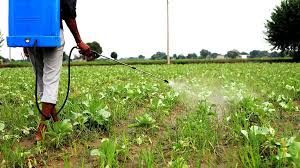
He said: “Healthy soil also reduces the risk of soil erosion, nutrient runoff, and water pollution, which can have negative impacts on the environment and human health.”
READ ALSO: Nigeria’s Ports Record 1,085% Surge in Export Containers in Q3
“Soil animals such as earthworms, nematodes, mites, springtails, ants, and beetles are critical to maintaining healthy soils. They are often referred to as ecosystem engineers because of the key roles they play in decomposition, nutrient cycling, soil structure formation, and even plant health.”
Dangers of OCPs on soil health
He explained that organochlorine pesticides are persistent, bio-accumulative, and toxic.
“They remain in soil for decades and can devastate soil fauna populations by direct toxicity, reproductive impairment, and reduced diversity,” he said.
Reducing pesticide control
Agbugba, speaking from both hands-on experience and theoretical knowledge, explained that farmers could adopt a variety of practices to ensure greener farming and healthier harvests.
According to him, this includes using what he called the integrated pest management (IPM) approach.
He said this holistic approach includes combining biological, cultural, physical, and chemical tools to manage pests economically and safely.
He explained that a biological control involves using natural enemies of pests, such as predators, parasites, or pathogens.
The agric economist said examples include introducing ladybugs to control aphids, using trichogramma wasps to control caterpillars, and applying bio-pesticides derived from bacteria, e.g., Bacillus thuringiensis or fungi.
Another is the rotation and diversification of crops. He explained this to mean that rotating crops disrupts pest life cycles and reduces the buildup of soil-borne diseases, stressing that intercropping, which involves the growing of multiple species together, promotes biodiversity and discourages pest dominance.
READ ALSO: NTA 2025: FIRS Emphasises 4% Single Development Levy Framework
He also highlighted the use of organic and botanical pesticides. Agbugba said that, derived from plants, minerals, or microorganisms, these have a lower environmental impact.
The examples he gave are neem oil, pyrethrin from chrysanthemum flowers, and garlic-based sprays.
The environmental economist noted the use of habitat management and agroecology in the approaches.
He explained this as a way of encouraging beneficial insects by planting flowering borders or hedgerows, composting and reducing tillage to enhance natural pest resistance.
Added to the approaches is the use of mechanical and physical control, which he said is a manual removal of pests, the use of traps, barriers, and mulches.
Soilless farming… an option
Agbugba was emphatic that soilless farming can be a viable option for sustainable food production.
His submission resonates around the efficient use of resources, which involves water savings and nutrient control, explaining that nutrients are delivered directly to plants to reduce waste and runoff.
He said soilless systems can be set up in urban areas, on rooftops, or indoors, bypassing the need for fertile land, thereby reducing land dependency.
The agric economist also said controlled environments allow for year-round production and faster crop cycles, explaining that plants often grow quicker and healthier due to optimised conditions.
He added lower environmental impact to the reasons, stating that there will be no need for pesticides or herbicides in closed systems.
What should policymakers and regulators do?
The initiative to ensure sustainable agricultural practices and food security, Agbugba suggested, can include strengthening climate-resilient agriculture.
This involves promoting agroecological and regenerative practices (minimum tillage, mulching, etc.) that restore soil health, enhance biodiversity, and reduce dependency on synthetic inputs.
It involves supporting climate-smart technologies such as drought-resistant crops, precision irrigation, and early warning systems for weather and pest outbreaks.
READ ALSO: FCMB Pensions Disburses Over N200bn to RSA Holders, As AUM Reaches N1tn
It is also important that support from the government and non-governmental organisations (NGOs) should encourage farmers and businesses to adopt sustainable practices and make it economically viable to do so (financial incentives and support).
He said, “support or empower farmers to integrate all stakeholders into creating a formidable and sustainable food system (capacity building and stakeholder engagement).”
He stressed further that investing in and creating systems that build resilient food systems from farm to fork (infrastructure and market development).
Agbugba added by urging the authorities to “update and enforce regulations to protect natural resources and human health while promoting sustainability (modernised regulatory frameworks).”

Alex is a business journalist cum data enthusiast with the Pinnacle Daily. He can be reached via ealex@thepinnacleng.com, @ehime_alex on X