

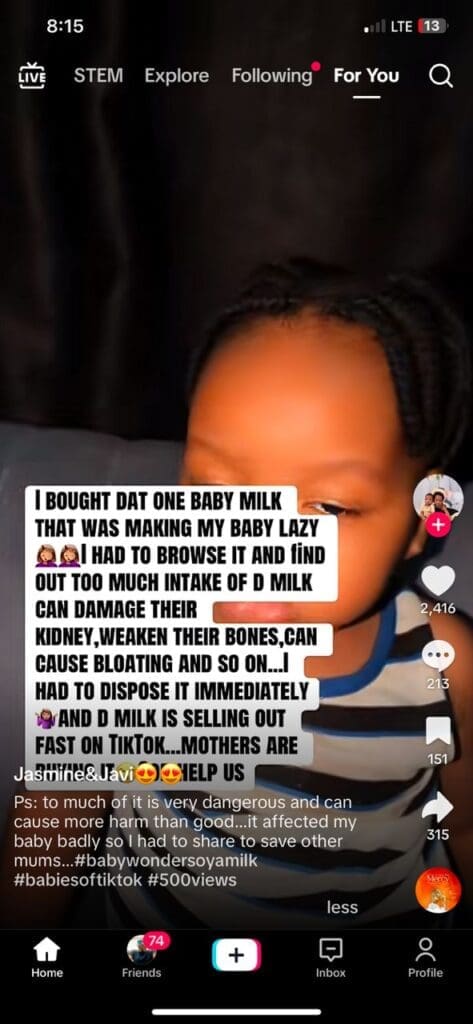
A viral video circulating on TikTok has sparked anxiety among parents after a mother claimed that excessive consumption of soy-based baby milk could damage infants’ kidneys, weaken bones, and cause bloating.
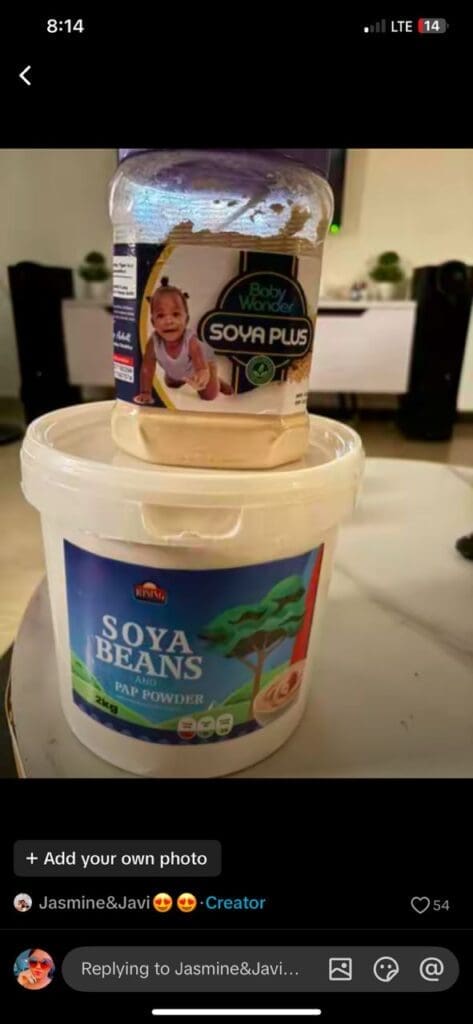
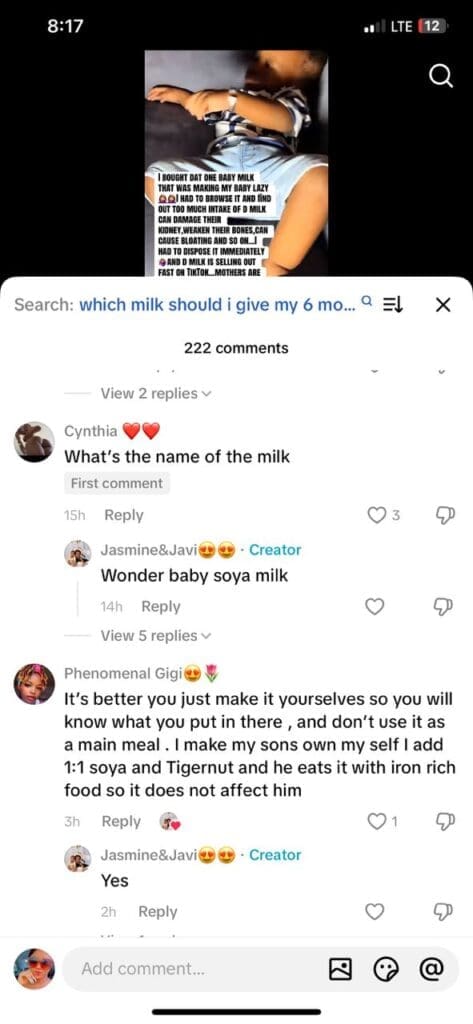
The video, which features a container labelled Baby Wonder Soya Plus placed on top of a bucket of soybean pap powder, shows the mother explaining that she stopped giving the milk to her baby after noticing unusual symptoms.
In the clip, the woman claimed the product made her baby “lazy” and said she discovered online that consuming too much soy-based milk could harm a child’s organs.
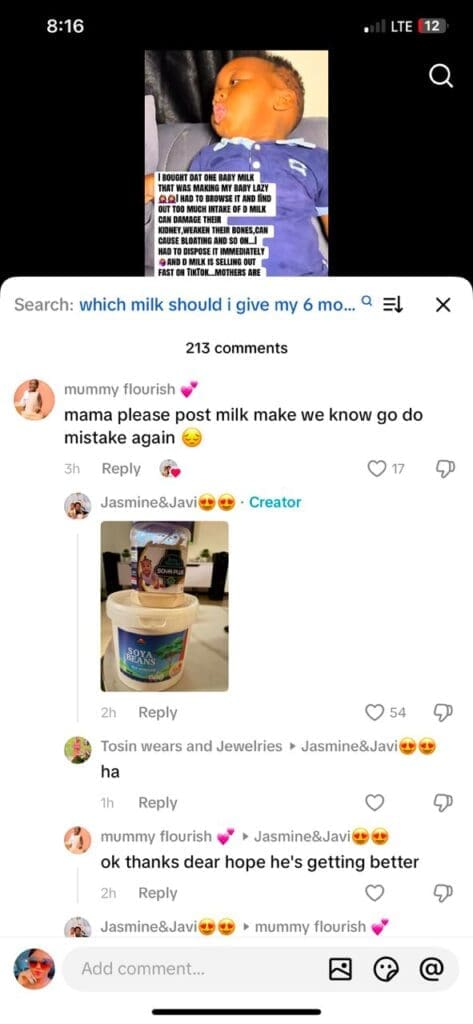
The video quickly gained traction on the platform, drawing thousands of views and reactions from worried parents seeking guidance on what type of milk is safe for infants.
But medical experts say the claims circulating online are misleading and not backed by scientific evidence.
Doctor Debunks Viral Health Claims
Reacting to the video, Dr. Izuagba Kelechi, Assistant Secretary of the Medical Women’s Association of Nigeria, told Pinnacle Daily that soy-based infant formulas are regulated and safe for babies when used appropriately.
According to her, there is no scientific proof that properly formulated soy-based infant milk damages babies’ kidneys or weakens their bones.
“The claims are misleading and are not scientifically proven. Soy-based infant formulas are made and regulated to meet the nutritional needs of babies,” she said.
“When used appropriately, they do not damage the kidneys or weaken bones in healthy infants.”
She explained that mild bloating or gas may sometimes occur in babies consuming formula milk, but this reaction can happen with different types of infant formula and is not exclusive to soy-based products.
Dr. Kelechi noted that the major risk arises when parents mistakenly give babies regular soy milk intended for adults instead of infant-formulated soy milk.
These products differ significantly in nutritional composition.
“The real concern arises when parents give babies regular soy milk meant for adults instead of soy-based infant formula because these products are nutritionally different,” she explained.
READ ALSO:
- Pregnancy at Any Cost: The Hidden Struggles of Nigerian Women
- The Healthcare Rights Most Nigerians Don’t Know They Have
- Nigeria Faces Triple Disease Burden, Health Ministry Warns
- FG Revamps 2,000 PHCs, Boosts Access to Essential Healthcare Nationwide
Infant formulas are specifically designed to contain the balanced proteins, fats, vitamins and minerals required for healthy infant growth.
Medical experts say soy-based infant formula can actually be beneficial in certain situations.
According to Dr. Kelechi, it may be recommended for babies with conditions such as galactosemia or lactose intolerance, or in families who prefer vegetarian feeding options.
However, she stressed that breastfeeding remains the gold standard for infant nutrition, particularly during the first six months of life.
“Any alternative like soy formula should ideally be used under the guidance of a paediatric nutritionist,” she added.
Comment Section Reveals Parents’ Confusion
The comment section under the viral video highlights the level of confusion many parents face regarding infant nutrition.
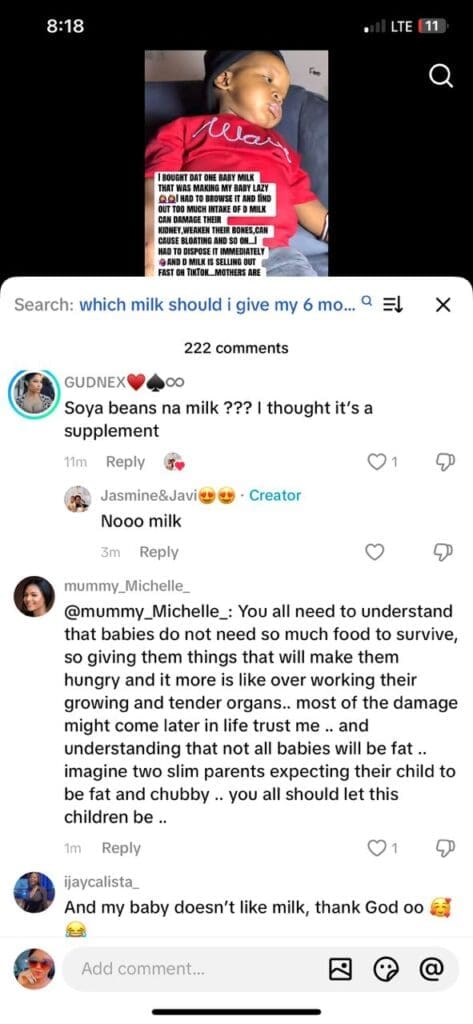
One user, identified as GUDNEX, questioned the product itself, writing, “Soya beans na milk??? I thought it is a supplement.”
The video’s creator responded: “Nooo milk.”
Another commenter, mummy_Michelle_, cautioned parents against overfeeding babies. “You all need to understand that babies do not need so much food to survive… giving them things that will make them hungry is more like overworking their growing organs.”
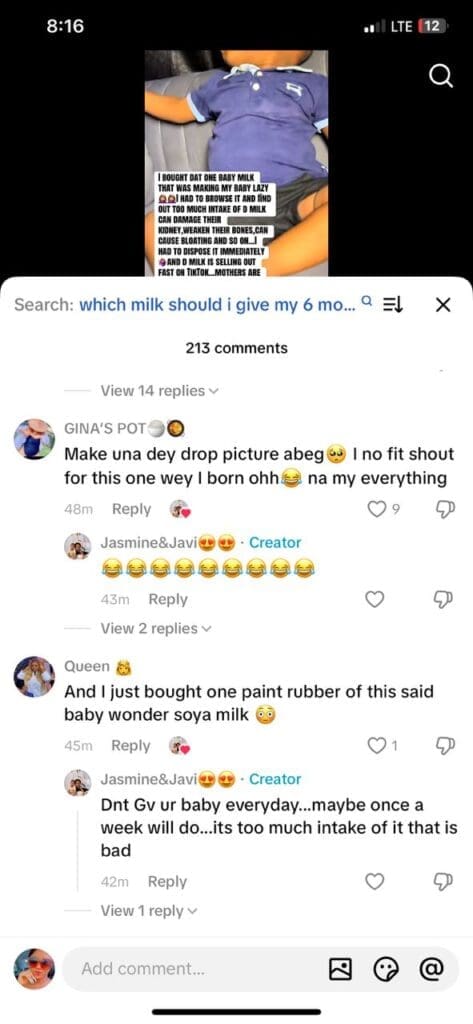
She added that not all babies are expected to be “fat and chubby,” urging parents to allow children to grow naturally.
Another TikTok user, ijaycalista, simply shared a personal experience, “And my baby doesn’t like milk, thank God oo.”
These reactions reveal how social media discussions on infant feeding often combine personal opinions, assumptions and unverified advice—sometimes leaving parents even more confused.
Health Experts Raise Alarm Over Social Media Advice
Dr. Kelechi said healthcare professionals are increasingly concerned about parents turning to social media platforms like TikTok for medical guidance instead of consulting qualified doctors.
“Social media makes information widely accessible, but unfortunately not all of it is accurate or evidence-based,” she warned.
“When parents rely more on social media advice, they may unintentionally make decisions that could affect their child’s health.”
What Parents Should Do Instead
Medical professionals recommend exclusive breastfeeding for the first six months of life, which remains the safest and most complete form of infant nutrition.
If breastfeeding is not possible, parents should use properly formulated infant formula recommended by a paediatrician.
Experts also advise parents to avoid giving babies regular cow’s milk, soy milk, or plant-based milks during the first year, unless directed by a healthcare professional.
Complementary foods can then be introduced gradually after six months while continuing breast milk or infant formula.
A Growing Public Health Concern
As parenting content continues to dominate social media feeds, experts warn that viral misinformation about infant feeding could pose serious health risks if left unchecked.
For many parents navigating early childcare decisions, the challenge now lies in separating online myths from medically verified guidance.
Dr. Kelechi offered a final word of caution: “Parents should always seek guidance from trained doctors when they are unsure rather than relying on online information.”
In the age of viral videos and instant advice, health professionals say ensuring accurate information reaches parents may be just as important as the food babies consume.

Esther Ososanya is an investigative journalist with Pinnacle Daily, reporting across health, business, environment, metro, Fct and crime. Known for her bold, empathetic storytelling, she uncovers hidden truths, challenges broken systems, and gives voice to overlooked Nigerians. Her work drives national conversations and demands accountability one powerful story at a time.