
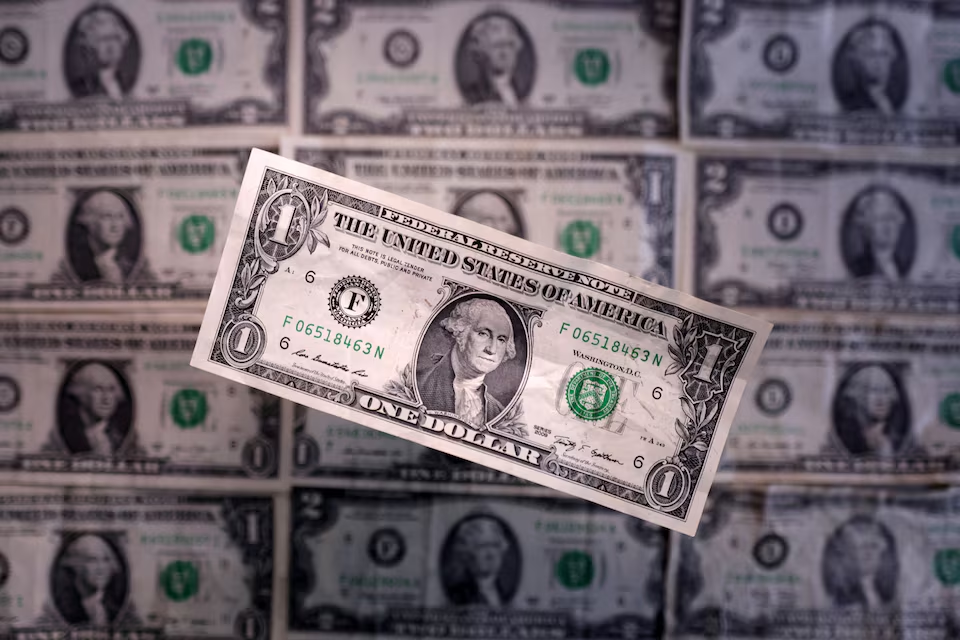
The U.S. dollar steadied against major global currencies on Tuesday after Donald Trump stated that the ongoing conflict involving Iran could end “very soon,” easing some fears in global financial markets.
The greenback traded at 157.73 yen and $1.1632 per euro in Asian markets. The currency remained mostly firm despite retreating slightly from the highs recorded on Monday.
Markets had been rattled earlier as investors worried that a prolonged war involving Iran could trigger a global energy shock and disrupt financial markets.
However, Iran’s Revolutionary Guards quickly dismissed Trump’s remarks, describing them as “nonsense.” Their reaction underscored the uncertainty surrounding the conflict and raised doubts about the possibility of a rapid de-escalation.
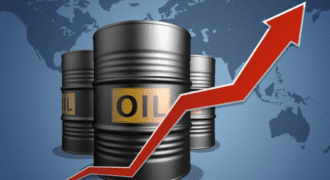
Global oil prices declined slightly on Tuesday but remained far above levels recorded before the conflict intensified.
Brent crude traded at around $93 per barrel, retreating from Monday’s surge when prices briefly climbed close to $120 per barrel.
The spike followed fears that the fighting between the United States, Israel and Iran could severely disrupt global energy supplies.
A major concern for markets is the disruption of oil and gas shipments passing through the Strait of Hormuz, a narrow waterway that handles roughly one-fifth of the world’s oil exports.
The conflict has already slowed shipments through the strategic corridor, pushing energy prices higher and increasing anxiety across global markets.
Investors Turn to Safe-Haven Assets
The uncertainty surrounding the conflict has pushed investors toward safer assets. As a result, the U.S. dollar has become the preferred shelter for traders.
At the same time, risk-sensitive currencies weakened. The Australian dollar slipped 0.2 percent to $0.7063, while the New Zealand dollar dropped 0.4 percent to $0.5912.
Meanwhile, the British pound managed to recover from Monday’s decline. Sterling held steady at $1.3434 as markets stabilised slightly.
Market analysts warn that the recent calm in markets may be temporary, as geopolitical tensions remain high.
According to Rodrigo Catril, senior currency strategist at National Australia Bank, investors should prepare for further volatility.
He noted that the conflict could still trigger sudden bouts of risk aversion if new developments emerge.
Catril also warned that ending the war may not be as simple as declaring a ceasefire, adding that it remains unclear whether the Iranian government would be willing to de-escalate quickly.
Global Economic Concerns Grow
Rising oil prices have also raised concerns about global economic growth.
Higher energy costs act like a tax on businesses and consumers. Companies face rising production and transport costs, while households must spend more on fuel and electricity.
These pressures could slow economic activity worldwide.
Economists say the surge in oil prices could also complicate monetary policy decisions for central banks.
Normally, weaker economic growth encourages central banks to cut interest rates. However, higher oil prices can fuel inflation, forcing policymakers to delay rate cuts.
A recent analysis by Deutsche Bank highlighted the risk that markets could face deeper turmoil if several conditions occur at the same time.
These include persistently high oil prices, a policy shift by central banks, and clear signs of a global economic slowdown.
READ ALSO:
- Dollar Wobbles as Fed Decision Nears, Yen Holds Firm on Intervention Fears
- Nigeria’s Dollar Reserves hit $50.1bn, Highest in 13 Years
- Dollar General Boosts Annual Profit Forecast as Bargain Hunting Fuels Strong Sales
- Naira Slips as Year-End Dollar Demand Rises
Despite the risks, analysts say financial markets have not yet reached crisis levels.
Henry Allen said investors are closer to those danger thresholds than they were a week ago, but the situation has not fully deteriorated.
He noted that this explains why stock markets have not yet entered the kind of severe bear-market decline seen after Russia’s invasion of Ukraine, which triggered a major global energy shock.
For now, investors continue to watch developments in the Middle East closely, as any escalation could quickly send shockwaves through global financial markets again.

Esther Ososanya is an investigative journalist with Pinnacle Daily, reporting across health, business, environment, metro, Fct and crime. Known for her bold, empathetic storytelling, she uncovers hidden truths, challenges broken systems, and gives voice to overlooked Nigerians. Her work drives national conversations and demands accountability one powerful story at a time.