
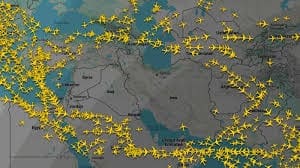
Governments across Europe, Asia, and the Gulf have stepped up evacuation efforts as the ongoing U.S.-Israeli conflict with Iran continues to disrupt air travel across the Middle East.
Dozens of repatriation flights were scheduled to depart the region on Wednesday to evacuate thousands of stranded citizens. The shutdown of key airspace corridors has left major aviation hubs largely idle for five consecutive days, marking the most severe travel disruption since the COVID-19 pandemic.
Dubai’s airports, including the world’s busiest international hub, suspended most commercial operations, forcing airlines and governments to activate emergency travel plans.
Europe Begins Evacuations
France and Britain launched evacuation flights for their nationals. French Finance Minister Roland Lescure said authorities were proceeding cautiously. Paris plans several flights for its citizens, with about 400,000 French nationals currently in the wider region.
The United Kingdom arranged a chartered flight from Oman, prioritising vulnerable citizens, according to the British Foreign Office.
The United Arab Emirates also opened special travel corridors to allow some citizens to return home.
Airlines Suspend and Reroute Flights
Emirates suspended all routes to and from Dubai until March 7 and is operating a limited scheduled flights from Dubai International and Al Maktoum International airports.
Qantas introduced extra services to help British travellers stranded in Australia return home. The airline now routes flights through Singapore instead of traditional Middle East hubs.
Airlines have begun carrying extra fuel and making additional refuelling stops as they avoid restricted airspace. Executives say crews and aircraft remain scattered worldwide, complicating efforts to restore normal schedules once restrictions ease.
READ ALSO:
- At Least 100 Missing After Iranian Military Ship Sinks Off Sri Lanka Coast
- Thousands of Flights Remain Cancelled, Billions of Dollars Lost as U.S.-Israel War Against Iran Continues
- Trump Vows to Continue Attacks on Iran, Says More US Troops ‘Likely’ to Die
- Nigeria to Roll Out Twice-yearly HIV Prevention Injection Lenacapavir
Airline stocks stabilised on Wednesday after steep losses earlier in the week. Lufthansa shares rose about 3 percent, while Qantas closed 2.7 percent lower after losing more than 10 percent this week. BA-owner International Airlines Group gained 2 percent following heavy declines recently.
In the United States, shares of United Airlines, American Airlines, and Delta Air Lines edged higher in pre-market trading.
Meanwhile, Brent Crude prices have surged by about 14 percent since the strikes, raising concerns about higher jet fuel costs. Analysts say many airlines have hedged roughly half of their fuel needs, which could cushion the impact. However, experts warn that prolonged rerouting and rising oil prices may eventually push up ticket fares.
Beyond passenger travel, the disruption also affects global cargo operations, as the Gulf serves as a critical transit hub for international freight.

Esther Ososanya is an investigative journalist with Pinnacle Daily, reporting across health, business, environment, metro, Fct and crime. Known for her bold, empathetic storytelling, she uncovers hidden truths, challenges broken systems, and gives voice to overlooked Nigerians. Her work drives national conversations and demands accountability one powerful story at a time.