

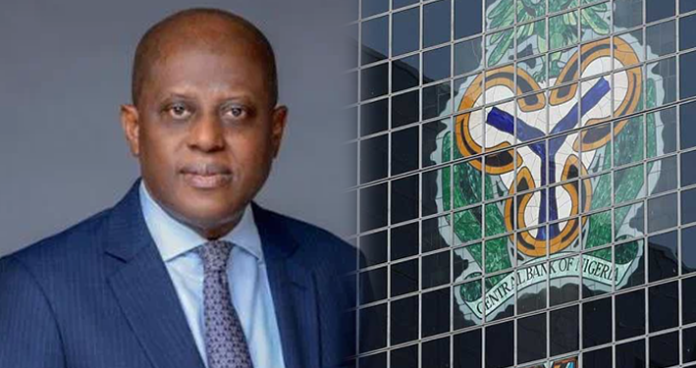
The Central Bank of Nigeria (CBN) has outlined price stability and strengthening external reserves as the core pillars of its medium-term growth strategy, reinforcing its transition to an inflation-targeting framework and its commitment to defending the naira.
Speaking at the National Economic Council Conference at the Presidential Villa in Abuja, CBN Governor Olayemi Cardoso said the apex bank remains resolute in preserving currency stability.
“We will do whatever it takes to ensure that we safeguard the value of the naira,” Cardoso said.
He noted that the ongoing banking sector recapitalisation would position lenders to support the Federal Government’s ambition of building a $1 trillion economy, particularly by expanding long-term financing capacity.
However, the governor cautioned that macroeconomic risks persist. He identified excess liquidity in the financial system as a key concern requiring careful management.
“There’s a lot of liquidity that still remains within the system, and we’ve got to manage this very, very carefully,” he said.
“So, we are not out of the woods yet,” Cardoso warned.
He further expressed concern over liquidity injections typically associated with election cycles, noting that increased fiscal spending could undermine reform gains if not properly managed.
According to him, such inflows must be closely monitored to avoid destabilising the economy and reversing recent stability gains. He also flagged global trade tensions as an emerging external risk.
READ ALSO:
- NRS Rakes in ₦28.3trn Revenue in 2025, Eyes ₦40.7trn for 2026
- 14 Years After: 40m Nigerian Adults Remain Outside CBN’s Financial Inclusion
- NBS Survey Reveals How Unpaid Care Work is Holding Back Nigeria’s Growth
- Russia Denies Recruiting Nigerians for Ukraine War
Cardoso stressed that while monetary policy remains essential, it cannot single-handedly guarantee sustained low inflation without complementary structural reforms.
“No central bank has sustainably delivered low and stable inflation alone, where structural drivers such as food supply shocks, high energy and logistics costs and infrastructure deficits are large contributors to price pressures. Liquidity management has boundaries.
“Transmission is imperfect where credit markets are seen, and informality is high. That is why sustained gains require fiscal discipline, supply-side reforms and institutional coordination,” the CBN governor said.
He emphasised that monetary stability depends on fiscal discipline, fiscal sustainability and policy coherence.
He said, “CBN will sustain a disciplined interest rate. Fiscal authorities will support fiscal policies that promote robust revenue mobilisation, efficiency in public expenditure, debt sustainability and modernisation of public financial management.”
The governor highlighted the critical role of sub-national governments in macroeconomic management, noting that states control roughly half of the disbursements from the Federation Account Allocation Committee (FAAC).
He said sub-national fiscal decisions significantly influence inflation dynamics, exchange rate stability, liquidity management and poverty outcomes.
“It’s incredibly critical, especially considering the fact that the states now have a lot more revenue at their disposal,” Cardoso said.
He noted that as a strategic partnership, sub-national shares directly shape macroeconomic outcomes, such as deficits, public investment, inflation, and drive economic growth.
“Sub-state governments can align with the economic stability agenda by prioritising infrastructure and public expenditure that reduces structural drivers, and relations enable human capacity development and support economic growth and sustainable sub-national debt management, and third, partnering with the financial system to promote financial inclusion, enhance access to credit and stimulate economic activity,” Cardoso said.
CBN’s Priorities for 2026–2030
According to Cardoso, CBN’s five-year priorities include strengthening monetary policy effectiveness through an orthodox policy stance, safeguarding financial stability, deepening domestic financial markets and expanding financial inclusion.
“In other words, we will continue doing the things we have done, safeguarding financial stability and deepening domestic financial markets, financial inclusion as a growth strategy and enhancing external sector stability and international competitiveness.
He said the apex bank is targeting single-digit inflation by 2030, supported by stronger foreign exchange reserves driven by non-oil exports, foreign direct investment and remittance inflows.
“Remittances have made a big difference to how we have grown ourselves. The diasporas come from every single state that is represented here, all of them living outside and looking to remit money back to Nigeria.
“We’ve engaged with them, we have assured that it is now easier for them to remit money back to Nigeria, and honestly, the support of all the excellencies here will be very, very helpful in the years ahead,” Cardoso added.

Alex is a business journalist cum data enthusiast with the Pinnacle Daily. He can be reached via ealex@thepinnacleng.com, @ehime_alex on X