
The United States’ action of arresting Venezuelan President Nicolás Maduro and his wife, Cilia Flores, on January 3, 2026, has unsettled governments far beyond Latin America and reignited debate over sovereignty, international law, and the future of resource-rich states such as Nigeria. The operation, code-named 'Operation Absolute Resolve', has been described by international law experts …

The United States’ action of arresting Venezuelan President Nicolás Maduro and his wife, Cilia Flores, on January 3, 2026, has unsettled governments far beyond Latin America and reignited debate over sovereignty, international law, and the future of resource-rich states such as Nigeria.
The operation, code-named ‘Operation Absolute Resolve’, has been described by international law experts and global leaders as a defining and controversial moment in U.S. foreign policy, raising concerns that the forceful removal of a sitting head of state could establish a dangerous precedent.
A Contested Operation with Global Consequences
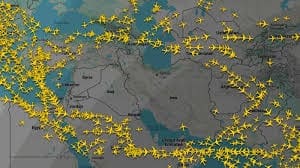
Maduro was taken into U.S. custody following coordinated air and ground strikes across northern Venezuela, including Caracas. Reports indicate that as many as 150 aircraft were deployed during the operation, with unconfirmed figures suggesting at least 40 fatalities.
The Trump administration has defended the action as a law-enforcement operation rather than an act of war, stating that Maduro and his wife were fugitives facing serious criminal charges in the United States. Critics, however, argue that the scale and execution of the operation amounted to a military invasion of a sovereign nation.
Maduro is currently being held at the Metropolitan Detention Center in Brooklyn, New York, where he faces a superseding indictment unsealed on January 3, 2026, charging him with narco-terrorism, conspiracy to import cocaine into the United States, and weapons-related offences. Both Maduro and Flores pleaded not guilty on January 5, insisting that he remains Venezuela’s legitimate president and describing himself as a “prisoner of war”.
Despite his detention, the Venezuelan government remains largely intact, with Vice President Delcy Rodríguez serving as acting president. However, President Donald Trump’s public comments suggesting that the United States would “run” Venezuela and oversee its oil industry until a political transition have deepened international tension.
Historical echoes: Noriega and the Ker-Frisbie doctrine
The seizure of Maduro has drawn inevitable comparisons with the 1989 U.S. invasion of Panama, when American forces captured military ruler Manuel Noriega and transported him to the United States to face drug-trafficking charges.
In both cases, Washington relied on the Ker-Frisbie Doctrine, a controversial U.S. legal principle that allows American courts to try defendants regardless of how they were brought into custody, even through abduction or force.
While U.S. interventions in Central America and the Caribbean have a long history, experts note that the direct military removal of a sitting leader in South America represents a significant escalation.
Legal concerns and international backlash
The operation has drawn sharp criticism from international legal scholars, who argue that it erodes the principle of sovereign immunity traditionally enjoyed by sitting heads of state.
United Nations officials and legal experts have warned that the action undermines the UN Charter, particularly Article 2(4), which prohibits the use of force against the territorial integrity or political independence of another state.
“This was a use of force,” said Marko Milanovic, Director of Global Law at the University of Reading, during an interview with DW. “If you send 150 aircraft into another state, bomb its defences, abduct its president, and cause civilian deaths, that clearly falls within the meaning of ‘prohibited force.”
China has also condemned the operation, describing it as a “hegemonic act” and a clear violation of international law.
Critics further point out that the operation lacked congressional approval, a requirement under U.S. law for military action abroad.
RELATED STORIES:
- After Venezuela, Nigeria Could Be Next – Oye
- South Africa Dismisses Trump’s ‘False Genocide’ Claims Ahead of G20 Summit
- Genocide Claim: CAN Accuses FG of Twisting Facts, Insists Christians Are Targeted
- FG’s Failures Fuel Insecurity, Spark US Genocide Watch — PDP Chieftain
- U.S. Congress Flags Alleged Christian Genocide in Nigeria
While Secretary of State Marco Rubio framed the raid as an arrest operation supported by the military, constitutional law expert Milanovic stressed that President Trump’s subsequent statements about controlling Venezuela’s oil sector undermined that justification.
Jeremy Paul, an expert on constitutional law at Northeastern University in the US, told DW that Rubio’s argument was “plausible”, but subsequent statements by the president about the US “running” Venezuela and its oil fields “completely undermined” that rationale.
“Everything that President Trump said about the oil fields, about running the country, about working with various Venezuelan officials … All of that completely undermines the rationale that Secretary of State Rubio put forward. It’s totally inconsistent.”
Paul, who noted the illegitimacy of the former Venezuelan president, however, expressed concern about the process of his capture.
A long road to regime change
The removal of Maduro followed years of escalating pressure. During Trump’s first term, Maduro was labelled a “narco-terrorist”, with allegations that his government facilitated international drug trafficking, claims that critics say were never substantiated with clear evidence.
Relations briefly thawed early in Trump’s second term, particularly over migration cooperation, before deteriorating rapidly.
U.S. naval deployments in the Caribbean and heightened rhetoric over fentanyl, which Trump labelled a “weapon of mass destruction”, signalled a renewed confrontation.
Some analysts argue that the buildup was less about narcotics and more about control over Venezuela’s vast oil reserves, a view reinforced by Trump’s post-arrest remarks.
Why Nigeria is watching closely
The events in Venezuela have sparked anxiety in Nigeria, another oil-producing nation with a history of external scrutiny and internal challenges.
Speaking to Pinnacle Daily, Nigerian lawyer Abiola Adegboyega Kolawole said the capture of Maduro should not be seen as an isolated incident.
“With the benefit of hindsight, it is safe to say that this is not a new precedent but another chapter in a long and familiar pattern of American foreign policy interventions,” Kolawole said. “It does not matter who occupies the White House; the strategic impulses remain the same.”
He warned that Nigeria appears to be moving along a recognisable trajectory historically associated with U.S. intervention, describing a four-stage pattern: media demonisation, economic pressure, internal destabilisation, and eventual forced regime change.
“I do not take pleasure in sounding alarmist, but Nigeria appears to be at Stage Three (internal destabilisation) of this familiar foreign-policy sequence. The strategy bears the hallmarks of long-standing intelligence doctrine. To understand this position, it is necessary to examine how Nigeria has gradually been drawn into this web,” he said.
Stages of Pressure
Kolawole noted that Nigeria entered what he described as “Stage One” as far back as 2021, when prominent Western commentators publicly labelled the country a “failed state”. This narrative, he said, was reinforced in late 2025 when Trump reportedly described Nigeria as a “disgraced country”.
“Once a country is persistently framed as dysfunctional or dangerous, it becomes easier to justify hostile actions against it,” he explained.
On “Stage Two”, Kolawole pointed to Nigeria’s designation as a “Country of Particular Concern” on religious freedom grounds and repeated threats of aid cuts and sanctions.
Stage Three, he warned, involves the exploitation of internal divisions. “The narrative of Christian persecution oversimplifies Nigeria’s complex security challenges and risks inflaming religious and ethnic tensions,” he said.
Nigeria, he added, has so far managed to contain these pressures, but the long-term sustainability of that containment remains uncertain.
Lessons from History
Kolawole cited multiple historical examples, including Iran in 1953, Guatemala in 1954, Panama in 1989, Iraq in 2003, and Libya in 2011, where resource interests, particularly oil, played a central role in regime change.
“When these examples are mapped against Nigeria’s current position, a troubling question arises,” he said. “If oil, ideology, and regional influence continue to drive U.S. policy, does Nigeria fall within that strategic calculus?”
He cautioned that while countries like Cuba, Iran, Venezuela, and North Korea have resisted U.S. pressure through strong internal cohesion and alternative alliances, Nigeria lacks the same level of ideological unity.
The path forward
According to Kolawole, Nigeria’s strongest defence lies not in foreign alliances but in internal cohesion, credible governance, and institutional strength.
“The government must make Nigeria boring to demonise, hard to sanction, difficult to destabilise, and impossible to remove without global backlash,” he said.
This, he argued, requires transparency, diversified diplomatic relationships, reduced economic vulnerability, and a national identity rooted in shared citizenship rather than division.
As the global fallout from Maduro’s arrest continues, Nigeria and other resource-rich nations are watching closely, aware that what unfolded in Venezuela may not remain confined there.

Rafiyat Sadiq is a political, justice, and human rights reporter with Pinnacle Daily, known for fearless reporting and impactful storytelling. At Pinnacle Daily, she brings clarity and depth to issues shaping governance, democracy, and the protection of citizens’ rights.