
As Nigeria ushers in 2026, the nation operates under a landmark fiscal framework, the 2025 Tax Reform Laws. Designed to modernize the tax system, broaden compliance, and strengthen national revenue, these reforms have generated both optimism and anxiety.
A wave of misinformation circulating online has raised fears that the new system could allow authorities to freeze or automatically debit personal bank accounts. In response, the government has moved to reassure Nigerians of the security of their funds.
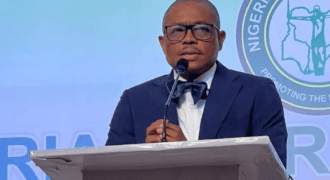
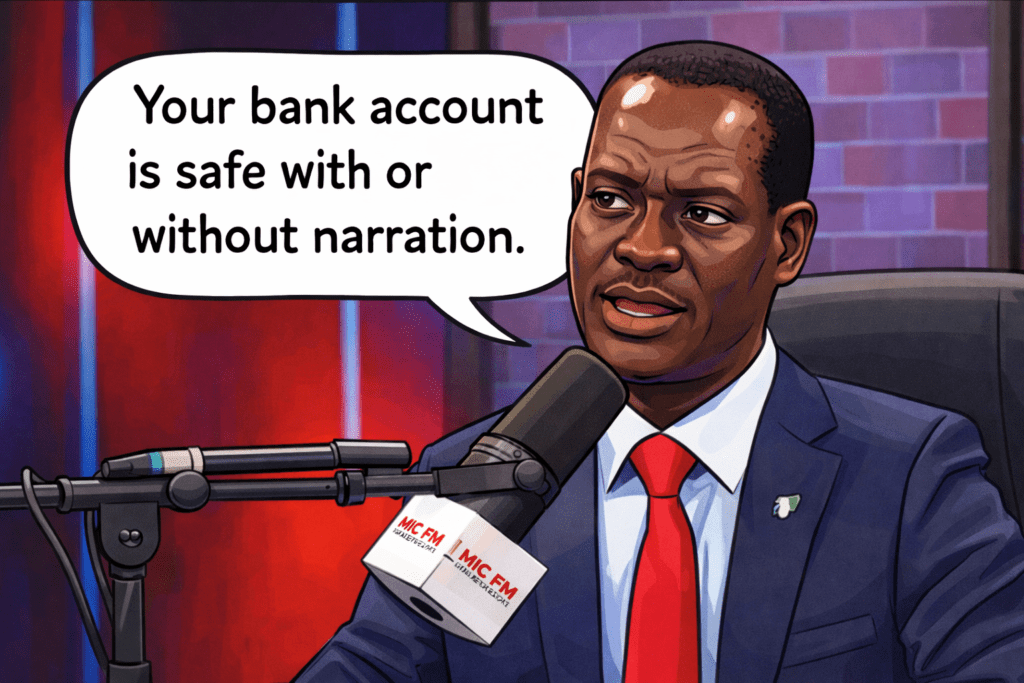
At the forefront of this reassurance campaign is Taiwo Oyedele, Chairman of the Presidential Fiscal Policy and Tax Reforms Committee. On his official X account, Oyedele wrote, “Your bank account is safe with or without narration.”
He reiterated this message in televised remarks, clarifying that neither the Federal Inland Revenue Service (FIRS), the Central Bank of Nigeria (CBN), nor any other government agency has the power to automatically debit an individual’s account under the new tax laws, irrespective of the transaction amount or description.
Humour, Fear and Financial Folklore
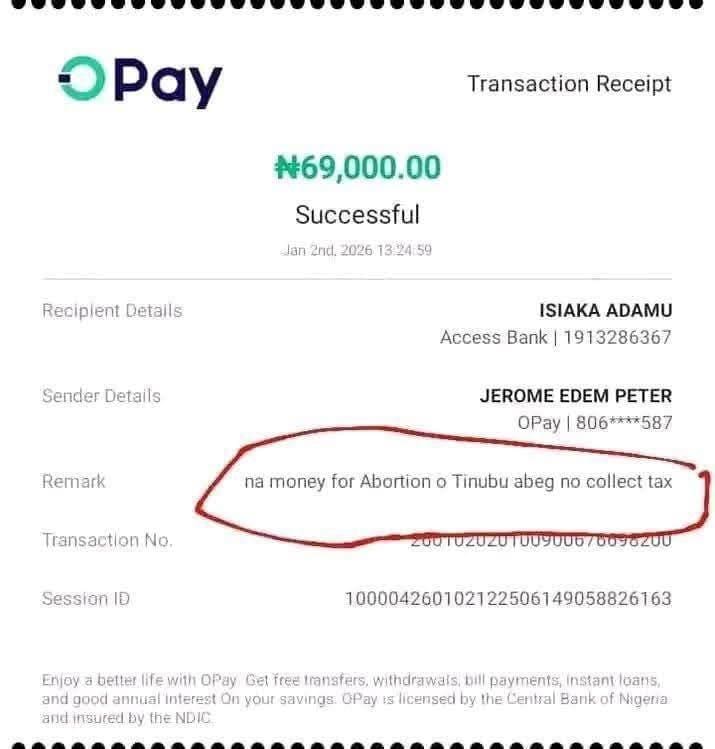
Beyond official explanations, Nigerians have responded to the tax-law rumours with their signature mix of humour and sarcasm. Screenshots of OPay transaction receipts circulating on social media show users deliberately crafting exaggerated and comical payment narrations, seemingly to confuse any imagined tax surveillance system. In one widely shared receipt, a ₦69,000 transfer carries a tongue-in-cheek narration referencing abortion money and a plea that no tax be collected, while another modest ₦1,500 transfer is carefully explained as money used to buy plantain from the woman. The trend, while amusing, reflects a deeper public anxiety fueled by misinformation, the fear that transaction descriptions could somehow attract scrutiny or trigger tax deductions. Analysts say the viral narrations underline how unclear communication around fiscal reforms often pushes citizens toward satire, turning everyday banking into a stage for protest, parody, and self-defence through humour.




READ ALSO: Tax Reform to Boost, Not Hurt, Airlines — Oyedele
Social media-driven rumours suggested that transaction narrations could trigger automatic deductions. Oyedele called these claims “false, misleading, and dangerous”, assuring citizens that the new system operates on self-declaration and targeted compliance, not intrusive monitoring.
He emphasized that whether a transaction is ₦1,000 or ₦1 billion, personal accounts remain secure, and the government cannot seize funds arbitrarily. By addressing these concerns early, the administration hopes to strengthen public trust and encourage compliance.
Objectives of the 2025 Tax Reforms
Effective January 1, 2026, the 2025 Tax Laws represent one of the most comprehensive fiscal overhauls in decades. The reforms aim to:
- Unify fragmented tax statutes into a coherent legal framework
- Broaden the revenue base, including new income sources
- Encourage voluntary compliance through simplified procedures
- Modernize tax administration with digital tools and transparency
Despite the reforms’ potential, misinformation continues to generate intense public discussion, particularly on social media. Experts, including Oyedele, have played a pivotal role in clarifying misconceptions and guiding the public.
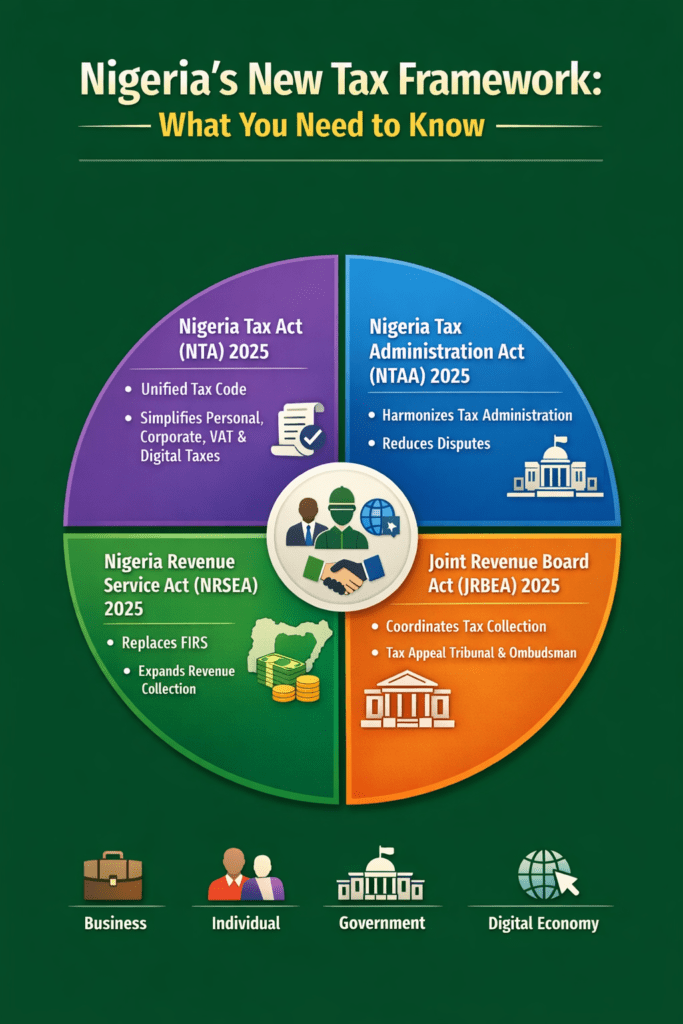
The Four Pillars of Nigeria’s Tax System
The 2025 reforms center on four key pillars, covering personal, corporate, value-added, and digital economy taxation.
1. Personal Income Tax (PIT)
The progressive PIT framework remains, with rates ranging from 0% to 25%. Key highlights include:
- Full exemption for individuals earning ₦800,000 or less annually
- Clearly defined tax bands for higher earners
- 20% rent deduction, capped at ₦500,000, to reduce financial pressure on employees and low-income taxpayers
These measures protect the majority of Nigerians from additional tax burdens while maintaining equity across income groups.
2. Company Income Tax (CIT)
Corporate tax remains a major contributor to national revenue. The reforms introduce:
- Minimum effective tax rate of 15% for companies with turnover above ₦50 billion, aligning Nigeria with global standards
- Capital Gains Tax increased from 10% to 30%, discouraging profit-shifting and encouraging domestic reinvestment
This framework fosters a predictable and transparent environment, thereby boosting investor confidence and encouraging economic growth.
3. Value-Added Tax (VAT)
The VAT rate stays at 7.5%, with important refinements:
- Zero-rating of essential goods and services, including basic food items, medicines, educational materials, electricity, and exports
- Mandatory VAT registration for non-resident digital suppliers, extending the tax net to the growing digital economy
These changes ensure fair contributions from both domestic and foreign actors while safeguarding household budgets.
4. Digital Economy and Modern Taxes
For the first time, Nigeria explicitly addresses the digital economy:
- Cryptocurrencies, NFTs, and online earnings are now taxable
- Digital transactions exceeding set thresholds are included
- A 4% development levy consolidates multiple legacy levies into a single, efficient mechanism
This marks a major step toward a modern, future-ready tax system, capturing revenue from previously unregulated sources.
READ ALSO: Tax Laws to Take Effect January 1, 2026, Amid Concerns Over Amendments
At the NES#31 Summit in October 2025, Oyedele emphasized that “Most Nigerians will not see an increase in tax burdens, particularly low-income earners.”
He highlighted that 97–98% of citizens remain shielded from additional liabilities, reinforcing the reform’s fairness.
Revenue specialists like Sam Abu, Regional Senior Partner at PwC West Market Area, noted at tax summit that the reforms provide structured penalties, clear compliance mechanisms, and stronger dispute resolution frameworks, including the Tax Appeal Tribunal and Tax Ombudsman. These measures, he says, are key to building taxpayer trust and ensuring transparency.
- Structured penalties for non-compliance
- Clear compliance mechanisms
- Stronger dispute resolution frameworks, including the Tax Appeal Tribunal and Tax Ombudsman
These measures aim to build trust, enhance transparency, and ensure equitable enforcement.
Common Misconceptions vs Facts
| Misconception | Fact / Clarification |
|---|---|
| Bank accounts can be frozen or debited based on transaction narration | False. Agencies cannot debit accounts automatically; all transactions are protected |
| Ordinary salaries face new, arbitrary taxes | False. Low-income earners remain largely unaffected; obligations are clarified |
| Digital earnings are unfairly targeted | False. Inclusion aligns Nigeria with global tax norms |
| High-value transactions trigger automatic audits or deductions | False. Compliance is self-declared and targeted |
| FIRS or other agencies have unlimited power | False. Enforcement follows structured rules and dispute mechanisms |
| Reforms increase PIT for low-income earners | False. Exemptions and deductions protect them |
| VAT makes essentials like food and medicine more expensive | False. Essentials are zero-rated; only non-essential goods are fully taxed |
| The law allows the arbitrary seizure of funds | False. Funds remain safe; compliance is based on self-declaration and legal enforcement |
Economic and Social Impact
The government projects that the reforms will:
- Boost revenue collection without overburdening ordinary citizens
- Reduce dependence on borrowing, promoting fiscal sustainability
- Widen Nigeria’s tax-to-GDP ratio
- Fund critical sectors, including healthcare, education, infrastructure, and social services
By creating a streamlined, equitable, and digitally-enabled system, the reforms are expected to attract investment, enhance governance, and support long-term economic growth.
READ ALSO: Tax Reform Acts Casts Doubt on Nigeria’s Integrity, NBA Warns
With the 2025 Tax Laws fully operational, Nigeria stands at a critical fiscal inflection point. These reforms aim to:
- Modernize tax administration
- Enhance fairness and compliance
- Support essential public services
- Integrate global best practices
Their success depends on continued public education, transparent enforcement, and active engagement with citizens.
Amid all these changes, Oyedele’s reassurance remains central: “Your bank account is safe with or without narration.”

Esther Ososanya is an investigative journalist with Pinnacle Daily, reporting across health, business, environment, metro, Fct and crime. Known for her bold, empathetic storytelling, she uncovers hidden truths, challenges broken systems, and gives voice to overlooked Nigerians. Her work drives national conversations and demands accountability one powerful story at a time.