
Venezuelan bonds are positioned for significant gains following the capture of Nicolás Maduro by the United States, sparking fresh hopes for a potential regime change.
This comes as investors, who have long bet on a shift in Venezuela’s leadership, are seeing returns on bonds valued at $60 billion.
Recent months have seen a sharp rise in the prices of defaulted Venezuelan bonds, with notes from the Venezuelan government and state-run oil company PDVSA more than doubling in value, trading between 23 and 33 cents on the dollar.
This surge in prices coincided with the intensified efforts by U.S. President Donald Trump to ramp up pressure on Maduro.
Looking ahead, investors are optimistic that a debt restructuring, which is crucial for attracting new funding, could drive bond prices even higher, potentially reaching 50-60 cents on the dollar.
A Changing Outlook for Venezuela’s Debt
According to Alberto Rojas, a senior strategist at UBS, Venezuela continues to face serious liquidity issues, and any restructuring process would be complex and lengthy.
However, Rojas notes that the market is currently focused more on the political “optionalities” arising from the current situation rather than long-term fundamentals, which until recently seemed remote.
READ ALSO: Oil Prices Rise as Trump Orders Venezuela Tanker Blockade
The situation marks a stark turnaround for Venezuelan bonds, which traded at mere pennies on the dollar just two years ago.
Robert Koenigsberger, founder and CIO at Gramercy Funds Management, reflected on the achievement of the initial goal—the removal of Maduro—while emphasising that the path forward will depend largely on the type of regime change that takes place and the role the U.S. will play in Venezuela’s transition.
The U.S. Involvement and the Future of Venezuelan Debt
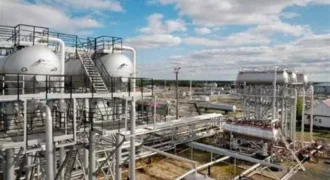
The U.S. is expected to play a key role in managing Venezuela until a new leadership can be established. Trump indicated that U.S. officials would oversee Venezuela’s recovery, focusing on repairing the country’s oil infrastructure. With U.S. military strikes targeting alleged drug-trafficking boats in the Caribbean, the probability of Maduro’s downfall has grown, though some investors remained cautious about his ability to hold onto power.
Ray Zucaro, CIO at RVX Asset Management LLC, is one of the investors betting on Venezuela’s recovery. He believes that if the U.S. takes control and works with the current administration to maximise oil output, Venezuela could experience a windfall, including substantial debt relief. Zucaro points out that after years of capital flight, there is a significant opportunity for fresh capital to flow into the country.
The Role of Vice President Delcy Rodríguez
A critical factor for investors is the role of Venezuela’s Vice President, Delcy Rodríguez. While U.S. Secretary of State Marco Rubio has been in contact with Rodríguez, Trump’s announcement of her expected cooperation raised hopes of a smooth transition.
However, just hours later, Rodríguez publicly called for Maduro’s return, describing U.S. actions as “barbaric”.
According to Risa Grais-Targow, an analyst at Eurasia Group, Rodríguez will be under immense pressure to cooperate with the U.S. to stabilise an interim government.
Yet, she will also have to maintain a certain domestic rhetoric for political reasons. Bondholders are closely watching for any signs of political stability and are eager for a government willing to work with the U.S.
A Complicated Debt Restructuring
Venezuela’s debt restructuring will not be an easy or quick process. The country must navigate a $154 billion web of defaulted bonds, loans, and legal judgements owed to creditors from Wall Street to Russia. Koenigsberger suggests that restructuring will likely only occur once a permanent government is established.
Although Trump has provided few details about how the U.S. will manage Venezuela’s affairs, analysts remain hopeful that if the new regime is aligned with U.S. interests, it could lead to serious support for Venezuela’s reconstruction. This would, in turn, create opportunities for debt restructuring discussions to move forward.
Rebuilding Venezuela’s Oil Industry and Global Economic Integration
Experts agree that with U.S. involvement, Venezuela could quickly rebuild its oil production capacity.
Francesco Marani, a debt trader at Auriga Global Investors, highlights that the potential for rapid recovery could hasten the country’s re-entry into the global economy after nearly a decade of economic collapse.
READ ALSO: Trump Administration Suspends U.S. Green Card Lottery
Since Venezuela began defaulting on its debt in 2017, U.S. sanctions have severely impacted the country’s ability to access international markets.
Trading volumes for Venezuelan bonds remain low and are dominated by hedge funds and distressed asset specialists.
However, the reversal of secondary trading sanctions in 2023, followed by JPMorgan’s re-inclusion of Venezuela’s bonds in key indexes, has made these bonds one of the most profitable trades in the developing world.
The rising prices of these bonds are seen as a sign of renewed optimism, with the possibility of significant recovery in the coming years. Venezuela’s economic crisis, which has led to the worst refugee crisis in the Western Hemisphere, may now be nearing an end, signalling a new chapter for the country and its investors.

Sunday Michael Ogwu is a Nigerian journalist and editor of Pinnacle Daily. He is known for his work in business and economic reporting. He has held editorial roles in prominent Nigerian media outlets, where he has focused on economic policy, financial markets, and developmental issues affecting Nigeria and Africa more broadly.