
Nigeria must move decisively from rhetoric to action if it hopes to tackle poverty, soaring debt, and weak economic growth.
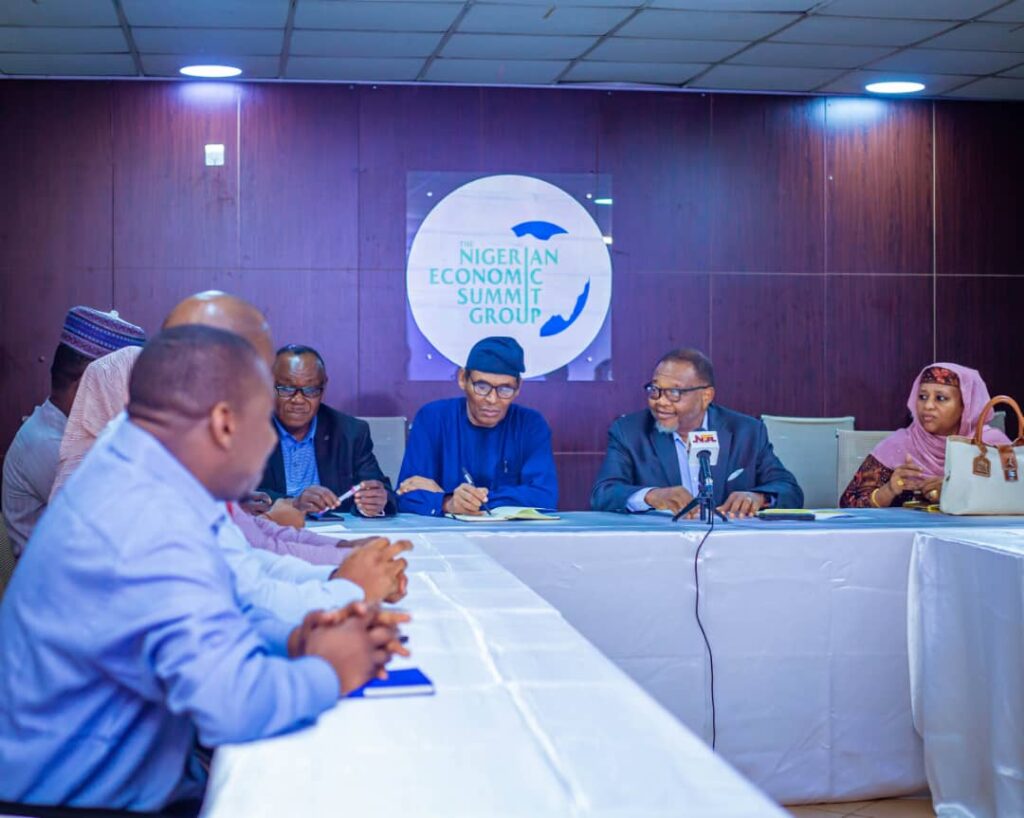
That was the stark warning issued by the Economic Advisory Council (EAC) of the Nigerian Economic Summit Group (NESG) during its third quarterly interactive session with journalists and stakeholders in Abuja.
At the high-level meeting, council members delivered a sobering assessment of the Nigerian economy, emphasizing that business-as-usual policies are no longer sustainable. They called for urgent, productivity-driven reforms across key sectors to halt economic stagnation and drive job creation.
READ ALSO: Nigeria’s Economy Grows, but Nigerians Get Poorer — Bongo Adi Warns
Council members highlighted agriculture, manufacturing, industrialization, and workforce development as sectors critical for sustainable growth. “We must prioritise productivity. Without it, poverty and unemployment will remain our reality,” said Professor Osita Ogbu, Co-Chair of the NESG Economic Advisory Council.
Dr. Mohammed Sagagi, economist and co-chair, reinforced the point: “The time for incremental measures is over. Bold, evidence-based reforms are non-negotiable if we are serious about economic recovery.”
The council’s message was clear, the economy cannot rely solely on rhetoric or stopgap measures. Strategic, well-planned interventions that boost output and efficiency are essential for long-term prosperity.
The NESG Economic Advisory Council also raised the alarm over Nigeria’s increasing debt burden. According to the council, rising interest payments are consuming resources that should be invested in critical sectors such as education, healthcare, and industrial development.
Jonathan Aremu, a council member, warned, “Every naira spent must deliver impact. That is the only way forward.” His colleague, Professor Ummu Ahmed Jalingo, added, “We need to align fiscal policy with tangible outcomes. Realistic budgeting, transparency, and zero-based budgeting must guide how public resources are deployed.”
The interactive session underscored NESG’s position at the forefront of economic reform advocacy in Nigeria. By engaging both media and policymakers, the council provides critical guidance on tackling systemic challenges that have long hindered growth.
Members noted that their recommendations are expected to shape discussions in government circles in the coming months. With growing pressure from citizens and international observers, the NESG hopes that its evidence-based policy guidance will catalyze action before economic vulnerabilities deepen.
READ ALSO:25 Countries With Lowest Salaries
Nigeria faces a precarious economic future, with unemployment, inflation, and debt converging to strain public resources. For the NESG Economic Advisory Council, the message is clear: without decisive action to boost productivity and ensure efficient fiscal management, economic recovery will remain elusive.
“The time to act is now. Nigeria’s survival depends on our ability to transform policy into measurable, impactful action,” Professor Ogbu concluded.

Esther Ososanya is an investigative journalist with Pinnacle Daily, reporting across health, business, environment, metro, Fct and crime. Known for her bold, empathetic storytelling, she uncovers hidden truths, challenges broken systems, and gives voice to overlooked Nigerians. Her work drives national conversations and demands accountability one powerful story at a time.