

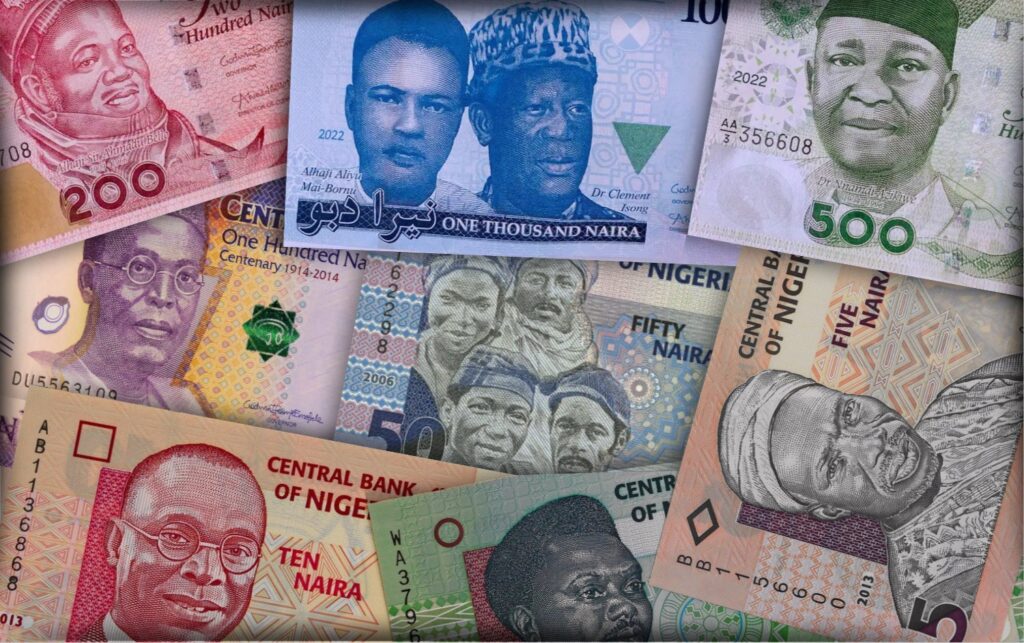
The Central Bank of Nigeria (CBN) has steadily grown the foreign Exchange reserve by $6.7 billion in 11 months, starting from $40 billion in January to the current amount.
The current, which is the highest in seven years, is just a few million dollars from the $47 billion recorded on the 3rd of August in 2018.
The current reserve translates to 10.3 months of import cover in goods and services.
How the reserve fared over the months
| Months | Gross (USD) Opening | Gross (USD) Closing |
| January | 40 | 39.7 |
| February | 39.7 | 38.4 |
| March | 38.4 | 38.3 |
| April | 38.3 | 37.9 |
| May | 37.9 | 38.4 |
| June | 38.4 | 37.2 |
| July | 37.2 | 39.3 |
| August | 39.3 | 41.3 |
| September | 41.3 | 42.3 |
| October | 42.3 | 43.1 |
| November | 43.1 | 46 |
The date from the CBN showed that the reserve struggled with accretion between January and July, falling from the $40 billion mark to $37 billion in July.
READ ALSO: 16 Banks Have Met CBN’s Recapitalisation – Cardoso
The decline in the first and second quarters of 2025 was due to seasonal factors and foreign debt interest payments.
However, the reserve rose to $39 billion in August and continued the upward trend to $42 billion in September, $43 billion in October and currently $46.7 billion and counting on the back of increased oil output and non-oil export growth.
What Caused the Rise
According to the CBN, the reserves milestone reflected renewed investor confidence, improved oil receipts, and stronger balance-of-payments inflows. The stronger reserve position is a key factor behind the stability of the naira. Today, the gap between the official and Bureau de Change windows had narrowed to below two cent.
The remarkable improvement in Nigeria’s economic indicators is now being recognised globally. All three top international ratings agencies have upgraded Nigeria’s economic outlook. S&P Global Ratings recently revised the country’s outlook from stable to positive.
The removal of Nigeria from the Financial Action Task Force Grey List has led to a further boost to international confidence because it demonstrated the country’s full alignment with global standards.
There is a steady flow of Foreign Direct Investment into Nigeria. The country attracted $5.6 billion in FDI in the first quarter of 2025, representing a 67 percent year-on-year increase.
Macro Impact to Watch
- The stronger reserve position improved the external buffer and import cover, which supports macroeconomic stability.
- Exchange rate stability and rising confidence may encourage more foreign portfolio inflows into Nigeria’s fixed income and money markets
- The improved external reserves and stable FX environment contributed to a more favourable context for the CBN’s monetary policy decisions in late 2025.
Risks and Considerations
- Reserves depend heavily on external inflows such as oil export proceeds and portfolio investments. A sharp drop in oil prices or reversal of portfolio flows could weaken reserves.
- Liquidity gains may be undermined if short‑term foreign‑exchange liabilities (swaps, forwards) rise without proportional inflows. Over-reliance on reserves without structural diversification may leave the economy vulnerable to external shocks, especially given global economic uncertainties.
What the CBN is Saying
CBN Governor, Mr Olayemi Cardoso, represented by the Deputy Governor, Economic Policy Directorate, Mr Muhammad Sani Abdullahi, at a colloquium marking the 20th anniversary of the Bank’s Monetary Policy Department (MPD), said, “The exchange rate has stabilised, with the naira continuing to strengthen, while the spread between the official and Bureau de Change rates is below two per cent. This stability has restored investor confidence and reduced uncertainty for households and firms.
READ ALSO: CBN Holds Benchmark Interest Rates at 27%
“This accretion reflects investor confidence in our policies, leading to improved oil receipts, a stronger balance of payments, and renewed foreign portfolio inflows.”
Cardoso linked the rising confidence to recent upgrades of Nigeria’s sovereign outlook by the three leading international ratings agencies, including S&P Global Ratings, which recently revised Nigeria’s outlook from stable to positive.
According to him, the upgrade “reflects the impact of sustained reforms that have placed our economy on a more resilient path.”
What the expert are saying
According to United Capital analysts, the steady rise in reserves underscores enhanced external liquidity and resilience against external shocks. They said the improved structure (with falling “blocked reserves”) enhances the ability of the country to meet trade obligations and support exchange‑rate stability.
The Centre for the Promotion of Private Enterprise (CPPE) Chief Executive, Muda Yusuf, said the rise in the external reserves is a sign of investor confidence and nascent fiscal discipline.
He said the figure is a positive signal to both local and foreign investors.

Sunday Michael Ogwu is a Nigerian journalist and editor of Pinnacle Daily. He is known for his work in business and economic reporting. He has held editorial roles in prominent Nigerian media outlets, where he has focused on economic policy, financial markets, and developmental issues affecting Nigeria and Africa more broadly.