
The Nigerian National Petroleum Company (NNPC) Limited has announced a fresh deadline of mid-2026 for selecting technical partners to manage the operations and maintenance of the country’s state-owned refineries after their ongoing rehabilitation is completed.
This move is a critical step in the long-delayed and costly effort to revive Nigeria’s moribund refineries and achieve energy self-sufficiency.
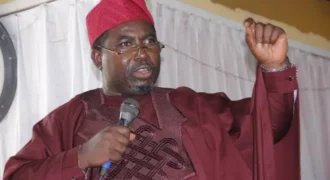
NNPCL Group Chief Executive Officer Bayo Ojulari, who made this known during a press briefing in Abuja on Monday, said the company is seeking to partner with a competent private entity with a track record of performance in refinery management.
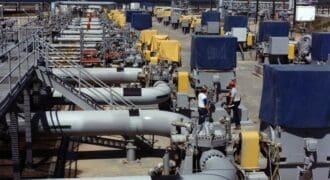
With a combined capacity of 445,000 barrels per day (bpd), the three state-owned refineries – Port Harcourt (old & new 210,000 bpd), Warri (125,000 bpd), and Kaduna (110,000 bpd) – have remained moribund for decades. This is after the Federal Government spent billions of dollars on turnaround maintenance of the facilities in the last two decades. Recent efforts to revive them have proved unsustainable, as the Port Harcourt and Warri refineries operated for a few months and packed up.
The Port Harcourt plant is undergoing rehabilitation that costs about $1.5 billion, while Warri is being rebuilt under a joint programme with Daewoo Engineering. Kaduna refinery requires extensive refurbishment to handle more complex crude.
“What we are looking at is some partnership with private entities that have existing refineries that they are running and operating. So, it’s not by mouth, right? So, they would have that track record,” Ojulari stated.
He emphasised that the engagement with technical partners will be on a commercial basis, as NNPCL is partnering as a limited liability company operating under the Companies and Allied Matters Act (CAMA), not as a government.
“Our intention is to partner with them as a business. Remember, we are not partnering as a government. We are partnering as a CAMA company. It’s very different. It’s a commercial arrangement where they bring in technical capacity, technical resources, and all of that, and we complement with the capability that we have, and we cooperate with them. But they lead the operation, because we want people who are in the game,” he explained.
Speaking on the reason for the poor state of the refining sector, the NNPCL GCEO lamented that years of underinvestment, poor governance, and declining technical capacity had rendered Nigeria unable to manage its refineries in accordance with global standards.
He revealed that the company is also considering transforming its refineries into hybrid plants in order to meet global standards and increase competitiveness in international markets. According to him, firm completion dates will be published once these redesign and hybridisation plans are confirmed, with a more detailed timeline projected by mid-2026.
He pointed out that going ahead with the original rehabilitation plan for the refineries will not be the best option, as, according to him, the products will be “two steps below current international specifications.”
READ ALSO: NNPC Limited Declares ₦5.4 Trillion Profit After Tax
The NNPCL boss stressed that the company has transformed from a state corporation to a limited liability company under the Petroleum Industry Act (PIA), giving it greater commercial freedom to engage in business-driven partnerships.
In a post on his X handle, Ojulari highlighted NNPCL’s strategic objectives, which include increasing crude oil production to 2 million barrels per day by 2027, 3 million bpd by 2030. For natural gas production, the company targets 10 billion cubic feet per day (bcf/d) by 2027 and 12 bcf/d by 2030. It also targets completing critical gas infrastructure, including AKK, the Escravos-Lagos Pipeline System (ELPS), and the Obiafu-Obirikom-Oben (OB3) expansion. On strategic investment for energy transition, the company said it is mobilising $60 billion in investments across all oil and gas sectors by 2030.

Victor Ezeja is a passionate journalist, scholar and analyst of socioeconomic issues in Nigeria and Africa. He is skilled in energy reporting, business and economy, and holds a master's degree in Mass Communication. He can be reached via @VICTOREZEJA on X