

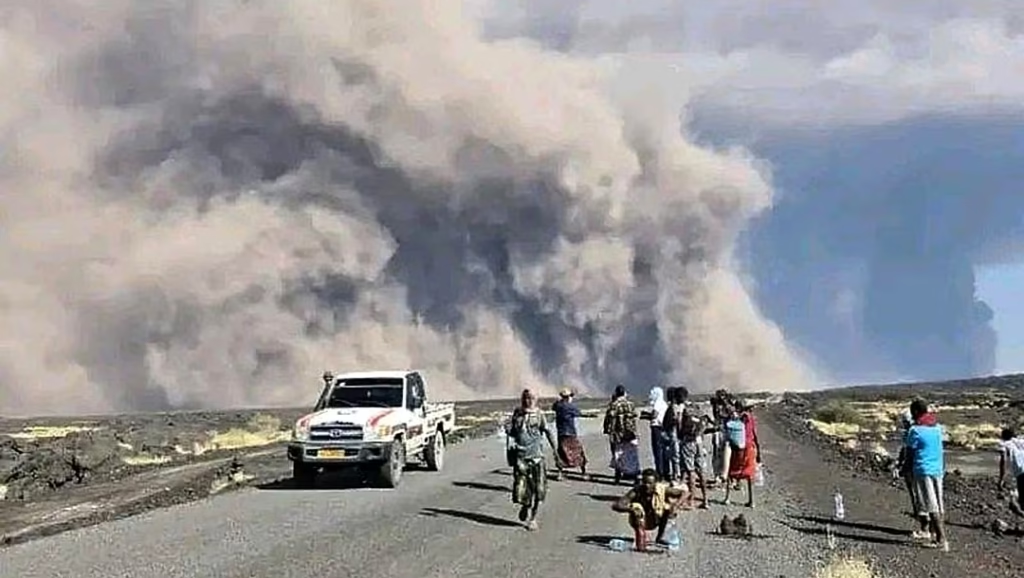
A long-dormant volcano in Ethiopia’s Afar region erupted on Sunday, sending massive ash plumes into the sky and spreading dust across nearby communities.
The Hayli Gubbi volcano, believed to have been inactive for nearly 12,000 years, spewed ash up to 14 kilometres high.
The plume drifted across the Red Sea toward Yemen and Oman, according to monitoring agencies.
The eruption, which lasted several hours, blanketed Afdera village in ash. Local administrator Mohammed Seid said no casualties were recorded, but warned that the fallout threatened the livelihoods of livestock-reliant communities.
“While no human lives and livestock have been lost so far, many villages have been covered in ash and as a result their animals have little to eat,” Seid said.
Residents reported tremors and loud blasts as the volcano came to life. One resident, Ahmed Abdela, described a “shock wave” following a sudden explosion of smoke and ash.
READ ALSO: Sudan’s Darfur in Flames: Al-Fashir Falls to RSF as Civilians Face Atrocities, Famine
By Monday evening, the Toulouse Volcanic Ash Advisory Center reported that an ash cloud had travelled as far as northern India and was “moving quickly” toward China.
Seid noted that there was no previous record of activity from Hayli Gubbi. The Smithsonian Institution’s Global Volcanism Program confirmed the volcano had no known eruptions during the Holocene, the geological epoch that began about 12,000 years ago.
The Afar region sits on a tectonically active rift system and frequently experiences earthquakes, making Sunday’s eruption a dramatic but not unexpected geological event for the area.

Rafiyat Sadiq is a political, justice, and human rights reporter with Pinnacle Daily, known for fearless reporting and impactful storytelling. At Pinnacle Daily, she brings clarity and depth to issues shaping governance, democracy, and the protection of citizens’ rights.