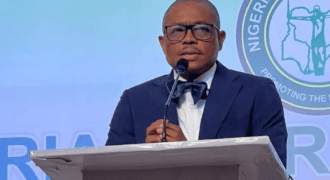


The National Agency for Food and Drug Administration and Control (NAFDAC) has announced December 2025 as the final deadline for the total ban on the production and sale of alcoholic beverages in sachets and small glass or PET bottles with a capacity of less than 200 millilitres.
According to the Director General, Prof. Mojisola Adeyeye, the full enforcement of the ban will begin in January 2026, stressing that there will be no further extension. She noted that the move, backed by the Senate and the Federal Ministry of Health and Social Welfare, is designed to protect public health and shield children, adolescents, and young adults from alcohol abuse.
“This ban is not punitive; it is protective. We cannot continue to sacrifice the well-being of Nigerians, especially our children, for short-term economic gain. The health of the nation is its true wealth,” Adeyeye said.
READ ALSO: NAFDAC Sets 18-Month Deadline for Trans Fat Ban in Nigeria
She explained that the ban affects only two categories of packaging—spirit drinks in sachets and small glass bottles under 200 ml.
The DG urged all manufacturers, distributors, and retailers to comply fully with the December 2025 deadline, warning that no extensions would be granted.
Adeyeye recalled that the phase-out process began in December 2018 when NAFDAC, the Federal Ministry of Health, the Federal Competition and Consumer Protection Commission (FCCPC), and industry stakeholders signed a five-year agreement to end the practice by January 2024. The moratorium was later extended to December 2025 to allow producers time to adjust operations.
She said the decision aligns with Nigeria’s commitment to the World Health Organisation’s Global Strategy to Reduce the Harmful Use of Alcohol (Resolution WHA63.13, 2010).
Dismissing concerns about job losses, Adeyeye argued that the dangers of youth alcohol addiction far outweigh economic fears. “Children drinking alcohol is a ticking time bomb. Research shows that children who become addicted to alcohol are more likely to progress to hard drugs. That poses a national security threat,” she warned.
On enforcement, Adeyeye revealed that NAFDAC now operates a stronger monitoring system, supported by the Office of the National Security Adviser (ONSA). During a recent joint operation in Idumota, Aba, and Onitsha, ONSA deployed over 1,300 personnel to assist NAFDAC’s enforcement teams.
She added that NAFDAC’s Enforcement Directorate now chairs the Federal Task Force on Counterfeit and Substandard Products, while similar structures have been activated across all 36 states and the FCT.
Despite staffing challenges, Adeyeye confirmed that the agency has received approval to recruit 1,000 new workers to strengthen its capacity.
READ ALSO: NAFDAC Seizes N1.2bn Worth of Fake Malaria Drugs in Lagos
She further pledged continued collaboration with the Federal Ministry of Health, FCCPC, and the National Orientation Agency to intensify nationwide awareness campaigns on the dangers of alcohol misuse.
“The ban is rooted in science, public health, and national interest. It’s about protecting our children, our future workforce, and our nation’s stability. This is a collective responsibility,” Adeyeye concluded.

Esther Ososanya is an investigative journalist with Pinnacle Daily, reporting across health, business, environment, metro, Fct and crime. Known for her bold, empathetic storytelling, she uncovers hidden truths, challenges broken systems, and gives voice to overlooked Nigerians. Her work drives national conversations and demands accountability one powerful story at a time.