
Nigeria’s recent Eurobond issuance of US$2.25 billion has caught the attention of financial experts and investors alike. While the bond was oversubscribed, meaning there was strong investor demand, the coupon rate of 9.125% for the 10-year tranche and 9.625% for the 20-year tranche raises a few eyebrows.
This rate appears to be on the higher end compared to similar bond issuances from other African countries. So, what does this mean for Nigeria, and why did Nigeria’s bond seem more expensive?
Why Does the Coupon Rate Matter?
The coupon rate is essentially the interest Nigeria must pay to bondholders. The higher the coupon, the more it will cost Nigeria in the long term, as it will need to service this debt for years. A higher rate can signal a few things:
Pinnacle Daily analysis indicates that over the life of the bond, Nigeria will repay a total of approximately US$ 10.88 billion for this Eurobond issuance. This includes the principal amount of US$ 2.25 billion plus US$ 8.63 billion in interest
- Amount Issued: US$ 2.25 billion
- Total Repayment for 10-year tranche: US$ 4.30 billion
- Total Repayment for 20-year tranche: US$ 6.58 billion
- Total Repayment Over the Life of the Bond: US$ 10.88 billion
Reflecting on the cost of the bond, a senior fund analyst from a renowned multilateral organisation who prefers anonymity exclusively said to our editor, “Even though Nigeria’s Eurobond issuance was oversubscribed and the bond is in high demand, the total repayment amount of US$ 10.88 billion reflects a substantial cost to the country over the lifespan of the bond.
“This is due to the country’s fiscal challenges, credit rating, and global market conditions.”
Nigeria’s Eurobond and Its Historical Context
Nigeria has a history of issuing Eurobonds to raise funds for infrastructural development and to finance its fiscal deficit. In previous years, Nigeria’s Eurobond coupon rates have been lower. For example:
- In 2020, Nigeria issued a Eurobond with a 75% coupon.
- In 2021, a 375% coupon was offered, which was considered relatively low for emerging markets.
By comparing this to the 9.125% rate on the 2025 bond, it’s evident that Nigeria’s borrowing costs have gone up significantly.
While the bond was oversubscribed, the rate remains high, raising the question: why is Nigeria borrowing at a relatively expensive rate, and what does this mean for the country’s finances?
READ ALSO:
Tinubu Highlights What Developing Countries Need to Support Climate Sustainability Agenda
DMO Offers Higher Rates on January 2026 FGN Savings Bonds
Nigeria’s Debt Hit $34.63bn After $2.35bn Eurobond Offer
The source said investors may view Nigeria as a higher-risk borrower. This could be due to a combination of factors, including the country’s reliance on oil revenues, currency fluctuations, inflation, and political uncertainties.
According to the source, the global rise in interest rates, especially in advanced economies like the U.S., also plays a role. Higher global interest rates make borrowing more expensive for all countries, especially emerging markets. Investors demand higher returns for taking on the added risks associated with these countries.
African Eurobond issuances in 2025. The table reflects coupon rates, amounts raised, maturities, and issuing countries:
| Country | Date of Issuance | Amount Issued | Coupon Rate | Maturity | Purpose/Notes |
|---|---|---|---|---|---|
| Benin | January 2025 | US$ 500 million | ~8.625% | 16 years | First Eurobond of 2025 in Africa; proceeds for infrastructure and fiscal deficit. (ecofinagency.com) |
| Côte d’Ivoire (Ivory Coast) | March 2025 | ~US$ 1.75 billion | ~6.45% | ~11 years (to 2036) | High demand for debt issuance, part of strategic economic reforms. (economie-ivoirienne.ci) |
| Nigeria | November 2025 | US$ 2.25 billion | 9.125% (10‑yr) & 9.625% (20‑yr) | 10 years & 20 years | Issued to fund fiscal deficit and refinance maturing debt; strong oversubscription. (reuters.com) |
| Republic of Congo | November 2025 | US$ 670 million | 9.875% | 7 years | First Eurobond issuance in 20 years; funds to refinance domestic debt. (ecofinagency.com) |
| Kenya | October 2025 | US$ 1.5 billion | ~7.875% (2033) & ~8.80% (2038) | 10 years & 15 years | Issued to refinance maturing bonds and diversify the debt portfolio. (kenyanwallstreet.com) |
| Angola | October 2025 | ~US$ 1.5 billion | ~9.5% | ~5 and 10 years | Issuance marks a return to the bond market after several years; funds are used to support economic recovery. (ecofinagency.com) |
Comparing Nigeria to Other African Countries
Among the countries that issued Eurobonds in 2025, Côte d’Ivoire (Ivory Coast) stands out with the cheapest coupon rate of approximately 6.45%. This relatively low rate reflects the country’s improving economic fundamentals and strong investor confidence.
Over the past few years, Côte d’Ivoire has enjoyed political stability and robust economic growth, driven by a diversified economy that includes sectors like agriculture, mining, and infrastructure.
This stability, along with sound fiscal management and positive credit ratings from agencies such as Fitch and Moody’s, has made the country an attractive destination for investors. Côte d’Ivoire’s ability to issue bonds at such a low rate is a testament to its strong position in the African debt market, where lower borrowing costs are typically reserved for countries with lower risk profiles.
In contrast, Benin, with its 8.625% coupon rate, is positioned in the mid-range of African Eurobonds issued in 2025. While this is a higher rate than Côte d’Ivoire’s, it still represents a more favourable borrowing cost for a country of its size and development stage.
Benin’s credit rating has been improving, and its economic performance has been bolstered by its strategic investment in port infrastructure and its growing manufacturing sector.
However, the country still faces some challenges, such as a smaller fiscal base and limited diversification in its economy, which leads to a somewhat higher borrowing rate than countries like Côte d’Ivoire, but still reflects confidence from investors in its fiscal stewardship and governance.
READ ALSO: Why Nigeria’s Economy Is Unshaken By Trump’s Threat: Key Data Insights
On the higher end, Nigeria and Congo both issued Eurobonds with coupon rates around 9.125% and 9.875%, respectively. These higher rates are indicative of the greater economic risks associated with these countries.
Nigeria, despite being Africa’s largest economy, faces challenges such as a heavy reliance on oil revenues, high inflation, and political uncertainty, all of which make it a higher-risk borrower.
Similarly, Congo, with its political instability and weaker credit rating, had to offer a higher coupon rate to attract investors, despite the smaller amount it raised.
The higher rates reflect the investors’ need for greater compensation in exchange for the perceived risks of lending to these nations, contrasting sharply with countries like Côte d’Ivoire, which benefit from more stable economic and political environments.
Why is Nigeria’s Bond Rate Considered Expensive?
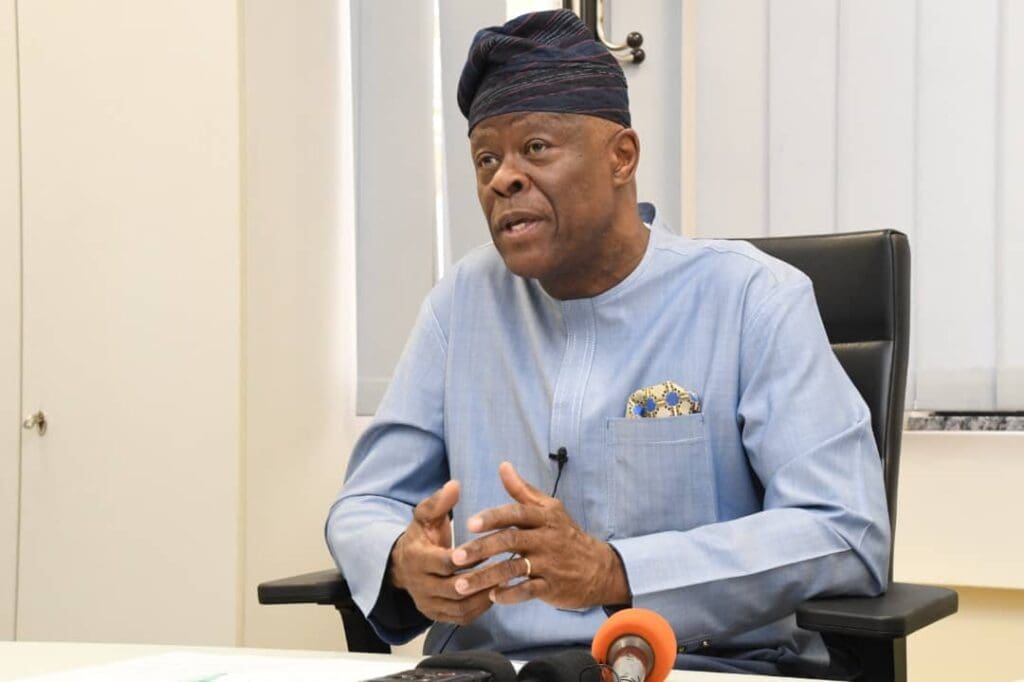
Speaking exclusively with Pinnacle Daily on why the Nigeria Bond rate is considered expensive, financial expert Joseph Enenche said, “Nigeria’s credit rating is not stellar. While it’s not as low as Congo’s, Nigeria still faces credit risks, including its reliance on oil, high inflation, and ongoing security concerns. Credit rating agencies often assign higher risk premiums to countries with these challenges.
“Nigeria has been grappling with high external debt and budget deficits, which raise the country’s borrowing costs. The high coupon reflects the government’s fiscal situation and the market’s assessment of Nigeria’s ability to service debt.”
Enenche also argued that Nigeria’s economy is heavily dependent on oil exports, making it vulnerable to fluctuations in oil prices.
He said this risk is factored into the bond’s coupon rate, as investors price in the possibility of economic instability if oil prices drop.
Expensive but Justifiable?
Enenche said, “Nigeria’s 9.125% coupon on its 2025 Eurobond does indeed reflect a higher borrowing cost compared to previous years and compared to some of its peers. However, the oversubscription of the bond shows that, despite these higher costs, investors are still willing to bet on Nigeria’s recovery and growth potential.
READ ALSO: DMO Opens November FGN Savings Bond at Lower Rates
“Nigeria must now ensure that it uses the funds wisely to stabilise its economy, manage its debt, and foster long-term growth to justify the high cost of borrowing.

Sunday Michael Ogwu is a Nigerian journalist and editor of Pinnacle Daily. He is known for his work in business and economic reporting. He has held editorial roles in prominent Nigerian media outlets, where he has focused on economic policy, financial markets, and developmental issues affecting Nigeria and Africa more broadly.