

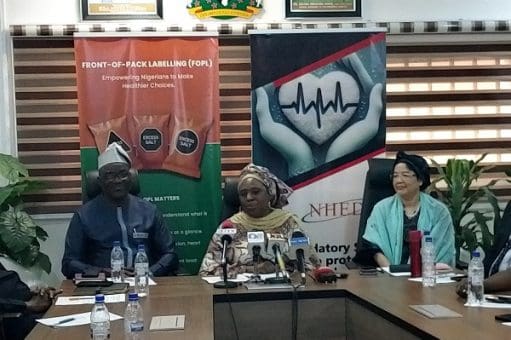
Nigeria is intensifying efforts to reduce salt consumption and promote healthier diets. The initiative aims to curb the rising burden of non-communicable diseases (NCDs) such as hypertension, stroke, and heart disease.
Speaking at a stakeholders’ engagement in Abuja for World Food Day 2025, Dr. Salma Anas, Special Adviser to the President on Health, stressed the importance of cutting sodium intake and implementing clear food labelling. She said these measures are vital for national health and productivity.
The event brought together representatives from the World Health Organisation (WHO), Federal Ministry of Health, Network for Health Equity and Development (NHED), Corporate Accountability and Public Participation Africa (CAPPA), Resolve to Save Lives (RTSL), and the private sector.
Dr. Anas warned that excessive salt consumption is silently fueling preventable illnesses. She noted that hypertension and heart problems now affect people under 50 and even those in their 20s.
READ ALSO: World Food Day: Experts Raise the Alarm over Persisting Food Crisis in Nigeria
Nigeria’s sodium reduction and front-of-pack labelling (FOPL) campaign aims to help consumers make informed choices. “Too often, nutritional information is hidden in tiny fonts. We want clear, visible labels so Nigerians can easily see what they are consuming,” Dr. Anas said.
She explained that regulations on sodium levels and labelling complement each other. While regulations limit salt in packaged foods, labelling allows consumers to identify high-sodium, sugar, or fat products. “Transparent labels encourage manufacturers to reformulate products and build consumer trust,” she added.
Dr. Anas commended NAFDAC and the Ministry of Health for frameworks promoting healthier food environments. These efforts align with President Bola Tinubu’s Renewed Hope Health Agenda, which prioritizes preventive care and nutrition.
“Reducing sodium is not just a health strategy; it’s an economic investment.
Healthier citizens mean higher productivity and lower healthcare costs,” she noted.
She urged food manufacturers to embrace reformulation and responsible marketing. “We want industry to be our ally in ensuring Nigerians eat food that sustains life, not disease,” she said.
READ ALSO: Childhood Obesity Overtakes Undernutrition, Puts Millions at Risk – UNICEF
Dr. Anas also called for a cultural shift in dietary habits. “We’ve conditioned ourselves to think salt equals taste. But local foods like yams and potatoes have natural flavors. We must retrain our taste buds and rethink our food culture,” she emphasised.
She appealed to media, civil society, and community leaders to raise awareness. “Excessive salt intake causes hypertension, stroke, and kidney problems. Your voices can inspire change,” she said.
Finally, Dr. Anas reaffirmed Nigeria’s commitment to achieving a 30 percent reduction in sodium consumption by 2030, in line with WHO’s global action plan.

Esther Ososanya is an investigative journalist with Pinnacle Daily, reporting across health, business, environment, metro, Fct and crime. Known for her bold, empathetic storytelling, she uncovers hidden truths, challenges broken systems, and gives voice to overlooked Nigerians. Her work drives national conversations and demands accountability one powerful story at a time.