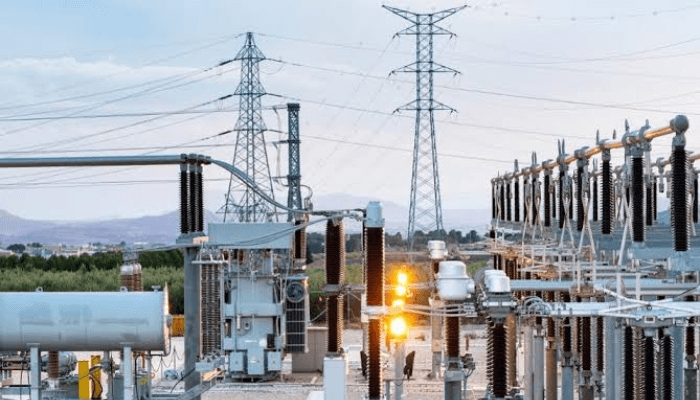
Nigeria’s electricity crisis remains one of the most significant constraints on its economic development.
Despite being Africa’s largest economy, Nigeria struggles with chronic power shortages, with operational output hovering around 5,000 megawatts (MW) for a population of over 200 million people.
The centralised model of electricity generation, transmission, and distribution has, according to experts, proven inadequate over the years, with the national grid experiencing frequent collapses that paralyse economic activity nationwide.
This forces businesses and households to rely on expensive alternatives, spending approximately $22 billion annually on fuel for generators, according to the Africa Trade Barometer report.
Experts have said the solution to this decades-long crisis lies in fully embracing decentralisation, which means transferring power and authority from the federal government to states, communities, and private sector participants to create a more resilient, efficient, and responsive electricity system.
The Electricity Act of 2023 marked a transformative shift in Nigeria’s energy landscape, formally recognising the failure of centralised control and beginning the process of devolving authority to subnational entities.
The Act empowers states to generate, transmit, and distribute electricity within their territories, potentially unleashing the innovation and competition needed to finally address Nigeria’s power challenges.
As of August 2025, the Nigeria Electricity Regulatory Commission (NERC) has devolved the power to regulate electricity markets to at least 11 states. These states include Edo, Ekiti, Enugu, Imo, Kogi, Lagos, Niger, Ogun, Ondo, Oyo and Bayelsa.
The implementation of this new framework has, however, been marked by significant tensions between federal and state authorities. State governments have accused the federal government of attempting to reverse decentralisation gains through proposed amendments to the Electricity Act.
This conflict was vividly displayed when the Federal Government rejected the Enugu State Electricity Regulatory Commission’s decision to reduce electricity tariffs, insisting that states should be responsible for covering any resulting market shortfalls.
Such clashes highlight the ongoing power struggle between centralised and decentralised approaches to energy governance.
Making a case for decentralising the power sector, Martins Arogie, Partner, Tax, Energy and Natural Resources, KPMG West Africa, said the country’s experience with the national grid system shows that it is no longer sustainable.
He cited cases when grid disturbance as a result of a technical fault in generation or transmission infrastructure in some parts of the country led to a nationwide blackout.
“This concept of a national power grid – I think it is outdated,” Arogie stated in an interview.
He urged the authorities to see the need to build independent power plants and decentralise the power grid.
“We are talking about grid-level plant, but within the franchise area of a particular DisCo. In that case, you cut off the transmission infrastructure,” Arogie stated.
Recently, the federal government announced plans to secure $238 million from the Japan International Corporation (JICA) to fund transmission infrastructure to boost power supply across the country.
Arogie called on the Federal Government to channel the funds into building embedded power plants and upgrading distribution infrastructure.
Energy expert Professor Wumi Iledare explained that what are often described as grid “collapses” are more accurately understood as ”trips” caused by overloading and inadequate infrastructure.
He likened this to household electrical systems where circuit breakers trip when overloaded, noting that “because everything is centralised, you’ll have a problem when you inject a lot of load on that line and a lot of demand.”
READ ALSO: Metering, Billing Trouble Nigerians as DisCo Complaints Drop 22%
Arogie argued that decentralisation offers a technical solution to this vulnerability by creating multiple smaller grids that can operate independently.
He emphasised that this approach would limit the effect of system failures to smaller regions rather than nationwide blackouts, allow for tailored infrastructure investments based on regional needs and resources and enable faster restoration of power after outages as local teams can respond more quickly.
Iledare also stated that decentralisation of the power grid would reduce transmission losses by generating power closer to where it’s consumed.
Other proponents of the decentralisation of Nigeria’s power sector said it offers the opportunity to reverse massive economic losses due to power failure and creates opportunities for targeted economic development by allowing states to leverage their specific energy resources to attract industries.
Northern states with abundant sunlight can develop solar parks to attract energy-intensive industries. Riverine states can leverage hydropower potential for industrial clusters, while gas-producing regions can develop gas-fired power plants to support manufacturing and other activities.
Highlighting the successes recorded in applying the decentralised approach as provided for in the Electricity Act 2023, a UNDP report cited the activities of Aba Power, manned by Geometric Power in Abia State, which it said has been producing not less than 23 hours of uninterrupted daily electricity.
READ ALSO: High Costs, Corruption Delay Meter Deployment, As Consumers Endure Arbitrary Billing
Decentralisation is also said to open new avenues for investment and innovation in the power sector.
Recently, the Nigerian government struck a deal with WeLight, a pan-African distributed renewable energy company, to install hundreds of renewable mini-grids with $200 million in funding from the World Bank and African Development Bank.
Arogie noted that the integration of decentralised renewable energy (DRE) systems would help in addressing electrification challenges in rural areas and communities not connected to the national grid.
Approximately 45 per cent of Nigeria’s population lacks access to electricity, with rural communities disproportionately affected.
The expert stressed that such off-grid schemes, involving the deployment of mini-grids such as solar, can provide cost-effective solutions for underserved communities without requiring massive investments in transmission infrastructure.
Studies have identified that scaling up private investment in DRE is crucial for achieving universal electricity access in sub-Saharan Africa.
Recently, the Managing Director/CEO of the Rural Electrification Agency (REA), Abba Aliyu, said the agency has completed the installation of 91 mini grids in the last six months as part of efforts to boost electricity supply in underserved areas in the country.
While the government continues to pursue the goal of achieving universal electricity access in Nigeria by 2030, emphasis remains on the full implementation of decentralisation of the electricity system to facilitate that.

Victor Ezeja is a passionate journalist, scholar and analyst of socioeconomic issues in Nigeria and Africa. He is skilled in energy reporting, business and economy, and holds a master's degree in mass communication.