
..Miami got the jobs, tax revenue, prestige; Nigeria got Instagram pictures
By Esther Ososanya
The recent high-profile wedding of Nigerian music superstar David Adeleke, popularly known as Davido, and his long-time partner Chioma Rowland, in Miami, United States, has reignited conversations about capital flight, celebrity spending, and Nigeria’s economic priorities.
Held on Sunday, August 10, 2025, at The Havana in Miami’s culturally rich Little Havana district, the star-studded ceremony reportedly cost a staggering $3.7 million (approximately ₦5.6 billion at the current exchange rate).
While the event was a spectacle of glamour and romance, economists are raising questions about the implications of such lavish foreign spending for Nigeria’s struggling economy.
Before the main ceremony, the couple hosted an intimate pre-wedding dinner attended by close family members and friends.
Videos circulating online showed the lovebirds in affectionate moments, basking in the warmth of their inner circle. From designer outfits to premium champagne, the night hinted at the opulence that would follow at the main event.
Renting a hall in Miami’s Little Havana can vary greatly, ranging from $80 to $1,000 per hour, depending on location, size, and amenities. Lavish mansions in the district can cost up to $450 per hour, excluding décor, catering, and entertainment.
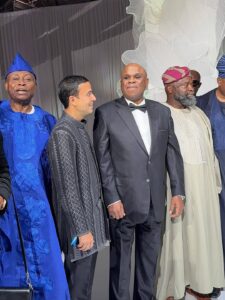
Industry insiders suggest that the venue for Davido’s wedding, The Havana, likely fell on the higher end of that range, given its exclusivity and event scale.
In addition to the venue, the budget reportedly covered luxury décor, gourmet catering, celebrity performances, private security, and international travel for high-profile guests — all expenses benefiting American service providers, not Nigerian businesses.
conversion of those amounts to Nigerian naira using the current exchange rate (₦1,600 per $1):
- $80/hour ≈ ₦128,000/hour
- $1,000/hour ≈ ₦1,600,000/hour
- Lavish mansions: $450/hour ≈ ₦720,000/hour
If Davido’s wedding venue was at the higher end of the $1,000/hour range, that’s roughly ₦1.6 million per hour, excluding décor, catering, and entertainment.
Davido himself confirmed the scale of spending in an interview, saying, “We spent $3.7 million in cash. You should know what we are doing. That’s jaw-dropping.”
Private Jets and Parking Costs
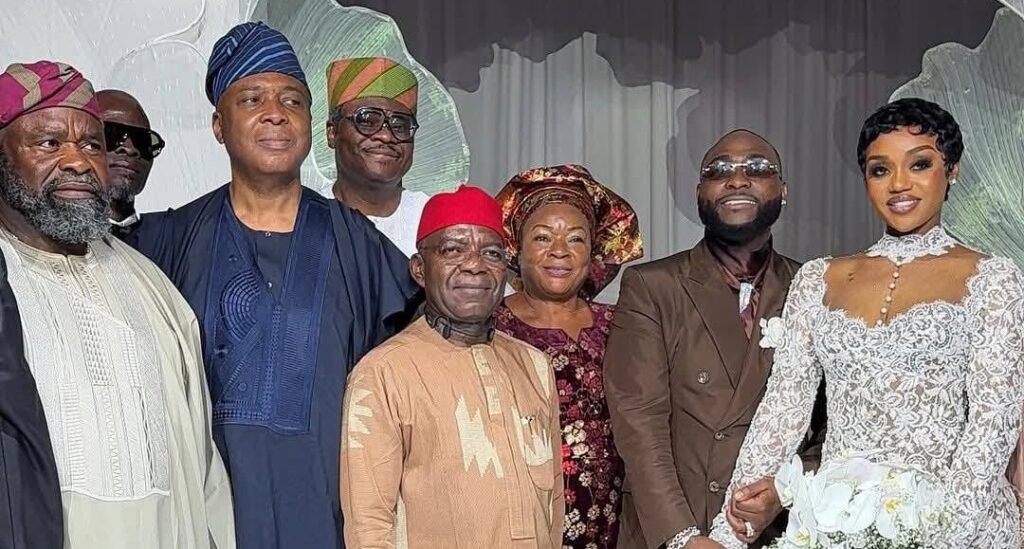
The star-studded guest list included Adekunle Gold, Teni, Zlatan Ibile, D’banj and their wives, Governor Ademola Adeleke, Governor Alex Otti, Adedeji Adeleke, Aliko Dangote, Bukola Saraki, Chief Ikuku, Obi Cubana and his wife, Uche Jumbo, Joeboy, Nigerian mixed martial artist Kamaru Usman, alongside international stars like Kirk Franklin, Shenseea, and Rubi Rose, amongst others.
Davido’s friend Liban Soleman gave an eyewitness account of how the singer’s guests arrived for his white wedding in Miami.
He revealed that the private airport terminal was extremely busy, and when he arrived, the staff asked if there was an Africa summit happening because there were 23 private jets parked.
When Pinnacle Daily carried out an estimation, it found that the cost of parking a private jet in a private terminal in Havana, Miami, was:
Havana – José Martí International Airport (HAV)
- Parking Fee: Approximately $20 USD per hour after the first 3 hours.
Miami – Miami International Airport (MIA)
- Parking Fee: Approximately $100–$500 USD per visit, depending on services provided.
The wedding, which lasted 3 days from Friday to Sunday, meant parking costs were:
Havana – José Martí International Airport (HAV)
- Cost per jet for 3 days = $1,380
- For roighly 10 jets: 1,380 × 10 = $13,800 USD
Miami – Miami International Airport (MIA)
- Cost per jet for 3 days = $100–$500
- For 23 jets:
- Minimum: 100 × 23 = $2,300 USD
- Maximum: 500 × 23 = $11,500 USD
Total estimated cost for 23 jets for 3 days:
- Havana: $31,740
- Miami: $2,300 – $11,500
This means that Nigerian airlines missed the opportunity to earn ₦17,652,500 (Seventeen million, six hundred fifty-two thousand, five hundred naira).
Note that the wedding had an after-party with close family and friends after the three days calculated, meaning more was spent than the estimated cost above.
Flights, Hotels, and Spending Estimates
Checking the cost of flights for 20 people from Nigeria to Havana, Miami, estimations show:
Estimated Cost of 20 People Travelling from Nigeria to Miami for Davido’s Wedding
| Item | 3 Nights | 5 Nights | Notes |
|---|---|---|---|
| Flights (Business Class) | $60,000 – $100,000 (₦92.1m – ₦153.3m) | Same | LOS–MIA return, 20 people |
| Hotels (4★, 10 rooms) | $6,780 + 11% tax = $7,526 (₦11.6m) | $11,300 + 11% tax = $12,543 (₦19.2m) | Double occupancy |
| Meals & Incidentals | $5,520 (₦8.5m) | $9,200 (₦14.1m) | GSA per diem $92 pp/day |
| Local Transport | $600 (₦0.92m) | $600 (₦0.92m) | Uber airport transfers |
| Miami Local Spend Subtotal | $13,646 (₦21.0m) | $22,343 (₦34.3m) | Miami’s direct gain |
| Total Trip Cost (Flights + Local Spend) | $73,646 – $113,646 (₦113.0m – ₦174.4m) | $82,343 – $122,343 (₦126.4m – ₦187.8m) | — |
Key Insight:
Miami’s direct economic gain from this 20-person group, excluding airfare, would be about ₦21 million for 3 nights or ₦34 million for 5 nights, with the rest going to airlines and non-Miami services.

Miami’s Local Tax Revenue
Estimated Miami Local Tax Revenue from 20-Person Trip
| Tax Type | Rate | 3 Nights Revenue | 5 Nights Revenue | Notes |
|---|---|---|---|---|
| Hotel Taxes (7% sales + 4% resort) | 11% | $746 (₦1.14m) | $1,243 (₦1.91m) | Applied to hotel subtotal before meals |
| Restaurant Sales Tax | 7% | $386 (₦0.59m) | $644 (₦0.99m) | Applied to meals/incidental spend |
| Additional Resort Tax on Food & Drinks (Miami Beach) | 2% | $110 (₦0.17m) | $184 (₦0.28m) | On top of restaurant spend |
| Local Transport Tax | ~5% | $30 (₦0.046m) | $30 (₦0.046m) | Estimated from Uber/Lyft surcharges |
| Total Local Tax Revenue | — | $1,272 (₦1.94m) | $2,101 (₦3.23m) | — |
What this Means:
For 20 people attending Davido’s wedding, Miami could collect about ₦1.94 million in taxes for a 3-night stay or ₦3.23 million for a 5-night stay, just from hotel, dining, and transport levies. This is in addition to the ₦21–₦34 million in direct spending that went to Miami businesses.
Nigeria missed out on about ₦198 million (3 nights) or ₦213 million (5 nights) from just 20 people attending Davido’s Miami wedding. This money could have boosted local airlines, hotels, restaurants, and tax revenues if such high-profile events were hosted domestically.
Missing Faces and Bigger Losses
While Davido was surrounded by family and friends, several high-profile figures many expected to see were conspicuously absent. Among them were his close associate Cubana Chief Priest, the bride’s parents, and music stars such as Burna Boy, Flavour, Wizkid, Phyno, Olamide, Mr. P, and Rudeboy. Based on travel, accommodation, and event-related expenses, the 20 attendees who flew to Miami for the wedding were estimated to have injected between ₦198 million and ₦213 million into the U.S. economy.
Had these additional celebrities and their entourages attended, Nigeria’s economic loss could have climbed by several tens of millions more, further draining domestic spending and boosting Miami’s gain.
Critics Raise Concerns
Critics argue that while individuals are free to spend as they please, hosting such high-profile events abroad has broader economic repercussions. This drains Nigeria’s event, hospitality, and tourism sectors of vital revenue.
Ossai Ovie Success, speaking on social media, emphasized that the country’s loss extends beyond direct expenditures, depriving it of the economic multipliers usually generated by such spending.
Data from the Central Bank of Nigeria shows that Nigerians have spent a staggering $98 billion abroad in the past decade across areas including travel, education, and healthcare resources that could have fueled domestic economic growth.
Meanwhile, official forecasts underscore Nigeria’s immense tourism potential: The World Travel and Tourism Council projects that, by 2025, the sector could contribute ₦11.2 trillion (approx. $7.5 billion) to GDP, with international visitor spending alone expected to hit ₦803.2 billion not to mention domestic tourism’s projected spending of ₦6.1 trillion.
America’s Gain, Nigeria’s Loss
From venue rentals and catering to entertainment and luxury accommodations, the United States economy, particularly Miami’s events and tourism sector directly benefited from Davido’s wedding.
Th wedding’s $3.7 million price tag would have circulated through multiple Nigerian industries if held locally, potentially boosting the incomes of florists, caterers, hotels, decorators, and transport providers.
Meanwhile, Nigeria, grappling with inflation, high unemployment, and a depreciating naira, saw yet another opportunity for domestic economic stimulation slip away.
For celebrities like Davido, hosting weddings abroad often carries prestige and privacy benefits. Miami offers a blend of luxury, security, and exclusivity, shielding high-profile events from the intense media scrutiny and security concerns of Nigerian venues. Yet, for a country battling capital flight and economic stagnation, such choices reinforce perceptions of elite disconnection from local realities.
In 2024, Davido came under heavy criticism for remarks on The Big Homies House podcast, where he urged Nigerians in America and Black Americans not to relocate to Nigeria, citing the country’s economic woes.
By hosting a lavish wedding in Miami and diverting millions of naira that could have boosted Nigeria’s hospitality, event, and tourism sectors, Davido’s actions mirrored the very lack of domestic confidence he once spoke about.
READ ALSO:Davido’s Timeless Earns UK Silver Certification
Had the wedding been held in Nigeria, the influx of international guests could have boosted the country’s tourism image, bringing in foreign exchange through hotels, airlines, and local vendors. Instead, Miami hotels, transport companies, and entertainment outfits reaped the benefits.
Davido’s wedding to Chioma will go down in history as one of the most expensive celebrity weddings by a Nigerian artist. It was a celebration of love, culture, and success but also a striking reminder of how Nigeria’s elite spending habits can feed other economies while leaving their own in need.
This wasn’t just a wedding; it was an economic transaction that crossed borders, and in doing so, tipped the scales in favour of America’s economy. As Nigeria struggles to stabilise its naira and stimulate local industries, Davido’s Miami extravaganza may be remembered not just for its romance, but as a case study in how elite spending choices shape the fortunes of nations.
As one Lagos-based public affairs commentator put it bluntly: “For the U.S., it was a win. For Nigeria, it was a missed $3.7 million opportunity.”
For Nigeria, this is a case study in capital flight: high-profile events by wealthy citizens are funnelling revenue, jobs, and taxes to foreign countries rather than stimulating the local economy.
The country not only lost direct spending but also the chance to showcase itself as a luxury wedding destination, attract international visitors, and keep tourism dollars at home.
In short Miami got the jobs, the tax revenue, and the prestige; Nigeria got nothing but Instagram pictures.

Esther Ososanya is an investigative journalist with Pinnacle Daily, reporting across health, business, environment, metro, Fct and crime. Known for her bold, empathetic storytelling, she uncovers hidden truths, challenges broken systems, and gives voice to overlooked Nigerians. Her work drives national conversations and demands accountability one powerful story at a time.