


By Rafiyat Sadiq
Nigeria’s 774 local government areas (LGAs) were envisioned by the Constitution as vehicles of grassroots development and participatory democracy.
Constitutionally recognized as the third tier of government, they are supposed to be autonomous entities, capable of implementing policies and delivering essential services tailored to local needs.
Yet, decades after their establishment, these institutions remain shackled ,politically subdued and financially strangled by state governments.
Despite the Supreme Court’s landmark 2024 ruling granting financial autonomy to local governments, the situation on the ground shows a stark gap between the court’s decision and how things are actually run.
This report examines the continuing crisis of local governance in Nigeria, situating it within constitutional constraints, political resistance, and institutional inertia.
Drawing from expert opinions, judicial precedent, and ongoing legislative debates, it exposes why the third tier of government remains a political puppet in Nigeria’s federal architecture.
The Supreme Court’s Verdict: Legal Breakthrough or Victory?
In Attorney General of the Federation v. Attorney General of Abia State & 35 Ors (2024), Nigeria’s apex court ruled that federal allocations to local governments must be made directly, bypassing the State Joint Local Government Account (SJLGA).
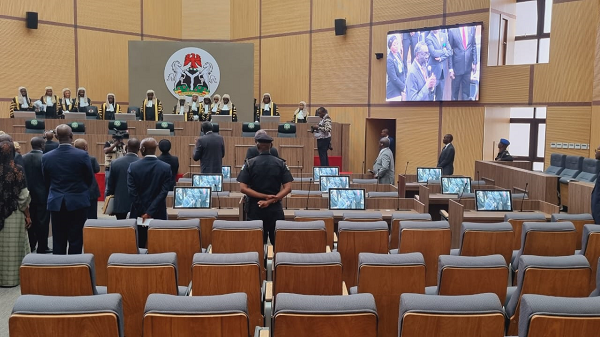
The ruling, celebrated as a bold reaffirmation of LGA financial autonomy, was interpreted by many as a turning point.
Senior Advocate of Nigeria and former NBA President Joseph Daudu, however, offers a more cautious interpretation. According to him, the ruling, while symbolically significant, is functionally limited by the existing constitutional framework.
“The judgment does not delete the constitutional provisions that give life to the SJLGA, he said adding that without a constitutional amendment, the Supreme Court’s decision, though final, remains structurally impotent.
“Indeed, Section 162 (6)-(8) of the 1999 Constitution (as amended) still mandates that allocations to LGAs be paid into a joint account managed by the states. As such, the court’s verdict cannot be practically enforced unless the Constitution is altered,” Mr. Daudu noted in an exclusive legal analysis.
Mr. Kenneth Eze, Executive Director of Speak Out Africa, however insists that Supreme Court rulings are de facto law and should be immediately actionable.
“The Supreme Court is the final interpreter of the Constitution. Once it speaks, that becomes law. The only issue now is the failure of states to implement,” he said during an interview with Pinnacle Daily.
READ ALSO:Daudu: Constitutional Amendment Alone Won’t Fix Nigeria’s Governance Issues
Mr. Eze faulted governors for persistently using joint accounts to control local councils, a practice he says hampers grassroots development.
He warns that if state governors maintain control over local government finances and operations, primary healthcare will deteriorate, primary school pupils will be affected, and the poor will continue to face unfair treatment.
He further highlights the fact that only a handful of LGAs have complied with the judgment’s provision to open dedicated accounts with the Central Bank of Nigeria (CBN).
Practice Before Judgment: How the Chains Were Forged
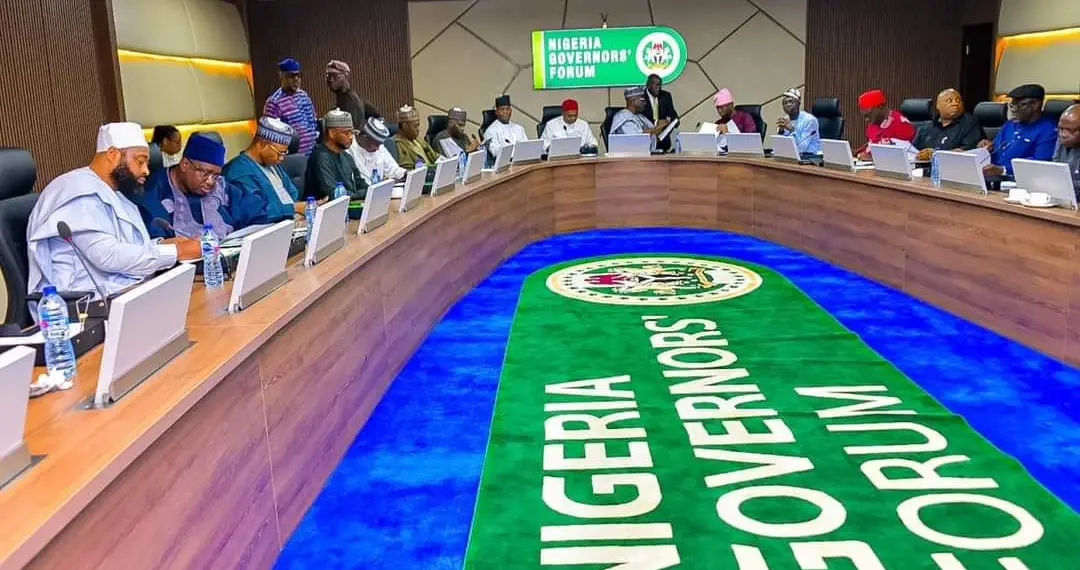
Before the 2024 ruling, the relationship between states and local governments had long been lopsided. Though LGAs were theoretically autonomous, state governors maintained near-total control over their finances and operations, often dissolving elected councils at will and replacing them with unelected caretaker committees.
Section 162(6) of the Constitution enabled this through the SJLGA mechanism, effectively reducing LGAs to fiscal dependents. The funds intended for grassroots development were routinely diverted to state projects or manipulated through opaque budgetary practices.
The Nigerian Governors Forum (NGF), often the most vocal opponent of local government autonomy, had historically defended this setup as a means of coordinating development across tiers. But critics argue that it is primarily a tool for political patronage.
READ ALSO: How Cost-Reflective Tariff Gap Costs FG ₦2.49trn in Two Years
“The SJLGA was a loophole turned into a noose,” said policy analyst Dr. Yetunde Salami. “Governors found in it a way to starve LGAs of resources and assert control, especially during election seasons.”
Mr Eze however stressed that “As long as state governors decide who becomes local government chairmen through what they call elections but are in reality selections and installing their loyalists at will, we cannot achieve genuine development,” he said adding that for real change to reach the grassroots, ordinary Nigerians, and the poor, vulnerable, and marginalised, local government must be freed from these political shackles.
Election Rigging and Democratic Disfigurement
In May 2024, INEC Chairman Prof. Mahmood Yakubu described local government elections as mere coronations for ruling party candidates and urged major reforms to ensure fairness.
He accused state governors of undermining the independence of State Independent Electoral Commissions.
Recounting on the state of local government elections observed, Mr Eze said, “What we saw was a coronation, not an election, the same party won every position in many states. That is not democracy.”
The Senate has condemned recent local government elections, particularly in Benue State, as a breach of democratic principles. Senator Abba Moro alleged the October 5, 2024 polls were marred by manipulation, with some conducted in ruling party leaders’ homes, making them selections rather than genuine elections.
Samson Itodo, Executive Director of Yiaga Africa, takes this concern further. He argues that the autonomy of local governments cannot be secured without electoral independence at the state level.
“As long as governors appoint commissioners into the State Independent Electoral Commissions (SIECs), we will continue to see rigged elections. It’s a blatant conflict of interest,” Itodo said during a policy forum organized by Agora Policy.
He also debunks the idea that INEC should take over LG elections, warning that INEC is already overburdened and under-resourced. Instead, he advocates for reforms that guarantee the financial and operational independence of SIECs.
Number of Elections Held After Autonomy Ruling
Before the Supreme Court’s July 2024 ruling granting full financial autonomy to local governments, many states repeatedly delayed council polls, citing lack of funds or insecurity. Governors often installed caretaker or transition committees in place of elected officials.
While ALGON claimed over 30 states held local government elections after the autonomy ruling, critics said the figure included caretaker arrangements that do not meet the standard of proper polls. Independent observers like Yiaga Africa put the number at 17 states, while Premium Times reported 18 as of August 2025.
The Supreme Court later nullified an October 2024 council election for failing to meet legal requirements such as issuing a 90-day notice and updating the voters’ register. All elected chairpersons were removed, with interim administrators installed, a move critics said lacked legal basis.
Tensions deepened as lawmakers attempted to amend laws to extend the tenure of ousted officials, while a reconstituted electoral body scheduled fresh elections with only 21 days’ notice, prompting civil society groups to condemn the process as unconstitutional.
The situation unfolded under a federal-imposed state of emergency, during which a sole administrator oversaw the state’s affairs.
State Resistance Threatens LG Autonomy Push
The National Assembly’s renewed push to grant full political, financial, and administrative autonomy to local governments in Nigeria continues to face strong resistance from state governors and some state Houses of Assembly, who benefit from the existing centralized structure.
Despite growing momentum and the prioritization of key constitutional amendments such as abolishing the State Joint Local Government Account, enabling direct federal allocations to LGAs, amending Section 7 of the Constitution, banning caretaker committees, and transferring local government elections to independent bodies like INEC success remains uncertain.
Past efforts under former President Muhammadu Buhari (2015–2023) failed when, despite passage by the National Assembly, most state assemblies rejected the proposals, largely aligning with governors. Commenting on this, Mr. Eze noted that Buhari’s reforms were deliberately blocked by governors and state legislators who profit from the current system.
Under President Bola Tinubu, the strategy shifted to legal enforcement, particularly after a significant 2024 court judgment. However, as events since then have shown, legal wins alone are ineffective without institutional backing and genuine commitment.
Civic activist Samson Itodo warned that, “You can’t legislate integrity,” stressing that even the best laws require the political will of those in power to ensure proper implementation.
In July 2025, the National Assembly conducted zonal public hearings across all six geopolitical zones to collect public input. The legislature aims to complete its process by December 2025 and forward the proposals to state assemblies. However Pinnacle Daily reports that unless at least 24 of the 36 state Houses of Assembly ratify the amendments, the reforms cannot become law.
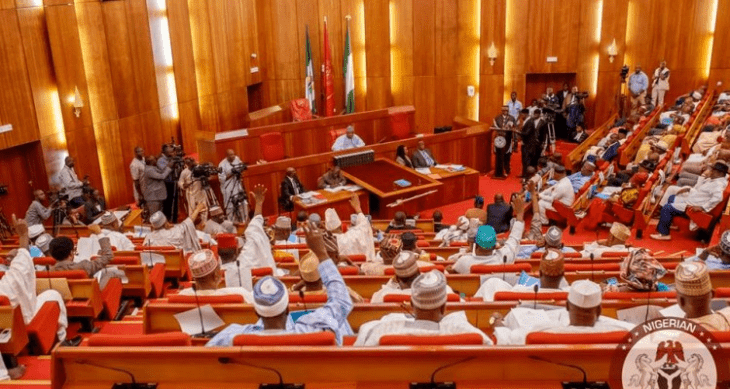
The autonomy debate isn’t limited to funding. Issues like tenure ambiguity, internal revenue generation, infrastructural responsibilities, and oversight also remain largely undefined in the Constitution.
A senior Advocate of Nigeria, Daudu stress that systemic clarity is essential.
“Ambiguity in law invites abuse. If we want to free local governments, we must give them clear rights and responsibilities,” he argues.
Furthermore, without financial literacy, administrative capacity, and civic engagement at the local level, even an autonomous LGA could still fail to deliver.
Unchaining Nigeria’s Local Governments Requires More Than Court Rulings
Despite a landmark Supreme Court ruling affirming local government autonomy, Nigeria’s third tier of government remains largely under the control of state governors, operating more as administrative appendages than independent institutions.
While local governments are theoretically best positioned to address grassroots challenges, their effectiveness has been undermined by state-level control over finances, especially through the State Joint Local Government Account. As a result, many councils lack the resources to execute meaningful projects, further distancing them from the people they are meant to serve.
Experts in the report agree that unchaining local governments in Nigeria will take more than court rulings. It will require a citizen-driven, constitutionally entrenched, and politically enforced framework ensuring that the third tier is no longer at the mercy of state executives, but a fully empowered actor in Nigeria’s democratic and developmental landscape.
According to Mr. Kenneth Eze, Executive Director of Speak Out Africa, the Supreme Court’s decision should be sufficient to guarantee autonomy, but without proper implementation by state governments, it remains ineffective.
He argues for strict enforcement, including withholding federal allocations from non-compliant states, stating, “Without consequences, governors will keep undermining democracy.” He also advocates for the inclusion of local government representatives in Federation Account Allocation Committee (FAAC) meetings to strengthen their financial independence.
Senior Advocate of Nigeria, Mr Joseph Daudu, offers a constitutional perspective, stressing that while judicial pronouncements are important, they cannot replace the legitimacy and durability of constitutional amendments.
He argues that in a democratic federation, consensus and lawful reform, not legal imposition, are the most sustainable path forward either through abolishing the joint account system or ensuring stronger accountability mechanisms for direct allocation.
Executive Director of Yiaga Africa, Samson Itodo, alongside Mr. Eze, emphasizes that true autonomy requires deliberate political action, not just legal declarations or constitutional text.
They assert that only a combination of legal, political, and institutional reforms backed by public support and political will can transform LGAs from political puppets into functional democratic institutions capable of delivering development at the grassroots.

Rafiyat Sadiq is a political, justice, and human rights reporter with Pinnacle Daily, known for fearless reporting and impactful storytelling. At Pinnacle Daily, she brings clarity and depth to issues shaping governance, democracy, and the protection of citizens’ rights.