

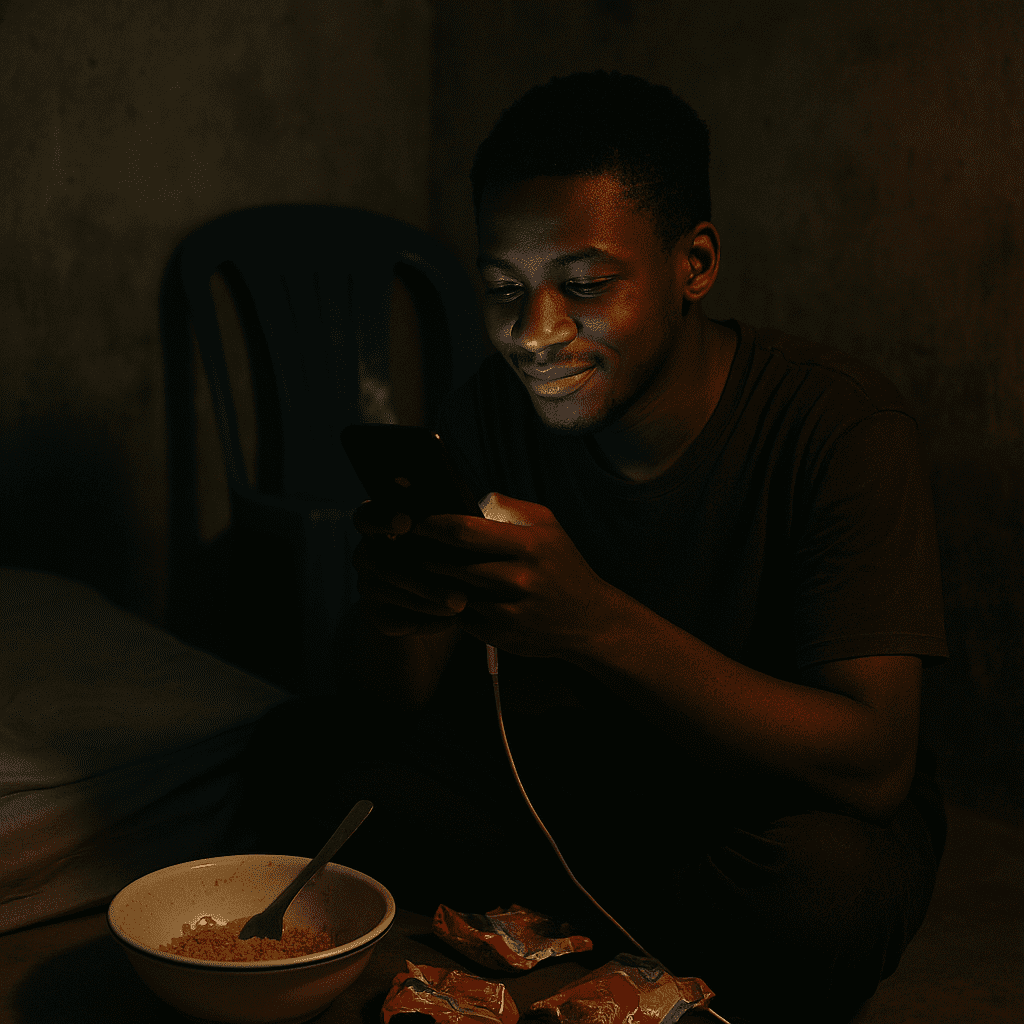
In the bustling corners of Nigeria’s cities, from the tight alleys of urban slums to the crowded student hostels of Kaduna and Abuja, a quiet crisis is unfolding as a growing number of young Nigerians are skipping meals just to stay online.
From recharge kiosks in Lagos to street-side vendors in Benin, data and airtime have become daily essentials. What was once a luxury has now become a survival tool often prioritised above food.
For many young Nigerians, especially those from low-income backgrounds, staying connected isn’t just a habit. It’s a lifeline.
“I Skip Meals to Stay Online”
Jimmy Jackson, a student of a tertiary institution in Abuja, lives this reality every day.
“I spend ₦3,000 daily on data but manage food with ₦2,500,” he says. “Sometimes I skip lunch so I can afford breakfast and dinner. If my data runs out, I just wait until I can afford it again.”
Jimmy isn’t alone. Across the country, thousands of young people are making the same difficult choice: food or internet.
Sadiq Mohammed Awwal, a university student in Kaduna, echoes the same struggle. “I use ₦1,000 daily on data. When I run out, I beg friends to hotspot me,” he says. “There have been days I didn’t eat just so I could stay online, especially when there’s a trending topic or job opening.”
For Deborah Rukayat, a recent graduate, the decision is more calculated.
“I try to balance ₦6,000 weekly on food and ₦3,000 on data. But if I’m broke, I’ll log off before I skip a meal unless it’s something really important.”
Online or Offline, It’s About Survival
The digital world is now central to youth survival in Nigeria. Social media is no longer just about entertainment; it’s work, networking, income, and even learning.
Boluwatife Adebisi, a teacher and side-hustle entrepreneur, says most of her sales happen on WhatsApp.
“I buy a ₦1,500 weekly data plan, and that’s non-negotiable,” she says. “If I don’t have data, my business stops. I’ll even borrow if I have to.”
Fatima, who sells recharge cards in Abuja, sees it every day. “People complain about the cost of food but still buy ₦500 worth of data daily,” she says. “They tell me it’s for job hunting, content creation, or side gigs. Some even owe me for airtime.”
ALSO READ: “Wounds from Within: When Pads Hurt More Than Periods”
Mental Strain Meets Digital Hunger
But this isn’t just a financial issue; it’s psychological too.
Mrs Ekejiuba Ihuoma Alice, a clinical psychologist at GBMC, says many low-income youth are now emotionally tethered to the internet.
“Digital access has become a basic psychological need,” she explains. “They skip meals and lose sleep just to stay connected. For them, staying online means staying relevant.”
She identifies several key drivers behind the trend: Social pressure and fear of missing out (FOMO), Emotional escape from poverty or anxiety, Validation through likes, followers, and shares Economic dependence on online platforms for income
This behaviour is increasingly common in countries like India, Brazil, South Africa, and Pakistan, where youth from low-income backgrounds are choosing connectivity over calories.
Nutrition Crisis Behind the Screens
The impact is not just emotional. Health experts warn of a deepening nutrition crisis hidden behind screens.
Grace Abasirim Gabriel, a registered dietitian, says many young adults are consuming junk food or skipping meals entirely just to afford data.
“Young people are choosing biscuits and soft drinks over proper meals,” she says. “Social media has warped their view of what healthy eating looks like. Many now believe nutritious food has to be imported or expensive.
“You can prepare a balanced meal with ₦2,000 using local staples. It’s about information and priorities. Health shouldn’t be a luxury.”
The Numbers Tell a Bigger Story
A mini-survey conducted among Nigerian youth reveals just how deep the problem runs: Daily screen time ranges from 8 to 15 hours. Over 50% have skipped meals to afford airtime or data. WhatsApp, TikTok, and Instagram are the top platforms for hustling, and many young people borrow data, despite the high costs and interest deductions
ALSO READ: SEC: CAC Registration Doesn’t Authorize Investment Deals
The consequences are real and growing. the survey notes. It identifies some to include: poor diet and malnutrition, leading to long-term health issues. Depression, anxiety, and emotional fatigue. Poor performance in school or at work due to burnout and financial strain caused by predatory airtime lending practices.
A Nation Scrolling on Empty?
In Nigeria today, your phone isn’t just a device; it’s a passport to opportunity. From virtual classes to job applications, everything begins online.
But for many, the cost of staying connected is dangerously high.
“When data becomes more important than food, we’re raising a generation that’s emotionally exhausted, undernourished, and mentally drained,” says Mrs Ekejiuba.
Bridging the Gap: Food and Data as Equal Priorities
Experts are calling for urgent, multi-pronged solutions to close the growing data-food divide. These include youth centres offering free Wi-Fi, meals, and mental health support. Public health campaigns promoting affordable, nutritious local food
They also recommended digital literacy programmes to build healthier screen habits and policy reforms to regulate data pricing and airtime borrowing.
The experts argue that this isn’t about young people making poor decisions. It’s about survival in a society where visibility often equals value.
They opined that until Nigeria addresses both digital access and food insecurity as part of the same public health puzzle, it risks raising a generation fed by likes but starved of life.

Esther Ososanya is an investigative journalist with Pinnacle Daily, reporting across health, business, environment, metro, Fct and crime. Known for her bold, empathetic storytelling, she uncovers hidden truths, challenges broken systems, and gives voice to overlooked Nigerians. Her work drives national conversations and demands accountability one powerful story at a time.