

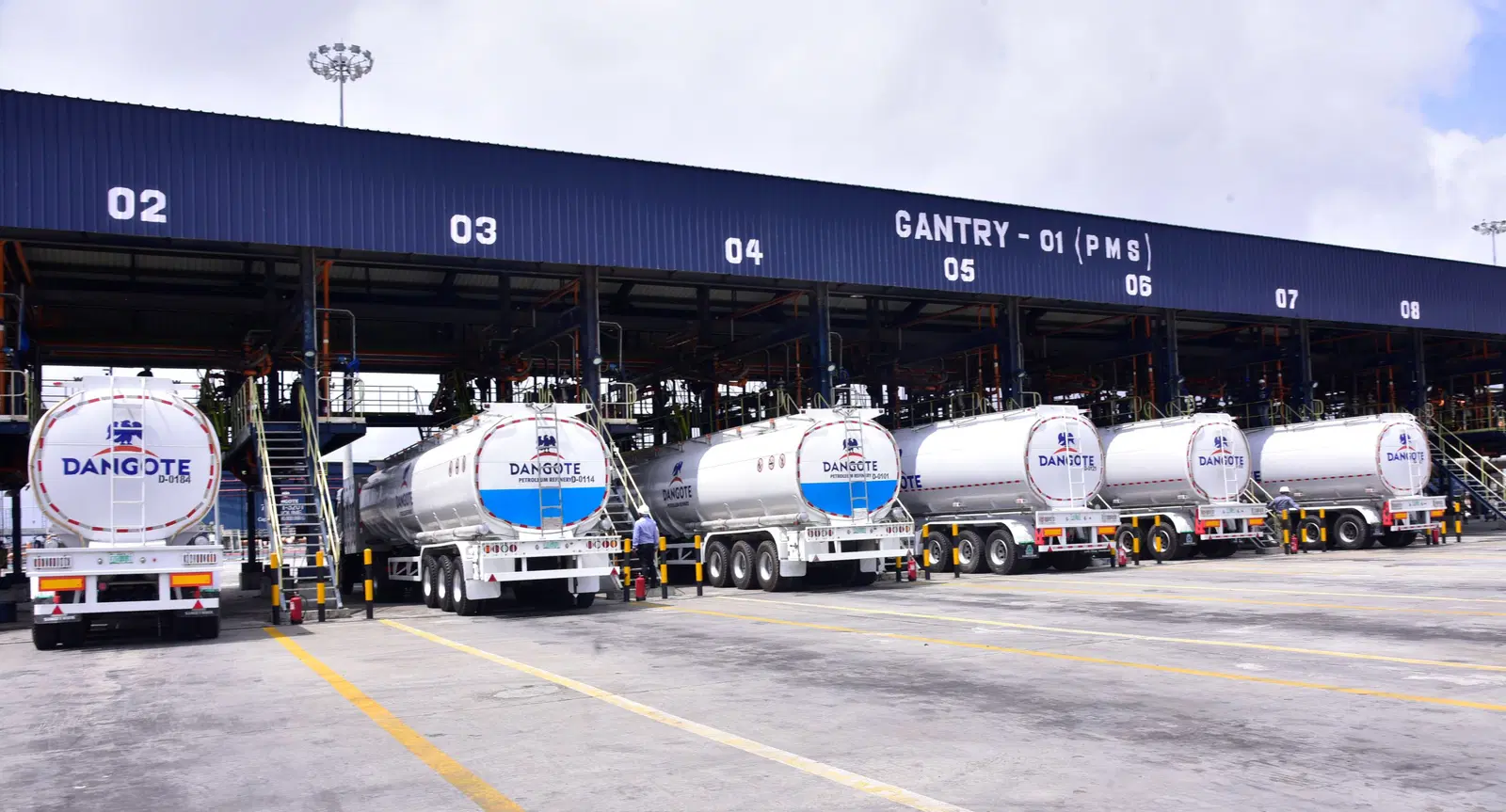
The Dangote Refinery, a 650,000 barrels per day facility considered the largest single-train refinery in the world, has been embroiled in battles with different stakeholders in Nigeria’s oil and gas sector since it commenced operations in 2024, sparking concerns about challenges faced by investors in the country.
Going by its nameplate capacity, the refinery was projected as having the capacity to meet 100 per cent of Nigeria’s domestic demand for refined products and still have a surplus for export. The commencement of the refinery’s production was seen as a turning point in ending Nigeria’s long history of fuel import dependence that had been a drain on the country’s foreign exchange.
However, the refinery has been locked in disputes. With the potential of the refinery to resolve energy issues in the country, many are miffed about the disputes, which they perceive as hurdles created by forces in the industry with vested interests.
While industry watchers basked in euphoria after the Nigerian National Petroleum Company (NNPC) Limited ended its regime of being the sole off-taker of Dangote Refinery’s petroleum products in October 2024, as it was deemed to have opened doors for private marketers, engendering healthy competition, the refinery was beset with another conflict with depot owners.
Monopoly Concerns
The refinery’s launch of a direct distribution initiative aimed at ensuring efficient supply of petroleum products to consumers nationwide seems to have unsettled some groups of fuel marketers, including depot owners and other middlemen, who saw it as a threat to their business.
While some groups of major marketers raised concerns about a potential monopoly of the downstream market by Dangote Refinery, others dismissed it, stating that there is an entrenched oligopoly in the industry fighting back to retain their position to the detriment of the majority of Nigerian consumers.
Industry groups like the Natural Oil & Gas Suppliers Association of Nigeria (NOGASA), the Depot and Petroleum Products Marketers Association of Nigeria (DAPPMAN) and the Petroleum Products Retail Outlets Owners Association of Nigeria (PETROAN) kicked against the refinery’s plan to distribute fuel directly to end-users.
NOGASA and PETROAN argued that Dangote’s plan to bypass traditional distributors could destabilise the existing supply chain, leading to scarcity and job losses. The initiative, which involves deploying 4,000 CNG-powered trucks (an investment worth about ₦720 billion), is said to save Nigerians over ₦1 trillion annually in fuel consumption. The scheme is also projected to lower pump prices, curb inflation, and create jobs.
READ ALSO: Nigeria May Lose N14.7bn Daily From Dangote PENGASSAN Row
Experts dismissed the concerns and arguments about monopoly, urging marketers to get their own refineries to diversify supply sources and reduce dependence on a single player.
Economist and energy expert Kelvin Emmanuel argued that marketers’ resistance stems from vested interests in maintaining the status quo, where arbitrage and middlemen inflate costs.
Speaking on a national television programme, Mr Emmanuel, who is a co-founder of Dairy Hills, said concerns about the refinery becoming a monopoly are misplaced, pointing instead to systemic inefficiencies that have plagued the sector for decades.
He maintained that the refinery is coming in to address long-standing issues in Nigeria’s fuel distribution system, adding that “the immediate fix is the deployment of CNG-powered trucks to ensure last-mile delivery while avoiding delays caused by existing structural inefficiencies.”
Energy expert Ikechukwu Okafor said the coming on stream of the Dangote Refinery came at a critical time to save the country from the burden of fuel import dependence, and Nigerians should be grateful to the company.
In an interview with Pinnacle Daily, Okafor said it makes no sense to accuse Dangote of monopoly when there is no functional refinery, especially government-owned, producing petroleum products, especially Premium Motor Spirit (PMS).
He decried high fares charged by truckers for conveying petroleum and other products across the country, stating that they usually gang up through unions, even when they have rickety trucks that often break down on the road. “Those opposing Dangote should go and take a loan and match him and import their own trucks too. And besides, they have so many rickety trucks,” Okafor stated.
He expressed optimism that when other refineries like BUA come on stream in a few years’ time, there will be more competition in the market.
Depot Owners’ Agitation
At the height of the controversy between Dangote Refinery and DAPPMAN, businessman Femi Otedola advised depot owners to align with the current market realities and adapt by identifying and investing in new value chains in the sector, instead of fighting Dangote.
“If anything, DAPPMAN members should be focusing on owning and scaling last-mile retail outlets, not holding on to tanks built for a fuel import economy that no longer serves us,” Otedola stated. He warned that DAPPMAN members would become irrelevant and bankrupt if they fail to adapt.
Labour Disputes
While the conflict between Dangote and DAPPMAN seemed to have subsided, labour unions came to the front burner. A disagreement between the refinery and the National Union of Petroleum and Natural Gas Workers (NUPENG) over unionisation of truck drivers employed by the company led to a nationwide strike by NUPENG in early September 2025, raising concerns about fuel shortages across the country.
The union saw the deployment of the trucks as a threat to jobs and collective bargaining.
However, Dangote insisted that it was aimed at fostering efficiency in the fuel distribution value chain and promoting environmental sustainability through the use of CNG-powered trucks deemed to be eco-friendly.
Unions accused Dangote of being anti-labour and tilting towards silencing workers. By the close of September, the dispute between Dangote and the Petroleum and Natural Gas Senior Staff Association of Nigeria (PENGASSAN) brewed, this time, in a wider dimension. The PENGASSAN strike, which lasted for three days, disrupted oil and gas supply, causing significant economic losses.
The strike followed the alleged dismissal of 800 Nigerian workers by the Dangote Refinery over unionisation. While PENGASSAN accused the company of anti-labour, it clarified that only a “small” number of Nigerians were disengaged as part of the reorganisation process in response to alleged acts of sabotage.
Entrenched Oligopoly
Analysts said the dispute between Dangote Refinery and labour unions, particularly PENGASSAN, reinforced concerns about monopoly and entrenched oligopoly in Nigeria’s oil and gas sector. The PENGASSAN strike generated mixed reactions across the country. While some hailed it as a struggle to protect workers’ rights, others saw it as excessive and aligning with the interests of a powerful force in the industry fighting to retain their business model based on fuel importation.
Some argued that Dangote is not creating a new problem but is instead challenging a long-standing, deeply corrupt, and inefficient system—the entrenched oligopoly.
Mr Emmanuel, while condemning the actions of NUPENG and PENGASSAN, said the unions’ desperation to have Dangote Refinery’s staff join them raises suspicion that they were proxies for the marketers fighting the refinery.
Human rights lawyer and Senior Advocate of Nigeria (SAN) Femi Falana faulted the agreement reached between the Federal Government, the Nigeria Union of Petroleum and Natural Gas Workers (NUPENG), and the management of Dangote Refinery and Petrochemicals over the unionisation of its staff, insisting that the deal contradicts existing labour laws.
Falana made this position known while presenting a paper titled “Automatic Membership of Trade Unions for Workers” at a national webinar on Abuse of Market Dominance and Unfair Labour Practices organised by the Federal Competition and Consumer Protection Commission (FCCPC) in collaboration with the Faculty of Law, University of Lagos.
“As far as the law is concerned, employees of Dangote Refinery and Petrochemicals are deemed to be members of NUPENG. The question of allowing only those willing to unionise to do so within two weeks is completely at variance with the Trade Union Act,” he said.
Falana cited multiple judicial authorities, including Nestoil v NUPENG (2012) and Eyiaromi Oladele v Attorney General, Lagos State (2017), to establish that junior workers are presumed to be automatic members of trade unions unless they formally opt out in writing. Senior staff, however, must expressly opt in.
A Senior Advocate of Nigeria (SAN), Dr Monday Onyekachi Ubani, said while workers can join labour unions, the unions must not constitute themselves into becoming agents to disrupt the private refinery.
He observed that the PENGASSAN came into existence when all the refineries were government-owned, but today, the situation has changed with the entry of the Dangote Refinery as a private company.
In an interview with Pinnacle Daily, Ubani emphasised that unionism should not be forced on the refinery in such a way that it becomes a tool to emasculate the company and continue serving the interest of those who want to continue profiteering in a system that impoverishes the masses.
“From the reports we are having, those unions want to increase virtually everything so that they continue milking us dry, but Dangote has come to break that monopoly in order to reduce the unit price of petrol and even diesel,” Ubani told Pinnacle Daily.
READ ALSO: Dangote Refinery: PENGASSAN, NUPENG Actions Threaten National Security – Expert
He said government authorities should focus on monitoring “what goes on in the Dangote Refinery so that he does not exploit Nigerians.”
Africa’s richest man and President of Dangote Group, Alhaji Aliko Dangote, while speaking during the flag-off of the CNG-powered trucks for fuel distribution in September 2025, raised the alarm over what he described as deliberate attempts by “mafias” in the petroleum sector to frustrate the operations of his refinery.
He alleged that both international traders and local marketers have connived to frustrate any refinery attempting to revive local production, preferring to continue profiting from fuel importation.
To overcome the threat of a private monopoly and the legacy of an oligopoly, experts believe that the solution lies in the government stepping up its duty as a regulator and a facilitator of genuine competition by adopting sound policies that create a conducive environment for more investors to come into the oil and gas downstream sector and boost local refining and distribution.

Victor Ezeja is a Nigerian journalist skilled in producing insightful news analyses, feature stories, and interviews that simplify complex issues and drive informed public discourse. His work combines rigorous research, balanced reporting, and compelling storytelling to highlight developments shaping industries and society. Victor, who holds a Master's Degree in Mass Communication, specializes in energy, aviation, business, and economic reporting. He can be reached via @VICTOREZEJA on X