

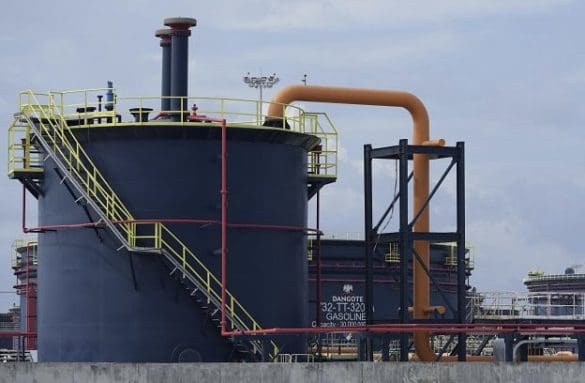
The emergence of the Dangote Refinery is fundamentally reshaping Nigeria’s oil industry, leading to a sharp decline in the country’s dependence on imported fuel from places like Malta.
According to TradeMap data, Nigeria’s imports of Malta petroleum oils and oils derived from bituminous minerals fell to $818 million in 2024, down from more than $2.1 billion the previous year. This reflects a 60 per cent drop.
The Trade Map data show that the import of petrol from Malta to Nigeria witnessed a spike in 2023 ($21 billion worth of imports), which raised concerns across the industry.
The surge in imports from Malta in 2023 was unusual, as Nigeria had previously imported very little from there. The West African country recorded no petrol imports from Malta between 2017 and 2022. The 2023 petrol import surge came at a time when some reports alleged offshore blending of petrol and smuggling into Nigeria.
Pinnacle Daily recalls that following claims by Dangote Group chairman Aliko Dangote that some personnel of the Nigeria National Petroleum Company Limited (NNPCL) and oil traders were involved in blending activities in Malta, the then NNPCL GCEO, Mele Kyari, denied any knowledge of such activity.
READ ALSO: 15% Tariff Suspension: Our Price Cut Triggered Petrol Price Drop – Dangote Refinery
The latest figure indicating a decline in imports from the small Mediterranean nation has been attributed to increased domestic production of Premium Motor Spirit (PMS), also known as petrol, from the Dangote Refinery.
The 650,000-barrel-per-day Dangote Petroleum Refinery, which commenced operations in early 2024, has been producing petrol, diesel, and aviation fuel supplied locally and also exported to other countries.
While some experts hailed the drop in petrol imports from Malta, others observed that there has been a significant increase in Nigeria’s crude imports, especially from the United States, this year.
READ ALSO: NNPC Limited Declares ₦5.4 Trillion Profit After Tax
Recent data released by the U.S. Energy Information Administration revealed that Nigeria’s crude oil imports from the country rose by 100.7 per cent year-on-year to 31.69 million barrels in the first eight months of 2025 from 15.79 million barrels in the previous year.
Industry watchers believe these imports were done mostly by Dangote Refinery, which has been grappling with domestic crude supply shortages since it commenced operations.
Despite the Domestic Crude Supply Obligation contained in the Petroleum Industry Act (PIA), which mandates local crude producers to allocate a certain portion of their crude for domestic consumption, domestic refineries, including Dangote, have continued to lament insufficient supply, hence resorting to importation to meet their refinery feedstock demands.
The Nigerian Upstream Petroleum Regulatory Commission (NUPRC) had reported that 67.66 million barrels of crude were delivered to local refiners between January and August 2025, including modular plants and facilities managed by NNPCL. This is 45 per cent short of the 123.48 million barrels sought by refiners for the first half of the year.
Aliko had reportedly said in July that the refinery imported about 60 million barrels of crude oil from the United States and other countries in the first half of 2025 (January to June).
The Dangote Group President, who spoke at the West African Refined Fuel Conference in Abuja in July, disclosed that the refinery now buys between 9 million and 10 million barrels of crude monthly from international markets. “As we speak today, we buy 9–10 million barrels of crude monthly from the US and other countries,” he stated.
A data and analytics firm, Kpler, reported that Dangote Refinery’s crude imports surged to a record 590,000 barrels per day (kbd) in July, with U.S. crude accounting for 60 per cent (370 kbd) of the total, while Nigerian grades constituted just 40 per cent (220 kbd).
The Kpler report indicated that it was the first time U.S. crude overtook Nigerian supply. While the Nigerian grades primarily comprised Amenam, Bonny Light, and Escravos, WTI accounted for a significant share of Dangote’s imports from the U.S.
READ ALSO: NNPC Targets 2026 to Select Technical Partners to Revive Refineries
Despite an agreement with NNPCL for Dangote Refinery and other local refineries to be supplied with crude in naira since October 2024, actual deliveries have consistently fallen short of agreed volumes.
Reacting to the data on the increase in crude imports from the U.S., Economist and energy expert Mr Kelvin Emmanuel said it is because government agencies in the upstream and downstream are not encouraging domestic refiners to succeed. Mr Emmanuel accused operators and NNPCL of allegedly collaborating to sell Nigerian crude at a $2-$3 premium per barrel to the Dangote refinery, which increases the cost of buying crude locally.
On the latest data indicating a decline in petrol imports from Malta, the energy expert said some Nigerian importers have moved to Lomé in Togo for their activities of blending and importing substandard products into Nigeria.
According to him, “There’s a 2m metric tonne floating storage and offloading vessel in Lome that stores 2.6bn litres of petroleum products at any given time, and it’s owned by Nigerian traders.”
“They buy crude at a discount in Primosk and Novorossisyk ports in Russia (Russia is under sanctions, so the oil price cap has it at $45 a barrel, with further discounts from sellers as sweeteners). Then they transship it to Lome, where it’s refined to naphtha and then blended with condensates to form what’s imported into Nigeria and approved illegally as petrol (in contravention of sections 317-11 of the PIA),” Emmanuel stated via his X handle.

Victor Ezeja is a Nigerian journalist skilled in producing insightful news analyses, feature stories, and interviews that simplify complex issues and drive informed public discourse. His work combines rigorous research, balanced reporting, and compelling storytelling to highlight developments shaping industries and society. Victor, who holds a Master's Degree in Mass Communication, specializes in energy, aviation, business, and economic reporting. He can be reached via @VICTOREZEJA on X