

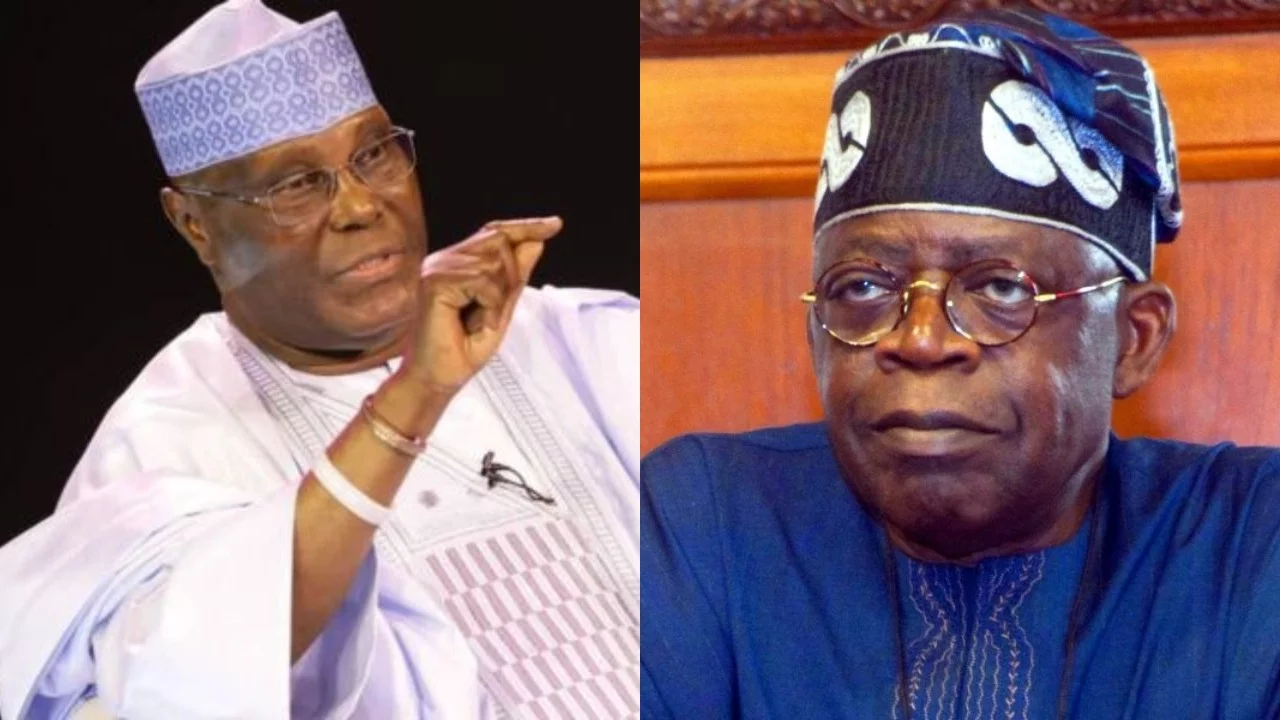
President Bola Tinubu has criticised former Vice-President Atiku Abubakar’s proposal to restore petrol subsidy if elected president in 2027, questioning how the programme would be funded.
Atiku, the presidential candidate of the African Democratic Congress (ADC), had said he would bring back petrol subsidy if elected, arguing that the Tinubu administration had failed to account for funds saved from the removal of the subsidy.
Tinubu: Subsidy Proposal Shows Ignorance
Reacting to the proposal, Tinubu described it as evidence of what he called “serious ignorance on governance and economy”.
The President spoke on Thursday at the State House, Abuja, while receiving Osun State Governor, Ademola Adeleke, who visited him following his victory in the August 15 governorship election.
Tinubu said the government inherited a difficult financial situation, noting that 27 states were unable to meet salary and pension obligations before he assumed office.
RELATED NEWS:
- 2027: Atiku Promises to Restore Petrol Subsidy if Elected
- Atiku Sues Tinubu Over Alleged Forged NYSC Certificate
- ‘Elections Are Not Military Operations’: Atiku Decries Security Overreach Ahead of Osun Election
- Obi Vows Crackdown on Criminality, Labels Fuel Subsidy ‘Organised Crime’
- Nigerians Yet to Feel Impact of Fuel Subsidy Removal – Economist
“Let’s look at the trajectory of the history. I saw one of my opponents, now say he will go back to subsidy. I read it. That is demonstration of a serious ignorance on governance and economy,” Tinubu said.
He argued that resources being spent on petrol subsidy would be better directed towards infrastructure, education, healthcare and housing.
Presidency Demands Funding Plan
The Presidency also challenged Atiku to explain the financial implications of his proposal.
Bayo Onanuga, Special Adviser to the President on Information and Strategy, described the proposed return to subsidy as “retrogressive”, saying it would take Nigeria back to a system he characterised as wasteful, corruption-ridden and financially burdensome.
Onanuga said Atiku was entitled to propose alternative policies but maintained that Nigerians deserved to know how the subsidy would be funded and implemented under the current petroleum-sector framework.
‘No N30trn Subsidy Windfall’
Onanuga disputed Atiku’s claim that about N30 trillion had been saved from subsidy removal, saying there was no such subsidy windfall or savings available to the government.
He said the previous subsidy arrangement required the Nigerian National Petroleum Company Limited (NNPCL) to absorb the difference between the cost of petrol and the regulated pump price, creating a significant financial burden.
According to him, the Petroleum Industry Act provided a framework for ending the subsidy regime by June 2023, with the Tinubu administration only bringing the process forward by a few weeks after taking office.
Dangote Refinery Has Changed Petrol Market — Presidency
The presidential aide further argued that Nigeria’s petroleum industry had changed significantly since the subsidy was removed, particularly with the emergence of large-scale domestic refining capacity.
He cited the Dangote Refinery as a major development that has reduced the country’s dependence on imported refined petroleum products.
Onanuga warned that returning to the old subsidy system could weaken domestic refining and put smaller local refineries under financial pressure.
He said Nigeria was increasingly moving towards domestic refining, which could improve energy security, conserve foreign exchange and create jobs.
‘Who Will Pay for Subsidy?’
Onanuga questioned who would bear the cost if petrol were sold below its economic price.
“If petrol is sold below its economic cost, which is about N1,200 to N1,300, someone must absorb the difference,” he said.
He argued that the cost would ultimately be borne by public finances through reduced funding for infrastructure and social services, lower allocations to states and the 774 local councils, increased borrowing or higher public debt.
The Presidency acknowledged the hardship caused by higher petrol prices but maintained that sustainable relief should not involve recreating a subsidy system that had placed pressure on government finances.
It pointed to the government’s compressed natural gas initiative as an alternative intended to reduce transportation and energy costs.
Atiku Asked to Explain Cost, Funding
Onanuga challenged Atiku to provide details of the proposed subsidy, including its estimated annual cost, source of funding, whether borrowing would be required and whether existing petroleum-sector laws would need to be amended.
He said political promises should be supported by clear financial calculations.
The dispute over petrol subsidy has emerged as another major policy issue ahead of the 2027 presidential election, with Atiku advocating a return to the policy and the Tinubu administration defending its removal.

Rafiyat Sadiq is a political, justice, and human rights reporter with Pinnacle Daily, known for fearless reporting and impactful storytelling. At Pinnacle Daily, she brings clarity and depth to issues shaping governance, democracy, and the protection of citizens’ rights.