

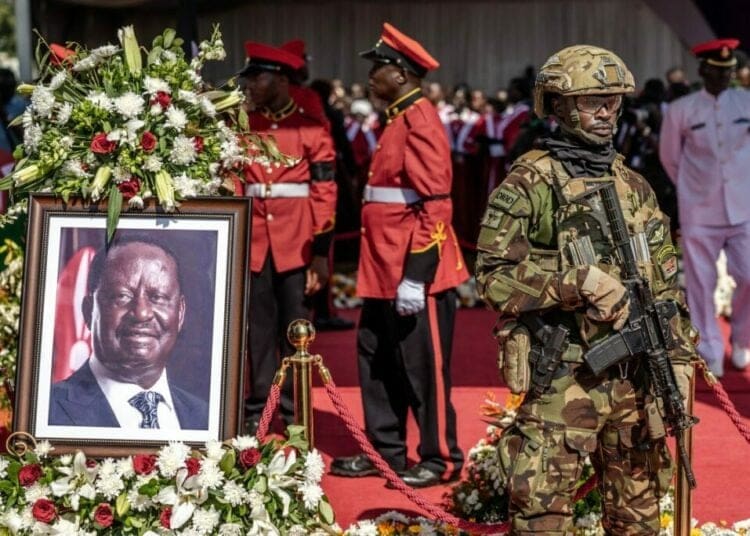
Former leaders, global figures honour Kenya’s opposition icon as Obasanjo, Obama pay tribute
Thousands of mourners, relatives, and dignitaries gathered in Bondo, western Kenya, on Sunday to bid farewell to former Prime Minister Raila Odinga, who was laid to rest near his ancestral home by Lake Victoria.
The burial followed a week of national mourning marked by deadly stampedes and widespread grief. At least five people were confirmed dead and hundreds were injured after massive crowds overwhelmed security officials during public viewing of the late leader’s body in Nairobi and Kisumu.
© AFP via Getty Images
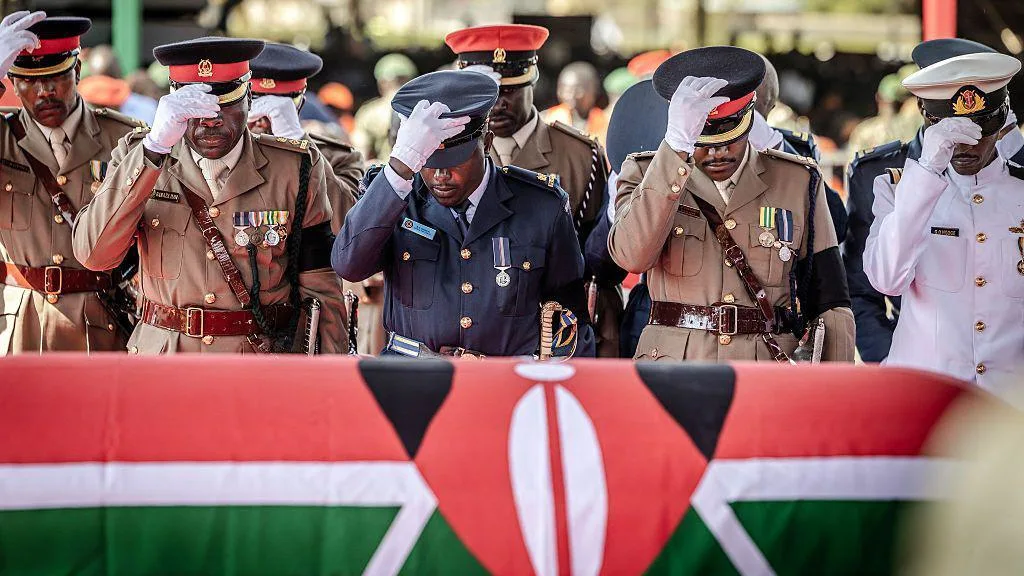
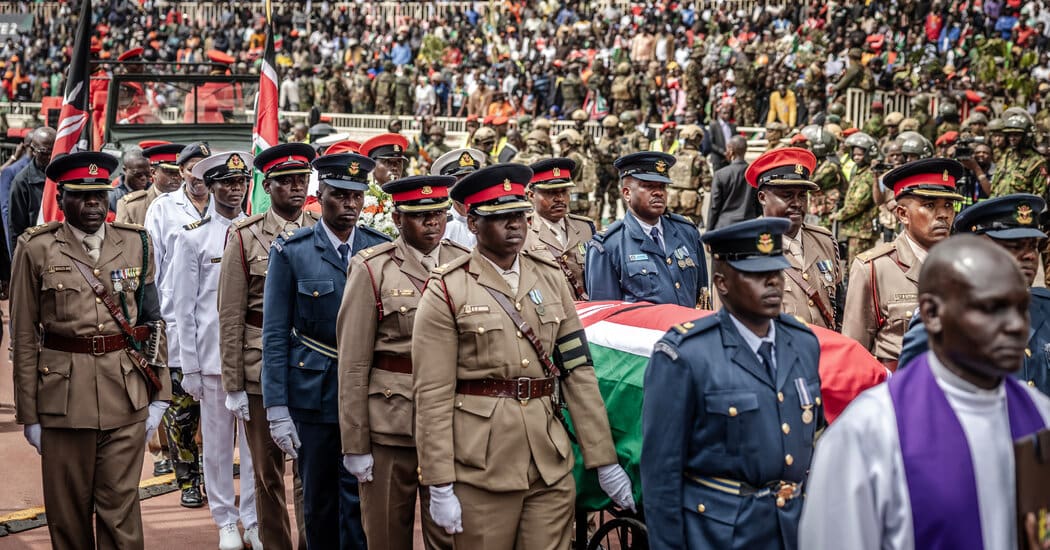
Odinga, popularly known as “Baba”, Swahili for “father” died last Wednesday in India at the age of 80 while receiving medical treatment. His casket, draped in the Kenyan flag, was received with military honours, including a 17-gun salute, before being interred after a solemn Anglican service at Jaramogi Oginga Odinga University of Science and Technology.
“Now finally, Baba is home,” said his son, Raila Odinga Jr., as mourners watched the final rites in Bondo under heavy security.
Obama, Obasanjo, Ruto Lead Global Tributes
Former U.S. President Barack Obama, in a message posted on social media, hailed Odinga as “a champion of peace who put his country’s interests above personal ambition.”
“Like few other leaders anywhere, he was willing to choose the path of peaceful reconciliation without compromising his core values,” Obama said.
Among those in attendance were President William Ruto, former President Uhuru Kenyatta, and Nigeria’s former President Olusegun Obasanjo.
Obasanjo described Odinga as “a brother, friend, and pan-African partner,” recalling their long friendship and Odinga’s unwavering dedication to democracy and justice.
“Africa has lost a statesman who believed leadership was service, not power,” Obasanjo said.
President Ruto praised Odinga’s statesmanship, saying the late leader had helped “steady the country” through a political pact reached in March that included placing opposition figures in government.
Some ODM officials said they would honour that agreement, while others signalled hesitation about joining forces with former rivals.
A Life of Political Struggle
Odinga’s political career spanned decades of activism, imprisonment, and five presidential bids.
He served as Kenya’s prime minister between 2008 and 2013 after a disputed election and later struck landmark political pacts, first with Kenyatta in 2018 and later with Ruto in 2024.
He was once jailed for treason during the Daniel Arap Moi regime and became a symbol of Kenya’s fight for multi-party democracy.
He also sought continental roles, including a run for the African Union chairmanship.
Former AU deputy chair Erastus Mwencha and other continental figures hailed Odinga’s impact on African politics. World leaders sending condolences described him as a committed pan-Africanist.
Odinga is survived by his wife, Ida, and their children Rosemary, Raila Junior and Winnie.
His death and the national response that followed have left Kenya facing a fragile political moment as leaders and supporters weigh the future of the pact he helped forge.
Tragedy Amid Tributes
The mourning period was marred by tragedy as on Thursday, police opened fire to disperse crowds that forced their way into a stadium during the first public viewing in Nairobi.
Two more people died at the state funeral on Friday, while scores were injured on Saturday in Kisumu, Odinga’s political stronghold.
“I’m feeling so low having lost him,” said Ainea Opilu, a 25-year-old teacher from Siaya County. “It feels like a bad dream. I still can’t believe Baba is gone.”
A Farewell to “Baba”
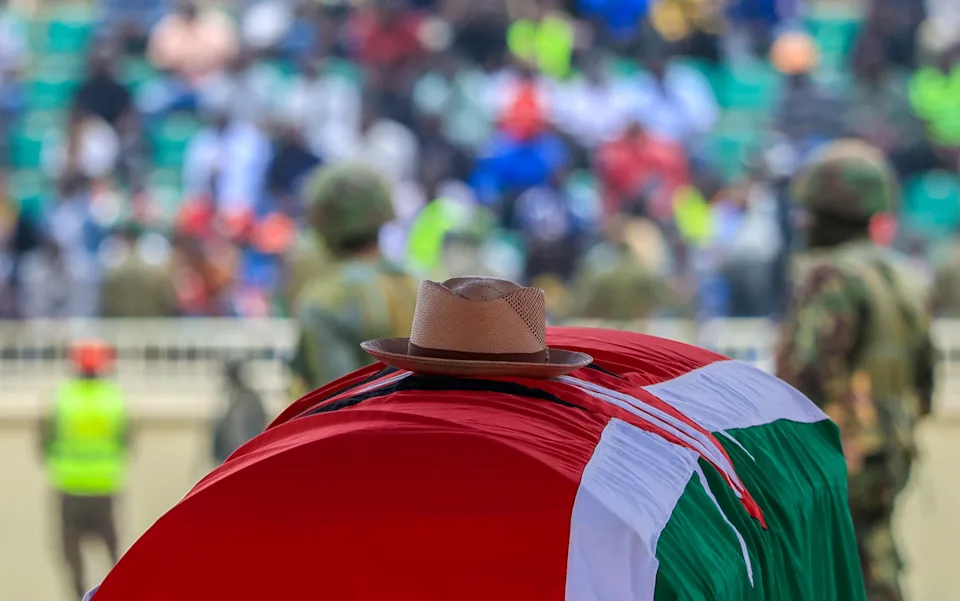
Odinga’s burial concluded with a military band salute as his coffin was lowered beside that of his father, Jaramogi Oginga Odinga, Kenya’s first vice-president and a revered independence hero.
His passing leaves a significant void in Kenya’s political landscape. For many, the emotional farewell to “Baba” marked not only the end of an era but also the beginning of uncertain political realignments in a country he helped shape for more than four decades.

Rafiyat Sadiq is a political, justice, and human rights reporter with Pinnacle Daily, known for fearless reporting and impactful storytelling. At Pinnacle Daily, she brings clarity and depth to issues shaping governance, democracy, and the protection of citizens’ rights.