

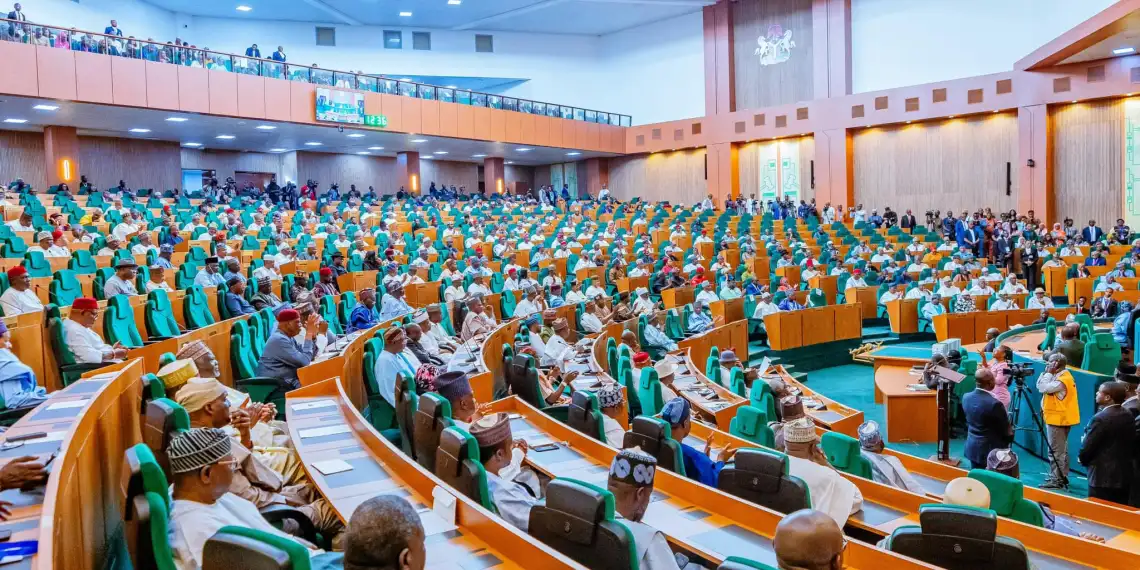
A bill aimed at regulating the employment of staff by Nigerian banks has passed second reading at the House of Representatives.
The draft legislation, sponsored by Fuad Laguda, an All Progressives Congress (APC) lawmaker representing Surulere I federal constituency in Lagos, seeks to amend the Banks and Other Financial Institutions Act 2020 to “prohibit, criminalise and penalise” the hiring of casual or contract staff by banks.
Objective of the Bill
Laguda, who led the debate on Thursday, said the proposed law is intended to “totally mitigate” exploitative practices in the banking sector, which he described as oppressive to millions of Nigerians employed on casual or contract terms.
He noted that existing labour laws, including the Labour Act 2004 and the Employees’ Compensation Act 2010, do not adequately protect the welfare of casual and contract workers.
READ ALSO: FG Bows to Labour, Meets Two Key Demands
Citing a 2023 report by the Chartered Institute of Bankers of Nigeria (CIBN), the legislator stated that banks often rely on casual and contract staff to reduce operational costs, including pensions, minimum wages, health insurance, promotions, bonuses, study grants, and severance packages.
Scope and Impact
According to Laguda, casual and contract workers account for approximately 65 percent of the banking workforce. He said the bill aims to ensure equitable treatment for all employees in the financial sector.
“The proposed law will curb the heinous practices of banks that violate section 7(1) of the Labour Act 2004, which stipulates that an employee should not be employed for more than three months without formal recognition of such employment,” he said.
Support from Colleagues
Laguda urged his colleagues to back the bill, noting that it aligns with the position of the Central Bank of Nigeria (CBN) Governor, Mr. Olayemi Cardoso, who has highlighted the poor working conditions faced by casual and contract staff in banks.
He added that banks frequently employ casual and contract staff to avoid legal obligations, exposing workers to systemic inequalities, emotional abuse, and mental health challenges.
The House voted unanimously in favour of the bill after Deputy Speaker Benjamin Kalu called for a voice vote.

Rafiyat Sadiq is a political, justice, and human rights reporter with Pinnacle Daily, known for fearless reporting and impactful storytelling. At Pinnacle Daily, she brings clarity and depth to issues shaping governance, democracy, and the protection of citizens’ rights.