

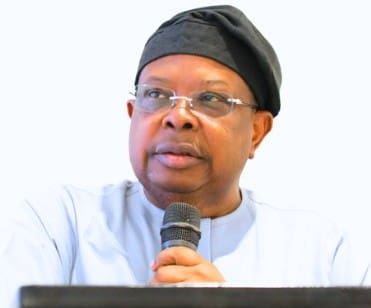
In a bid to safeguard the future of Nigeria’s energy sector, the Minister of Power, Joseph Tegbe, has cautioned industry stakeholders against engaging in actions that might lead to regulatory conflicts, warning that such could undermine the newly decentralized electricity market.
Speaking on Tuesday, July 14, at a workshop in Abuja, Tegbe stressed that the successful transition of the Nigerian Electricity Supply Industry (NESI) hinges entirely on cooperation, not competition, between federal and state institutions.
A Call for Collaboration Over Competition
The workshop, which was on the Legal, Policy, and Regulatory Harmonisation between Federal and State Institutions, focused on addressing potential friction, particularly between state regulators and the national electricity regulatory commission, arising from the decentralization of the power sector.
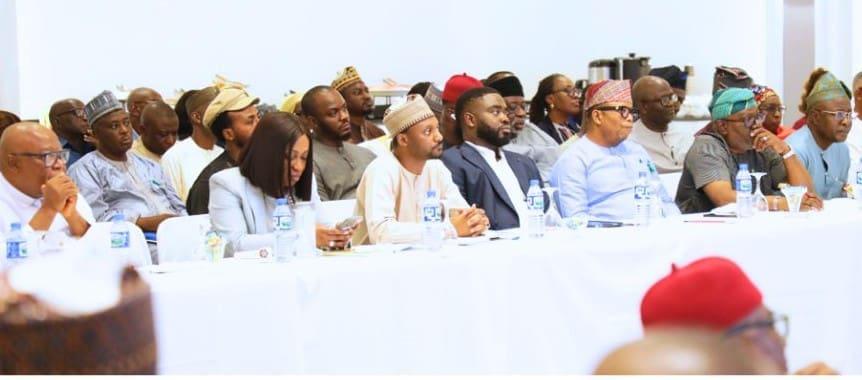
With the enactment of the Electricity Act, power generation, transmission, and distribution are no longer the exclusive preserve of the federal government.
However, Tegbe warned that this new era must not be characterized by jurisdictional turf wars.
“None of these institutions exists in isolation. Our success is interconnected,” Tegbe stated, stressing the need for collaboration among the institutions.
“We must ensure collaboration rather than competition between institutions. We must build alignment instead of regulatory conflict. We must practice mutual respect instead of jurisdictional rivalry.”
Defining the Roles in the New Electricity Era
To ensure a smooth transition, the Minister outlined the complementary roles that various stakeholders must play within the updated national framework.
According to him, the Federal Government retains national leadership and policy-making roles, while state governments assume expanded responsibilities to develop local electricity markets.
The minister clarified that the Nigerian Electricity Regulatory Commission (NERC) continues to regulate areas strictly within its federal jurisdiction.
He stressed that emerging state regulators are charged with the responsibility to supervise and guide their respective markets at state level.
On the role of private investors, the minister said they would provide the essential capital and technical innovation to scale up capacity.
While noting that the entire reforms prioritise consumers’ interest, Tegbe clarified that the legal reforms were designed to create a unified, stronger energy ecosystem, rather than fragmented, warring factions.
“The Electricity Act did not establish parallel electricity industries. It established complementary electricity markets operating within one national framework,” Tegbe clarified.
Protecting Investors and Consumers
The Minister urged regulators to prioritise market clarity, warning that administrative confusion would only drive away much-needed private capital and harm the consumer.
“Our objective must therefore be regulatory coherence,” Tegbe said.
“Investors should not encounter conflicting rules. Developers should not navigate contradictory approval processes. Consumers should not become casualties of institutional uncertainty,” he added.
READ ALSO:
- Tinubu Nominates Joseph Tegbe as New Power Minister
- Power Sector Reforms: NERC Moves to Align Judiciary with New Regulatory Frameworks
- Electricity Consumers Can Now Sell Excess Solar Power to Grid as NERC Launches Net Billing Regulations 2026
- Edo Sets Precedent on Electricity Disputes, NERC Hails Judiciary
By establishing a predictable and harmonious regulatory environment, the Ministry of Power aims to build robust investor confidence, paving the way for a more reliable, stable, and decentralized power grid across Nigeria.
According to a statement issued by NERC, the minister set up a nine-member inter-agency committee to address issues around decentralisation of the electricity market.
The statement said the committee, chaired by the minister, has four weeks to review issues raised at the meeting and share resolutions with stakeholders.
The minister emphasised the critical role of electricity in enabling economic growth, industrialisation, job creation, digital transformation and improving quality of life.
“Every sector of our economy depends upon it (electricity) – Manufacturing, Agriculture, Mining, Financial Services, Telecommunications and Information Technology, to mention but a few,” he stated.

Victor Ezeja is a Nigerian journalist skilled in producing insightful news analyses, feature stories, and interviews that simplify complex issues and drive informed public discourse. His work combines rigorous research, balanced reporting, and compelling storytelling to highlight developments shaping industries and society. Victor, who holds a Master's Degree in Mass Communication, specializes in energy, aviation, business, and economic reporting. He can be reached via @VICTOREZEJA on X