

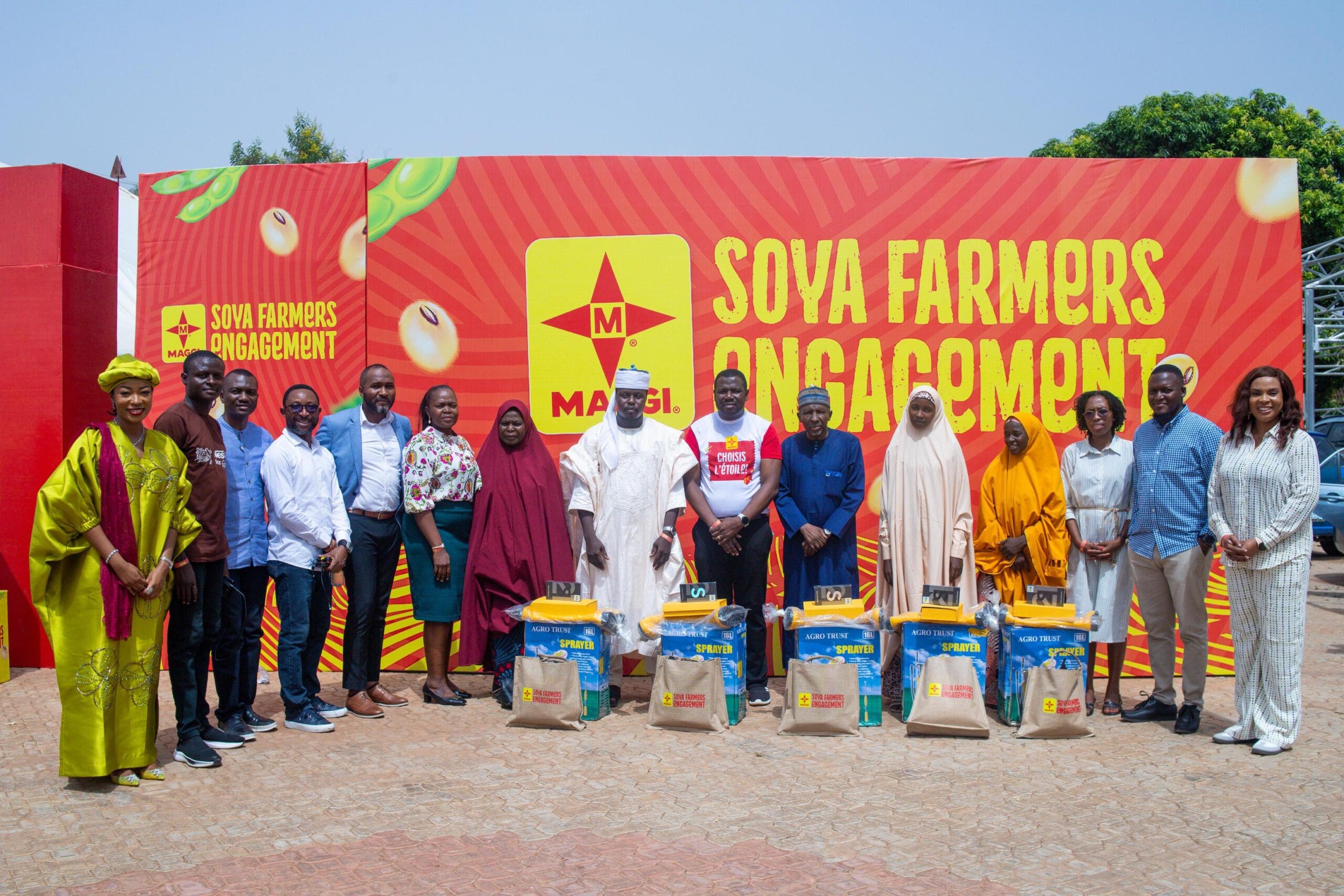
MAGGI, a seasoning brand from Nestlé in Nigeria, says it targets production of at least 80,000 metric tonnes of quality soybean grains annually with a Regenerative Agriculture (RegenAg) initiative.
The company stated this while announcing the successful completion of its Regenerative Agriculture (RegenAg) pilot for local soybean sourcing in Nigeria.
The programme aims to boost local soybean sourcing in the country.
The pilot programme, which was launched in 2023 with an investment of over ₦100 million, supported 1,030 soybean farmers to adopt climate-smart practices that improved their yields while restoring soil health.
In a statement signed by Toritseju Egbebi, Corporate Affairs Manager, Nestlé Nigeria, the company said the success of the pilot programme has paved the way for a larger, multi-partner scale-up initiative, now backed by AGRA and Nestlé, targeted at reaching 25,000 smallholder farmers across Nigeria.
The project, which was executed in partnership with TechnoServe and IDH, with technical guidance from the Centre for No-Till Agriculture (CNTA), Ghana, introduced techniques such as cover cropping, minimal tillage (ripping), crop rotation, and hedgerows to ensure healthier soils and higher yields.
The project demonstrated the potential of regenerative farming to transform smallholder agriculture in Nigeria.
Commenting on the project, Category Manager for Culinary, Nestlé Nigeria, Funmi Osineye, said the company prioritised supporting local farmers to grow soybean sustainably since it is a key ingredient in MAGGI production.
READ ALSO: World Food Day: Experts Raise the Alarm over Persisting Food Crisis in Nigeria
Osineye stressed that the project is aimed at boosting productivity while protecting the land for future generations.
“This initiative is more than a sourcing strategy; it is an investment in resilient food systems,” Osineye stated. “By equipping farmers, especially women and youth, with regenerative agriculture skills, we are improving productivity today while protecting the land for future generations. This is how MAGGI continues to nourish Nigerian families while helping build a stronger agricultural economy.”
At an event to mark the successful completion of the pilot programme, five award-winning farmers were recognised for their outstanding adoption of regenerative practices.
“Since I started adopting these strategies, as we were taught in this project, my yields have increased by 100%,” said Engineer Lawan Abdul, one of the farmers who shared his testimony about the programme. While noting that the programme was a very beneficial one, Abdul applauded the organisers.
READ ALSO: 500,000 Jobs, 10m tons of Rice As Dangote Partners with Niger Foods, Africa Rice
Alidu Amadu, Head of Agriculture Services, Nestlé Central & West Africa Region (CWAR), said the success of the project demonstrates the power of collaboration.
“Regenerative agriculture not only restores soil health but also builds long-term productivity and resilience for local communities,” Ahmadu stated.
The statement further disclosed that the initiative is part of efforts to achieve Nestlé’s ambition to source 20% of key ingredients through regenerative agricultural methods by 2025 and 50% by 2030, while supporting Nigeria’s broader food security and rural development goals.

Victor Ezeja is a Nigerian journalist skilled in producing insightful news analyses, feature stories, and interviews that simplify complex issues and drive informed public discourse. His work combines rigorous research, balanced reporting, and compelling storytelling to highlight developments shaping industries and society. Victor, who holds a Master's Degree in Mass Communication, specializes in energy, aviation, business, and economic reporting. He can be reached via @VICTOREZEJA on X