

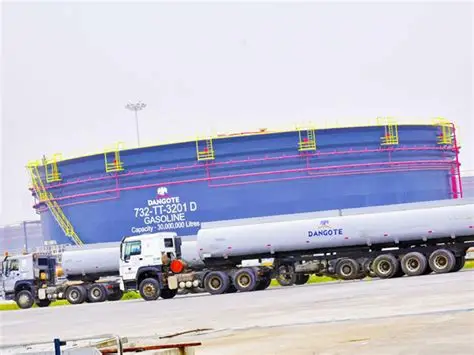
The Dangote Petroleum Refinery has reached a major export milestone, shipping 456,000 tonnes of refined petroleum products to five African countries.
This development follows the achievement of full production capacity of 650,000 barrels per day (bpd) in February by the refinery.
Twelve cargoes of petroleum products were delivered to Côte d’Ivoire, Cameroon, Tanzania, Ghana, and Togo, the company announced in a statement released on Sunday.
The massive export drive signals a definitive shift in Africa’s fuel supply chain, positioning Nigeria as a net exporter of refined goods after decades of reliance on imported fuel.
According to the statement shared on Sunday by the refinery’s management, the products were sold to international traders on a Free on Board (FOB) basis and include premium motor spirit (petrol), automotive gas oil (diesel), and aviation jet fuel.
“The Dangote Petroleum Refinery has strengthened Nigeria’s presence in the regional energy market with the successful sales of 12 cargoes, by traders, totaling 456,000 tonnes (456KT) of refined petroleum products,” part of the statement reads.
This comes at a time of global energy supply disruption caused by the conflict in the Middle East. The conflict, which has led to the blockage of the Strait of Hormuz, a key waterway for shipping about 20 per cent of the world’s oil and gas, has halted the supply of petroleum products from refineries in the Persian Gulf to African countries that depended on them. This has seen global crude prices rise to a four-year high, consequently pushing domestic fuel prices up and raising concerns about inflationary pressure on economies.
In Nigeria, the price of petrol has jumped from about N890 to over N1,400 per litre; similarly, the price of diesel has surged to over N1,500 per litre. These have caused a hike in transport and logistics costs across the country.
The 650,000-barrel-per-day facility, which began operations in early 2024, has been ramping up capacity over the last 24 months.
Industry analysts note that the latest export volumes demonstrate that the $20 billion refinery has moved beyond the commissioning phase into full-scale commercial dominance.
In response to the rising cost of crude oil in the international market, the Dangote Refinery has adjusted its ex-depot price about five times since early March.
The refinery confirmed that the exported products meet Euro V specifications, which are among the strictest environmental standards globally, featuring ultra-low sulfur content. This makes the fuel cleaner than the high-sulfur products traditionally imported into the region.
READ ALSO:
- Dangote Refinery Reassures Commitment to Nigeria’s Energy Stability Despite Global Supply Disruptions
- Dangote Refinery Further Raises Petrol, Diesel Prices as Crude Rises above $110
- Dangote Refinery Listing Ignites Demand, Raises Tough Questions
- Why Nigeria may not Benefit from Oil Price Surge
- Middle East War: Why Nigeria Should have Strategic Petroleum Reserves
The company said the latest export volume “demonstrates the refinery’s growing role in supplying high-quality Euro 5 gasoline and diesel to West Africa — a region long underserved and historically regarded as a dumping ground for lower-quality fuels, and other regions which have become destinations of exports.”
It further noted that by supplying petroleum products to neighbouring African countries and other economies, the refinery is expected to contribute in enhancing energy security in West, East, and Central Africa, while also reducing logistics and supply chain challenges associated with long-distance fuel imports.
It added that with the proximity sourcing advantage, it effectively reduces cost pressures on regional fuel markets.
Analysts observed that the exports also place pressure on the Nigerian government to fully deregulate the domestic market. With the refinery exporting significant volumes for hard currency, local marketers are calling for a consistent naira-for-crude arrangement to ensure that domestic supply remains stable and affordable.
As the refinery continues to scale, the company has indicated that it intends to increase export volumes further, targeting European markets later in the year. However, the immediate focus remains on securing Africa’s energy future.

Victor Ezeja is a Nigerian journalist skilled in producing insightful news analyses, feature stories, and interviews that simplify complex issues and drive informed public discourse. His work combines rigorous research, balanced reporting, and compelling storytelling to highlight developments shaping industries and society. Victor, who holds a Master's Degree in Mass Communication, specializes in energy, aviation, business, and economic reporting. He can be reached via @VICTOREZEJA on X