

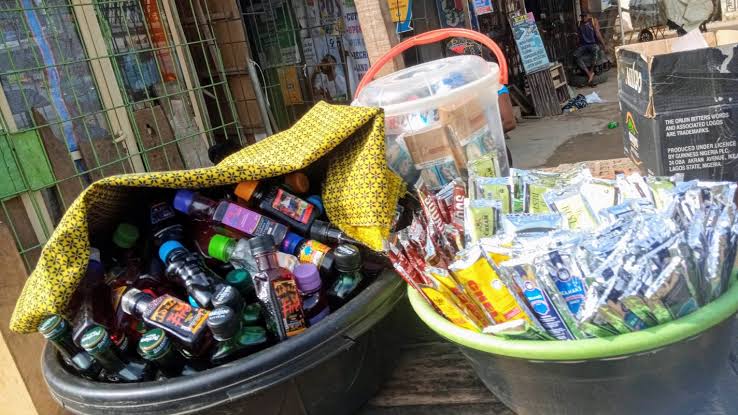
The National Agency for Food and Drug Administration and Control (NAFDAC) decision to enforce a ban on the production and sale of alcoholic beverages in sachets, PET bottles, and glass bottles of 200ml and below has received the backing of Network for Health Equity and Development (NHED) and Corporate Accountability and Public Participation Africa (CAPPA).
The two non-governmental organisations (NGOs) threw their weight behind the decision in a joint statement on Sunday, November 16, signed by the Media and Communication Officer of CAPPA, Robert Egbe.
Pinnacle Daily reports that NAFDAC had recently announced its determination to commence the enforcement of the ban on alcoholic drinks on sachets and other such containers starting from December 2025.
In their statement, the two public health advocacy organisations described the ban as a long-overdue public health intervention essential for safeguarding the well-being of Nigeria’s children, youths, and other vulnerable populations.
READ ALSO: E-Passport Revolution: 10 Countries Leading the Global Shift to Next-Generation Travel Documents
The NGOs concur that the packaging, pricing, and aggressive marketing of these products had made highly potent alcohol dangerously accessible, especially to minors, and were contributing significantly to rising addiction, social disorder, road crashes, and non-communicable diseases across the country.
They noted that when NAFDAC first announced the ban in 2024, it gave manufacturers a multi-year phase-out period, which ends in December 2025, to exhaust existing stock. But some alcohol manufacturers flagrantly continued production even after the deadline.
According to NHED and CAPPA, they condemned the pushback from the manufacturers, particularly the claim by the Manufacturers Association of Nigeria (MAN) that the ban could lead to investment decline and retrenchment, saying it was a familiar scare tactic to push the government to prioritise commercial greed over public health.
They argued that the manufacturing process of these products is mostly mechanised and requires relatively limited human effort; hence, the claims about huge job losses were contrived.
READ ALSO: Tragedy in Kebbi Girls’ School as Bandits Kill Vice Principal, Abduct Students
“We reject in its entirety the claims by the Manufacturers Association of Nigeria (MAN) that the ban will trigger a loss of over N1.9 trillion in investment and lead to the retrenchment of over 500,000 workers.
“These figures are not only inflated and unverifiable, but they also represent a familiar scare tactic used by alcohol and tobacco corporations globally whenever governments attempt to regulate harmful products,” the organisations stated.
The NGOs asserted that rather than engaging honestly with evidence-based public health policies, industry actors had chosen to weaponise economic misinformation to blackmail the Nigerian government and regulatory agencies.
“This behaviour is irresponsible, deceptive, and unbecoming of entities that claim to operate ethically,” they added.
The NHED’s Technical Director, Jerome Mafeni, emphasised that protecting lives must take precedence.
“The long-term social and economic costs of alcohol-related harm far outweigh any short-term profits that manufacturers seek to protect,” Mafeni said. “Nigeria currently bears the burden of increased alcohol-related violence, reduced productivity, escalating healthcare costs, and a rising addiction crisis among young people. These harms disproportionately affect poor and marginalised communities, who sachet alcohol products specifically target.”
He added, “It is unacceptable that children can purchase high-concentration alcoholic products for as little as ₦100. It is equally unacceptable that manufacturers have, for years, prioritised profit over the safety and well-being of Nigerians.”
On his part, CAPPA Executive Director Akinbode Oluwafemi, said government regulation to protect public health should not be negotiable.
“NAFDAC’s decision aligns with global best practices and mirrors what responsible governments worldwide have done to curb harmful alcohol consumption. No credible public health agency anywhere would permit the continued marketing of such products in packaging designed to encourage unrestricted, on-the-go, and underage drinking.
READ ALSO: World Diabetes Day: CAPPA Backs Call for State of Emergency on Diabetes Care
“We commend NAFDAC for resisting corporate bullying and for standing firmly on the side of science, public health, and national interest. We equally call on the Federal Ministry of Health, the Ministry of Finance, the Standards Organisation of Nigeria (SON), and the National Orientation Agency (NOA) to rally behind the agency and ensure seamless implementation of the ban,” Oluwafemi added.
The organisations urged the government not to yield to corporate pressure, insisting that the long-term social and economic costs of alcohol misuse far outweigh any economic benefits claimed by the manufacturers.
“We urge President Bola Ahmed Tinubu and the National Assembly to see through the industry’s theatrics and avoid any attempt to suspend, water down, or delay this life-saving policy. The well-being of over 200 million citizens must not be sacrificed at the altar of corporate profit,” they stated.
They also urged the government to implement additional alcohol control measures, including taxation, stricter marketing regulations to protect children, clear labelling, and nationwide sensitisation on alcohol-related harm.
“NAFDAC’s ban is the right policy at the right time. NHED and CAPPA stand resolutely with the agency and with all Nigerians committed to a healthier, safer, and more responsible society,” the NGOs added.

Alex is a business journalist cum data enthusiast with the Pinnacle Daily. He can be reached via ealex@thepinnacleng.com, @ehime_alex on X