

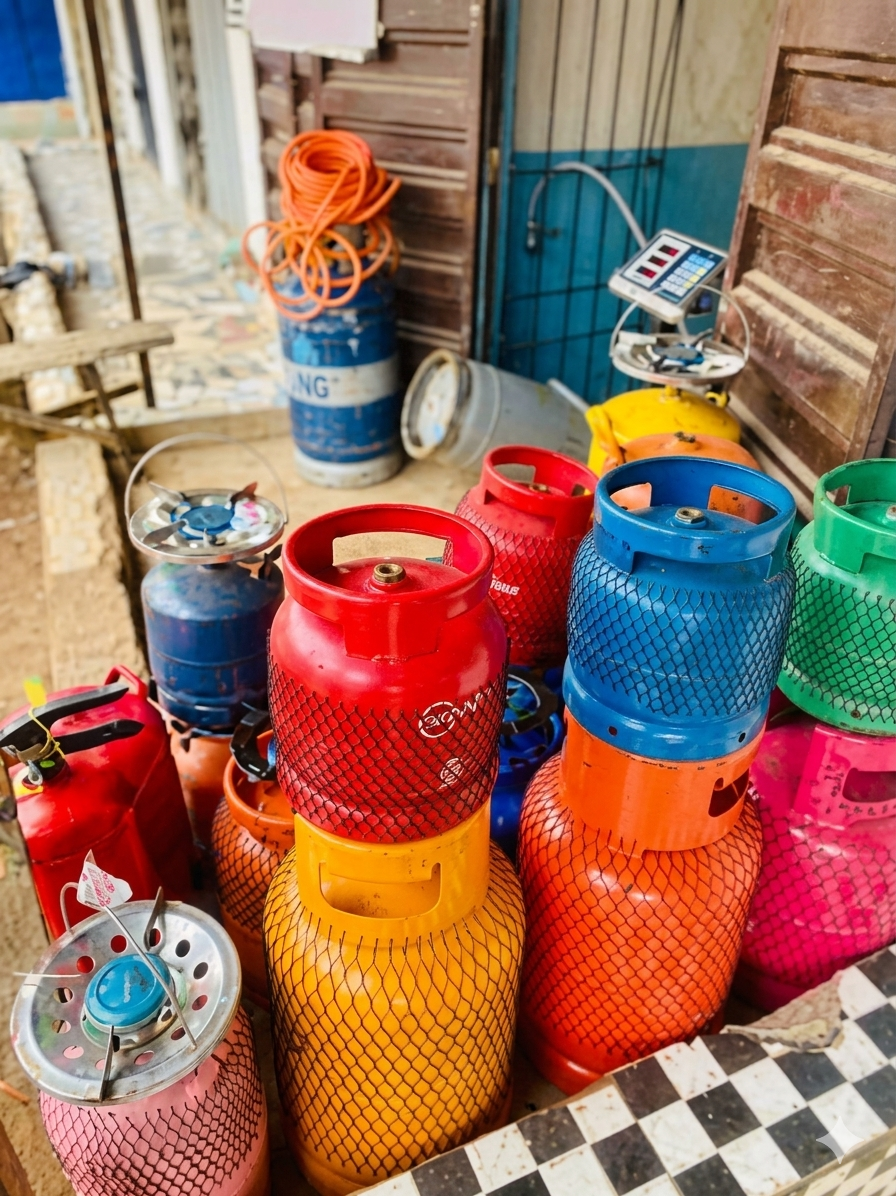
While preparing dinner on Friday evening, Madam Juliana Umeh, a mother of three who resides in the Ilasa area of Lagos, suddenly noticed the flame from her blue 12.5kg cylinder gradually dropped and finally stopped. The gas finished in the middle of the cooking. Left with no other option, Mrs Umeh approached a nearby gas refill shop and was shocked by the news of a fresh increase in the price of cooking gas.
“Last month, I filled this cylinder for ₦15,000, but today they are telling me to pay ₦18,750, that is ₦1,500 per kilogram,” she told Pinnacle Daily, while holding the cylinder and sweating.
In a chat with Pinnacle Daily, the gas seller, Mrs Kehinde Fagbenro, said: “We have been selling at ₦1,200 per kg, but now we are selling ₦1,500.”
When asked the reason for the increase, Fagbenro said: “They have increased the price for us at the depot.”
This is the ripple effect of conflict thousands of miles away now being felt in the heart of Nigerian homes, where the cost of Liquefied Petroleum Gas (LPG), also known as cooking gas, has surged to an alarming ₦1,500 per kilogram, forcing families to rethink.
According to industry sources and recent market checks, the ex-depot price of Liquefied Petroleum Gas (LPG), commonly known as cooking gas, increased from ₦18 million per 20 metric tonnes (MT) in February to ₦21 million in March.
The National President of the Nigerian Association of Liquefied Petroleum Gas Marketers, Mr. Inyang Edu, reportedly confirmed that the depot price has risen to ₦21 million.
Inyang attributed the sharp increase in cooking gas price to the Middle East crisis, which has affected other petroleum products in the last one month.
The conflict involving the United States, Iran and Israel has effectively choked the Strait of Hormuz, a vital maritime route where about 20 per cent of the world’s oil and gas passes to other parts of the world. This has, according to the International Energy Agency (IEA), caused the “largest supply disruption in the history of the global oil market.”
The supply disruption has caused global crude oil prices to surge above $100 per barrel before dropping to about $96 in the last few days.
While the missiles fly over the Persian Gulf, the fallout is landing squarely in Nigerian kitchens.
According to reports, when QatarEnergy declared force majeure in March and the Iranian conflict disrupted seaborne exports, the global Argus Far East Index (AFEI) for propane surged by over 50 per cent. This, according to analysts, had an instantaneous effect in Nigeria.
Pressure on Households
Across major cities and rural communities alike, the surge in the price of cooking gas has sparked concern among households already grappling with inflation and economic uncertainty. Selling at ₦1,500 per kg has placed additional strain on millions of Nigerians.
Despite being one of Africa’s largest producers of natural gas, Nigeria still relies heavily on imports of refined LPG due to limited domestic processing capacity. Analysts say Nigeria still relies on imports to meet nearly 40 per cent of its LPG demand. This structural gap has left the country vulnerable to external shocks.
READ ALSO:
- Middle East Tensions: Concerns as Fuel Prices Rise in Nigeria After Oil Price Surge
- Nigeria’s Cooking Gas Supply Drops as Prices Climb Amid Global Tensions
- Oil Surge Offers Nigeria Windfall as Global Markets Reel – Analyst
- Oil Boom, Empty Pockets: How Production Shortfalls Deny Nigeria ₦28trn Revenue – Expert
As the price of cooking gas continues to rise, some residents have said they may be forced to return to using charcoal.
“At the current rate, I don’t think I can afford to continue buying gas for cooking, as it will affect my business. I may have to start using my charcoal stove again,” Mrs Celina, who runs a restaurant in Isolo, stated, adding that customers may not afford higher prices if she attempts to pass on the cost.
Impact on Inflation
Economists warn that the cooking gas price shock may feed into broader inflationary pressures. Nigeria’s headline inflation rate, according to data released by the National Bureau of Statistics (NBS) last month, is at 15.06 per cent, while food inflation rose to 12.12 per cent in February from 8.89 per cent in January, driven largely by food costs.
There are concerns that the fresh rise in price of gas may have a knock-on effect on other things, such as processed foods, roadside meals, and even basic commodities like bread (which requires industrial ovens powered by gas).
“This is a regressive tax on the poor,” Dr. Ebikabowei Aduku, an economist and lecturer at the University of Africa, Toru-Orua in Bayelsa State, stated in a chat with Pinnacle Daily. He said that while the rich and middle class can afford to absorb the cost, the poor will find it difficult. “The poor, who are in the majority, will likely suffer it more.”
Commenting on the development, an analyst at Financial Derivatives Company (FDC), Ajibola Ayodeji, said the increase in depot prices contributed to the surge in retail prices across the country.
In an interview on Channels TV, Ayodeji also attributed the rising cost of cooking gas to logistical challenges, as the price of diesel used by vehicles to convey the product across the country has gone up.
“The increase in the cost of logistics and transport also contributed to the increase in the price of cooking gas,” the economic analyst stated.
While some industry stakeholders call for targeted subsidies to cushion the impact on low-income households, others highlight the need for accelerated reforms in the gas sector to ensure long-term resilience.
As global tensions continue to shape energy markets, Nigerian households remain at the mercy of forces far beyond their borders. For now, many are adapting as best they can while hoping for relief.

Victor Ezeja is a Nigerian journalist skilled in producing insightful news analyses, feature stories, and interviews that simplify complex issues and drive informed public discourse. His work combines rigorous research, balanced reporting, and compelling storytelling to highlight developments shaping industries and society. Victor, who holds a Master's Degree in Mass Communication, specializes in energy, aviation, business, and economic reporting. He can be reached via @VICTOREZEJA on X