

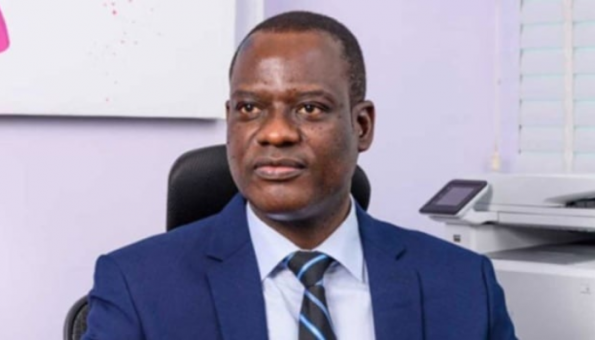
The Minister of Finance and Coordinating Minister of the Economy, Taiwo Oyedele, says Nigeria’s negative perception of government borrowing is undermining economic growth and investment decisions.
Speaking in Abuja on Tuesday at the Fellowship Award Ceremony and 2nd Biennial Conference of the Capital Market Academics of Nigeria, Oyedele said public criticism of borrowing often ignores its purpose and economic returns.
“When analysts go on TV and join the populist view to accuse the government of borrowing, you are doing a disservice. The relevant question is never simply how much debt. It is always debt for what and at what cost, against what return, and repaid on what terms?” he said.
He argued that borrowing should be assessed as a financial tool rather than a political or moral issue.
“A nation, a state, or a business that borrows to finance a productive asset generating returns above the cost of that capital is not behaving recklessly; it is behaving rationally,” he said.
Oyedele said Nigeria’s public discourse often treats debt as a moral failure instead of an economic instrument, a perception he believes is rooted in past debt challenges but now limits growth opportunities.
“In most of our public discourse, debt is spoken of as a moral failing rather than a financial instrument. People go to churches and mosques to pray that they may never be in debt. A government that borrows is accused of mortgaging the future,” he said.
READ ALSO:
- Nigeria Bets on States, Private Capital for Next Growth Phase
- FG: IMF Report Confirms Tinubu Reforms Are Working
- Nigeria Eyes Guinness World Record for Longest Dining Table
- How Nigeria’s Biggest Banks Turned FX Gains Into a Lending Boom
He warned that such attitudes also affect private sector behaviour, discouraging entrepreneurs from using credit or shared ownership structures to expand businesses.
“An instinct formed by historical trauma is not the same as a sound principle of modern finance. Indeed, refusing to borrow under such conditions is itself a missed opportunity, a form of economic conservatism that quietly forfeits growth,” he said.
The minister said equity participation and debt financing, if properly structured, are key tools for scaling businesses.
“The desire to own 100 per cent of a small business will always lose, in absolute terms, to owning a meaningful share of a large one. Equity is not a loss of control. It is, properly structured, a multiplication of capacity. Debt is not a confession of weakness. If properly priced, it is a tool of acceleration,” he said.
Oyedele also said Nigeria must develop a stronger financial culture that embraces debt, equity, venture capital and public listings as tools for productive expansion.
He warned that capital is highly sensitive to risk and will only flow to economies that offer trust, policy stability and strong institutions.
“Capital is mobile, impatient, intelligent, competitive and unforgiving,” he said, adding that investors are more concerned about uncertainty than taxation.
He listed policy inconsistency, weak contract enforcement, regulatory unpredictability and foreign exchange instability as key barriers to investment.
The minister also said Nigeria must urgently address delays in commercial dispute resolution, arguing that current court processes are too slow for modern investment needs.
“Some commercial disputes in Nigeria can take an average of about 15 years to move through the High Court, Court of Appeal and Supreme Court, a timeline no rational investor can underwrite,” he said.
He proposed the creation of a dedicated commercial dispute resolution tribunal staffed with judges and arbitrators with financial and capital market expertise, and supported by strict timelines and digital case management systems.
Oyedele also said Africa faces a “prejudice premium” in global capital markets, noting that Nigeria continues to pay high borrowing costs despite its credit history.
“We have never defaulted. So the sovereign spread between how much Nigeria pays and how much the US pays is just the default risk, and we have never defaulted. And we are paying so much spread,” he said.
He proposed the creation of a national risk market to price and distribute political, climate, agricultural and infrastructure risks, alongside credit enhancement instruments.
Oyedele further challenged stakeholders to build a $1 trillion capital market within a decade, citing recent growth in the Nigerian Exchange as proof of potential.
“If South Africa can build a capital market of that scale, if India can, if Saudi Arabia can, if Indonesia can, why not Nigeria?” he said.
He also called for broader financial inclusion, where citizens can invest in productive assets through regulated platforms from an early age.
On small businesses, he said Nigeria’s MSME financing gap remains above $200 billion, while many firms still rely on informal lenders charging extremely high interest rates.
He urged expansion of SME exchanges, crowdfunding platforms, venture capital, private placements and municipal financing instruments to bridge the gap.

Alex is a business journalist cum data enthusiast with the Pinnacle Daily. He can be reached via ealex@thepinnacleng.com, @ehime_alex on X