

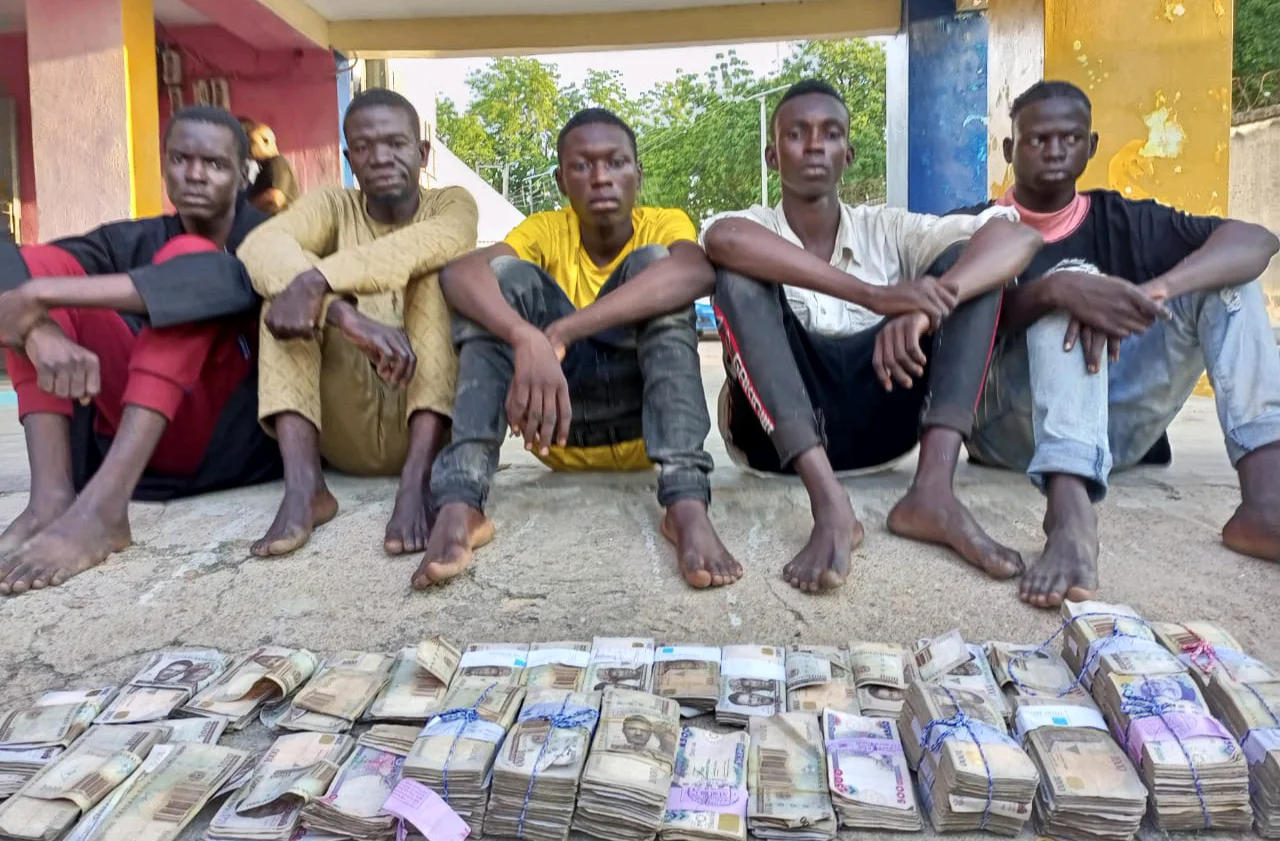
While Nigeria battles insurgency, the rate of kidnapping has equally escalated and turned into a lucrative industry, with abductors getting billions of naira as proceeds yearly.
A recent report by SBM Intelligence revealed that between July 2024 and June 2025, kidnappers demanded roughly ₦48 billion as ransom and got ₦2.57 billion, representing 5.35 per cent of the total amount requested.
This is a 144.76 per cent jump from ₦1.05 billion paid in 2024.
The report titled “Locust Business: The Economics of Nigeria’s Kidnap Industry – A 2025 Update” said, “As the cost of living soars and legitimate livelihood opportunities dwindle, kidnapping has become a highly organised and pervasive criminal industry.”
It stated that at least 4,722 people were abducted in 997 incidents, and at least 762 were killed within the period.
The Northwest was the epicentre, accounting for 425 incidents (42.6 per cent) and 2,938 victims (62.2 per cent). While Zamfara State recorded the highest number of kidnap victims, Katsina had the most fatalities.
READ ALSO: Naira Stability: Analysts Project External Reserves to Hit $45bn by Year-end
“The region’s vast, weakly governed rural spaces and entrenched bandit syndicates enable mass operations,” the SBM Intelligence report noted.
Out of the 762 that were killed, 563 were civilians, 180 were kidnappers, and 19 were security agents.
“Mass abductions, events with more than five victims, comprised about 23% of incidents and were overwhelmingly northern, often involving villagers coerced to work on bandit-run farms and mines,” it stated.
According to the report, Southwest recorded the lowest activity (5.3 per cent of incidents; 3 per cent of victims).
It said the top five states in the number of kidnap incidents include Katsina (131), Kaduna (123), Zamfara (113), Niger (40) and Delta (49).

This means that the state with the highest kidnapping rate in the South accounts for less than 5 per cent of the total, making the kidnapping crisis primarily a northern issue.
The report indicated that ransom dynamics vary regionally. While the South-South recorded the highest demands, including a ₦30 billion ask in Delta, the Northeast recorded the highest verified payments, driven by the ₦766 million transfer reportedly made for the release of Justice Haruna Mshelia to a Boko Haram-linked faction, equivalent to 29.8% of all ransom paid during the period.
READ ALSO: FG’s Shea Nut Export Ban: Experts Seek Urgent Clarity on Policy Implementation
It noted increasing participation of Islamist groups in the kidnapping-for-ransom business, adding that the proceeds are channelled to insurgency logistics.
The report also revealed that clerics are increasingly being targeted, with at least 17 Catholic priests abducted, ₦460 million demanded, and a ₦70 million verified payment made in the last year.
“Rapid settlement may have reduced fatalities among clergy, but ransom carriage is increasingly perilous; intermediaries have been killed or kidnapped during exchanges,” it stated.
It underscored the severe macroeconomic and social consequences of the rising spate of kidnapping and other forms of insecurity in the country.

“Insecurity depresses agricultural output, aggravates food inflation and displacement, and continues to disrupt schooling despite fewer mass school raids. Businesses relocate or curtail operations amid extortion risks.”
Highlighting the erosion of public trust as the people grapple with insecurity, the report said an Afrobarometer survey showed that 68 per cent of Nigerians judge security force performance poorly.
This, it said, has spurred the mobilisation of local vigilante groups to provide community security, but they have unfortunately complicated the situation.
The waning trust, it said, weakens community cooperation with authorities and hinders intelligence-sharing, thereby perpetuating insecurity.
It stated that unless security forces dismantle these criminal networks and address root causes—poverty, unemployment, and weak law enforcement—the cycle of kidnappings, ransoms, and deaths will continue unchecked, leaving ordinary Nigerians in perpetual fear.

Victor Ezeja is a Nigerian journalist skilled in producing insightful news analyses, feature stories, and interviews that simplify complex issues and drive informed public discourse. His work combines rigorous research, balanced reporting, and compelling storytelling to highlight developments shaping industries and society. Victor, who holds a Master's Degree in Mass Communication, specializes in energy, aviation, business, and economic reporting. He can be reached via @VICTOREZEJA on X