

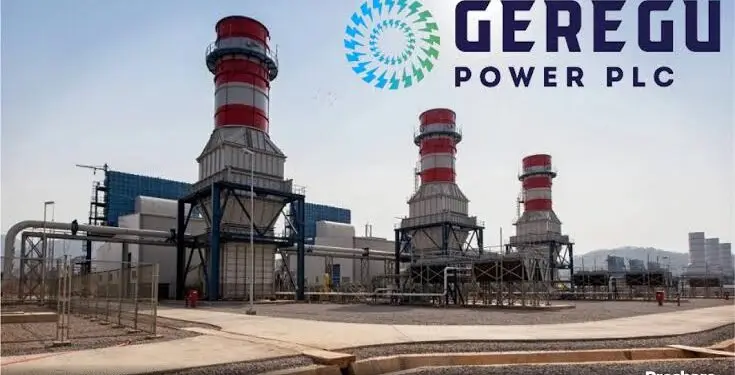
Geregu Power Plc’s recent bond default has raised deeper questions about corporate cash availability, treasury management, and governance, with DataPro Limited arguing that the company’s reported ₦31.77 billion in short-term deposits did not necessarily translate into liquidity when its debt obligation fell due.
In its Monthly Rating Brief for September 2026, titled “When Bonds Default: The Hidden Truth”, DataPro, a foremost Nigerian rating firm, said the default showed how a company could report billions of naira in cash and still fail to meet an obligation because the funds were not immediately accessible.
Geregu missed a scheduled coupon and principal repayment estimated at ₦6.03 billion on its ₦40.09 billion Series 1 Senior Unsecured Bond in July 2026, triggering a credit default event. The company subsequently made the payment in August, resolving the immediate shortfall.
But DataPro said the development raised a more fundamental question about whether Geregu lacked money or whether the cash it appeared to have was unavailable when it was needed.
“The issue is not necessarily whether sufficient assets exist, but whether enough unrestricted and immediately accessible cash is available at the precise moment the obligation falls due,” the rating agency said.
The default came after a major change in Geregu’s ownership structure. In December 2025, MA’AM Energy Limited completed a $750 million acquisition of a 95 per cent stake in Amperion Power Distribution Company, a transaction valued at about ₦1.088 trillion at the time.
READ ALSO:
- Geregu Bond Crisis: Did Investors Miss the Warning Signs?
- Geregu Appoints Acting CEO Amid Bond Default
- Geregu Power Engages Stakeholders Over ₦40.09bn Bond Default
- Credit Ratings Hold Key to Unlocking Nigeria’s Power Sector Funding — DataPro
- Nigeria Risks Manipulation Without Control of AI Systems – NITDA
The deal resulted in the transfer of effective control of about 77 per cent of Geregu Power and was heavily financed by a consortium of Nigerian banks, increasing the importance of the company’s ability to generate and distribute cash within the wider financing structure.
Weeks after the acquisition, the newly reconstituted board approved a ₦9 per share dividend for 2025, amounting to ₦22.5 billion and representing an 82.5 per cent payout ratio.
DataPro said a large dividend was not necessarily a problem but stressed that the key credit question was how much liquidity remained after cash left the business, particularly when an unexpected shock occurred.
The ownership transition also brought significant changes to Geregu’s board, including a new chairman and six new non-executive and independent directors in early 2026.
According to DataPro, such a major transition could create governance and continuity risks if incoming directors did not have a structured understanding of the company’s historical transactions, financing arrangements and obligations.
“A new board inherits more than assets. It inherits the company’s history,” the rating agency said.
Central to DataPro’s concerns was Geregu’s reported cash position. The company’s audited 2025 accounts showed approximately ₦31.85 billion in cash and cash equivalents, with ₦31.77 billion classified as short-term deposits.
On paper, the amount appeared to provide a substantial liquidity cushion. However, DataPro warned that reported cash was not necessarily the same as available cash.
“If a deposit is restricted, pledged, encumbered or otherwise subject to conditions, it may not be available when a debt payment falls due,” it said.
Following the default, questions emerged about the actual availability and status of the ₦31.77 billion, raising concerns about whether the incoming management and board had independently verified the funds and their restrictions.
The liquidity pressure intensified after Geregu encountered a major operational disruption. A significant turbine maintenance programme reduced power generation and sharply weakened its financial performance.
Revenue fell by about 79 per cent to ₦18.65 billion in the first half of 2026 from ₦87.63 billion in the corresponding period, while profit after tax declined by about 88 per cent.
The maintenance programme reportedly created a ₦61.47 billion financial shock, placing further pressure on the company’s liquidity buffer.
DataPro said the development demonstrated how quickly liquidity could deteriorate when operational cash generation weakened while fixed debt obligations continued to fall due.
On July 28, the ₦6.026 billion coupon and scheduled principal repayment on Geregu’s Series 1 Bond became due but were not paid within the required timeframe, resulting in a credit default.
The rating agency said the relatively small size of the missed payment compared with Geregu’s reported cash and asset base underscored the difference between solvency and liquidity.
“A company can be asset-rich and still experience a liquidity default,” DataPro said.
The company later paid the overdue coupon and part of the principal in August. However, DataPro said the episode remained significant because of the questions it raised about treasury management, governance, financial controls and the reliability of reported financial information.
The rating agency said the default also demonstrated why governance, risk management and compliance must be closely linked to credit risk, particularly during major ownership transitions and periods of operational disruption.
Pinnacle Daily earlier reported that Geregu subsequently defaulted on the eighth coupon payment and fourth principal repayment on the ₦40.09 billion Series 1 Senior Unsecured Bond.
While Geregu’s shares did not collapse during the first half of the year, the stock’s 19.6 per cent decline showed that investor sentiment had weakened considerably by June.
DataPro said the key lesson from the default was simple: “Before counting cash as a liquidity cushion, establish that it is actually there, accessible and available for the purpose assumed.”

Alex is a business journalist cum data enthusiast with the Pinnacle Daily. He can be reached via ealex@thepinnacleng.com, @ehime_alex on X