

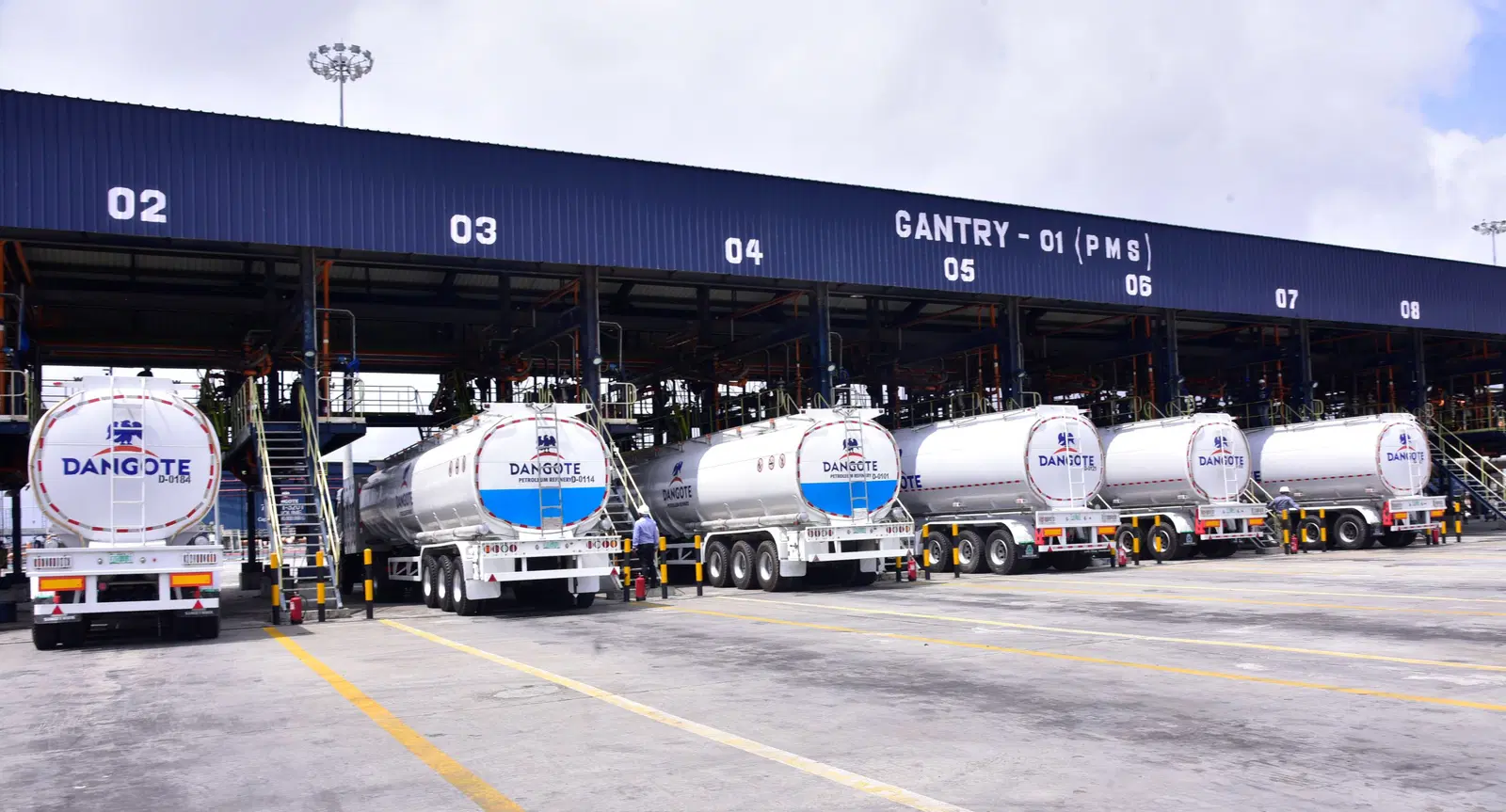
The Dangote Petroleum Refinery has reversed its recent petrol price hike, returning the ex-gantry price to N1,200 per litre.
The 650,000 barrels per day refinery had on Tuesday, April 7, raised its petrol price to N1,275, a N75 increase in response to global crude oil price volatility caused by the ongoing Middle East conflict.
The conflict, involving the United States, Israel and Iran, has disrupted global crude oil supply, especially through the Strait of Hormuz- a key maritime route through which 20 per cent of the world’s oil and gas passes to different parts of the world.
Dangote Refinery’s decision to roll back the price is tied to a significant drop in international crude oil benchmarks.
Brent crude prices fell by approximately 13 per cent to around $95.05 per barrel, while West Texas Intermediate (WTI) dropped nearly 14 per cent to $97.18.
The market downturn is largely credited to a conditional two-week ceasefire agreement between the United States and Iran. This development has eased fears of supply disruptions in the Middle East, particularly regarding the Strait of Hormuz.
The refinery’s coastal price has also been adjusted to N1,153 per litre to support marine distribution to southern depots.
Economic Impact
While diesel prices were also recently hiked to N1,950 per litre, the reduction in petrol pricing is expected to provide some relief to independent marketers and potentially ease retail pump prices for consumers.
The move highlights the refinery’s strategy of aligning its domestic pricing closely with international oil benchmarks, making local fuel costs highly sensitive to global shifts.

Victor Ezeja is a Nigerian journalist skilled in producing insightful news analyses, feature stories, and interviews that simplify complex issues and drive informed public discourse. His work combines rigorous research, balanced reporting, and compelling storytelling to highlight developments shaping industries and society. Victor, who holds a Master's Degree in Mass Communication, specializes in energy, aviation, business, and economic reporting. He can be reached via @VICTOREZEJA on X