

By Esther Ososanya
In the vast, sun-drenched stretch of Southern Africa, bordered by Angola, Botswana, Zambia, and the Atlantic Ocean, lies Namibia, a country better known for its deserts, diamonds, and dramatic dunes than its political experiments.
But in 2025, this nation of just 2.6 million people, one of the youngest democracies in Africa, having gained independence from South Africa in 1990, has become the unlikely site of a quiet global revolution.
Namibia has made history as the first and only country in the world where women now occupy the three highest positions of power: President Netumbo Nandi-Ndaitwah, Vice President Lucia Witbooi, and Speaker of the National Assembly Saara Kuugongelwa-Amadhila.
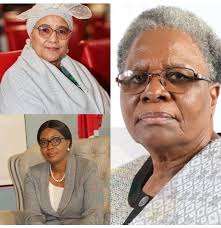
But this isn’t just about shattering glass ceilings. It’s about rebuilding the political house itself using a distinctly feminine blueprint that prizes transparency, discipline, collaboration, and long-term reform.
Beyond Symbolism: A Feminine Doctrine of Power
Netumbo Nandi-Ndaitwah’s presidency marks a bold turning point for Namibia and for Africa. A former liberation fighter turned foreign affairs strategist, she is Africa’s first democratically elected female head of state, and her leadership style is notably different: data over drama, structure over spectacle.
Her administration has trimmed government excess, reduced the cabinet by 30%, and introduced performance-based funding across ministries. Her closest allies, Vice President Lucia Witbooi, a grassroots education reformer, and Speaker Kuugongelwa-Amadhila, a seasoned economist, are not just helping her run the country; they are reinventing how leadership works.
Together, they are proving that feminine leadership can be firm, focused, and profoundly transformative.
ALSO READ: Morocco Joins PAPSS to Boost African Trade Integration
A Feminist Government? Not Quite — Something Deeper
This is not feminism by declaration. It’s functional, inclusive leadership rooted in empathy – a model that prioritises service over slogans and results over rhetoric.
Namibia’s women-led government is showing the world that you don’t need to militarise power to wield it effectively. Under their stewardship, governance is becoming less about control and more about collaboration, a rare shift in an age of political polarisation.
Exclusive Insight: A Governance Blueprint Rooted in Empathy
Inside the presidency, policy formation is guided by a bold innovation: “community-first governance”. Proposals are first reviewed not by political elites but by citizens via a new national e-feedback system linked to the Parliament’s digital platform.
Among their signature programmes:
- Project Dandelion: A youth-focused job training initiative blending agriculture, digital skills, and entrepreneurship
- SheProcure: A procurement reform law mandating that 50% of government contracts go to women-owned businesses
- Green Namibia Initiative: Mandating all government buildings run on solar by 2026
- Transparent ACC: Real-time tracking of Anti-Corruption Commission activities, budgets, and procurement processes
These are not just progressive policies; they are systemic reforms with measurable national impact.
ALSO READ: Biya to Seek Re-Election at 92, Extending Four-Decade Rule
Economic Results That Speak Volumes
Despite initial scepticism about a woman-led cabinet, the numbers are telling:
- Projected GDP growth of 4.0% in 2025 , nearly double the Sub-Saharan average
- Steady inflation control under fiscal reform
- Doubling of investment in green infrastructure
- 35% increase in public trust in government services, according to Afrobarometer
Namibia is quietly becoming a model for transparent, citizen-driven leadership in Africa.
“Namibia isn’t just showing us what’s possible; it’s showing us what good governance looks like when ego steps aside.”
“Power doesn’t always need to be loud. Sometimes, it needs to listen first.” – Lucia Witbooi
“This isn’t feminism. This is a function.” – Policy analyst in Windhoek
Africa’s Most Underreported Political Revolution
While global news cycles remain dominated by political unrest, military coups, and corruption trials across the continent, Namibia is quietly delivering a different kind of headline – one that deserves front-page recognition.
With humility, strategy, and solidarity, three Namibian women are restoring dignity to African leadership.
Their approach isn’t just different; it may be Africa’s best-kept democratic secret.

Esther Ososanya is an investigative journalist with Pinnacle Daily, reporting across health, business, environment, metro, Fct and crime. Known for her bold, empathetic storytelling, she uncovers hidden truths, challenges broken systems, and gives voice to overlooked Nigerians. Her work drives national conversations and demands accountability one powerful story at a time.