

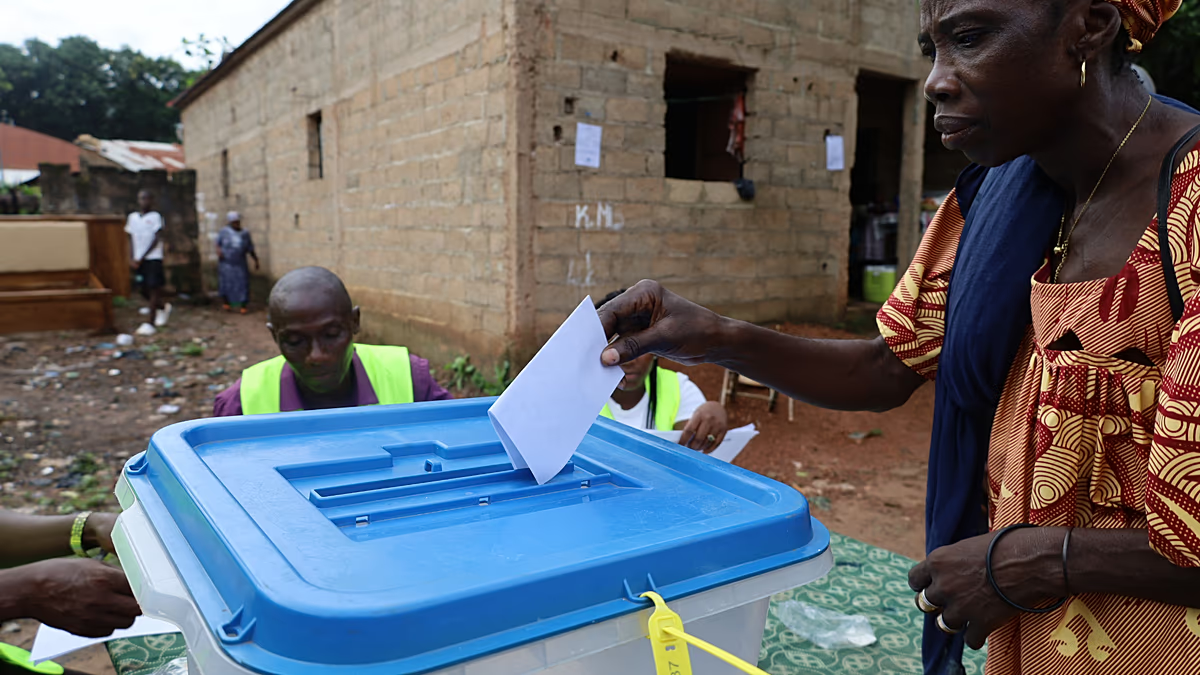
Vote counting has begun in Guinea-Bissau following a referendum on constitutional changes that could significantly expand the powers of the president ahead of general elections scheduled for December.
Voting ended at 5pm local time on Sunday, with the first provisional results expected on Tuesday, according to the National Electoral Commission.
The commission’s executive secretary, Idrissa Djalo, said voter turnout had exceeded 55 percent and that voting generally took place without incidents capable of undermining the credibility of the exercise.
Security was tightened in the capital, Bissau, with national guard and police personnel deployed at strategic locations.
The referendum is being held less than 10 months after the military seized power in the West African country, overthrowing then-President Umaro Sissoco Embalo and suspending the electoral process.
RELATED NEWS:
- Guinea President Dismisses 173 Soldiers, Including Coup Ally
- Guinea-Bissau Halts US-Backed Hepatitis B Vaccine Study Pending Ethics Review
- Senegal’s President Faye Elected As ECOWAS Chairman
The military junta is backing a proposed new constitution that would replace Guinea-Bissau’s parliamentary system with a presidential system.
Under the proposed changes, the president would have the authority to appoint and dismiss the prime minister and members of government, as well as dissolve parliament.
The current system requires the prime minister to emerge from the parliamentary majority, an arrangement that has repeatedly created tensions over the sharing of executive power.
Constitutional Changes Were Intended to Strengthen Political Stability – Transitional President General
Transitional President General Horta N’Tam urged young people to turn out in large numbers, saying the constitutional changes were intended to strengthen political stability and ensure that whoever wins the next election can complete their mandate.
“What we want after this referendum is to allow whoever wins the elections to see out their mandate without hindrance,” he said.
However, opposition groups have called for a boycott of the referendum, citing restrictions on public freedom.
The proposed constitution is expected to guide the country towards presidential and parliamentary elections scheduled for December 6, which the junta says will pave the way for a return to civilian rule.
Under the transitional charter, General Horta N’Tam is barred from contesting the elections.
The military takeover followed a presidential election and came after a period of growing political tension. Embalo had earlier dissolved an opposition-dominated parliament in 2023 over what he described as an attempted coup and subsequently ruled by decree before being removed by the military.
Guinea-Bissau has a long history of political instability. The country has experienced five coups and several attempted coups since gaining independence from Portugal in 1974.
The referendum comes amid wider constitutional changes across parts of Africa, where critics have raised concerns about moves to strengthen executive powers and extend political mandates.
Source: Africanews/AFP.

Rafiyat Sadiq is a political, justice, and human rights reporter with Pinnacle Daily, known for fearless reporting and impactful storytelling. At Pinnacle Daily, she brings clarity and depth to issues shaping governance, democracy, and the protection of citizens’ rights.