

Across Africa, water is no longer just an environmental concern but has become a hard economic constraint with measurable consequences for growth, productivity, and human development.
New consolidated estimates from the United Nations, the African Union, the World Bank, and the UN Economic Commission for Africa show that achieving universal access to safe drinking water and sanitation under Sustainable Development Goal 6 will require between $45 billion and $50 billion every year.
What is being spent today tells a starkly different story. Annual investments currently range between $10 billion and $19 billion, leaving a financing gap exceeding $30 billion each year. That deficit is not abstract. It is embedded in overflowing drains, unsafe drinking water sources, stalled industrial output, and recurring public health emergencies across the continent.
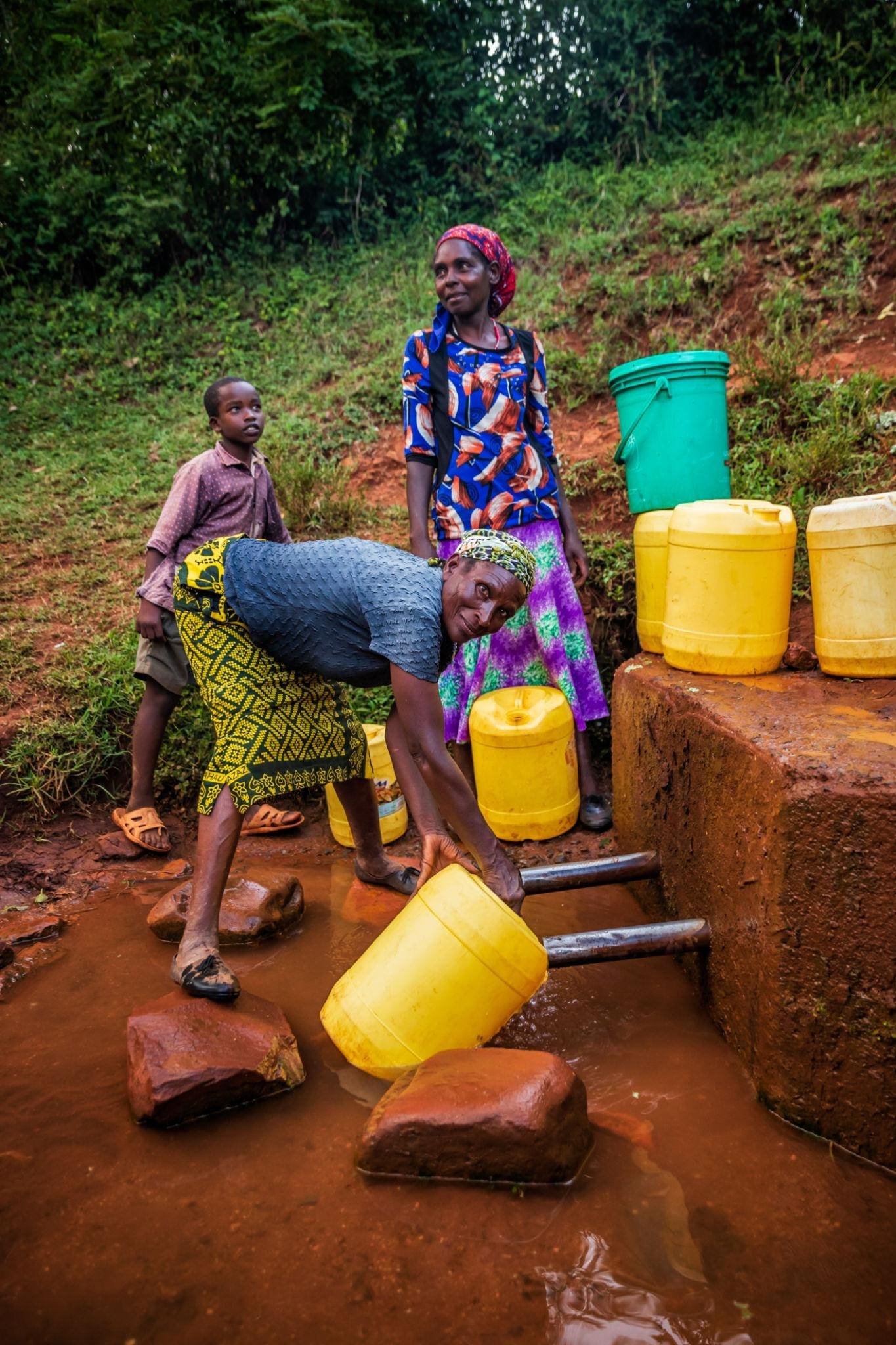
The scale of the crisis is already visible in numbers that refuse to drop. More than 400 million people in Africa still lack access to safe drinking water, while over 700 million people are without safely managed sanitation services. As of 2023, only 81 per cent of Africans had access to safe drinking water, and sanitation coverage lagged further behind at 59 per cent.
What emerges is not just an infrastructure shortfall, but a systemic drag on development.
When water becomes an economic bottleneck
At the 2026 Annual Meetings of the African Development Bank Group, Claver Gatete, Executive Secretary of the United Nations Economic Commission for Africa, highlighted the impact of poor investment in clean water and sanitation in the continent.
“Underinvestment in water is not only a social concern but a structural economic constraint,” he said, warning that water insecurity is now actively limiting Africa’s productivity potential.
The warning reflects a growing consensus among development finance institutions: water stress is no longer peripheral. It is increasingly central to macroeconomic stability.
Despite this, water-related projects receive less than 3 per cent of global climate finance, even as droughts, flooding, and water contamination intensify across multiple regions of Africa.
Gatete described this mismatch as a “disconnect between the scale of the risk and the scale of investment.”
His framing is deliberate. In economic terms, water is not merely consumption infrastructure—it is input capital. It determines agricultural yields, industrial uptime, energy generation efficiency, and even labour productivity.
“Water should not be seen only as a utility to be delivered, but as the bloodstream of our economies,” he added.
The financing gap that refuses to close
Across policy frameworks, the response has been expansionary but uneven.
The African Union launched the Africa Water Investment Action Plan at COP28 in 2023, designed to accelerate financing for water security and sanitation systems. Parallel initiatives such as the African Water Facility aim to mobilise an additional $7 billion through 50 urban sanitation projects across the continent.
Yet implementation remains inconsistent, largely due to weak domestic funding, project delays, and fragmented execution capacity at national levels.
In several countries, including Nigeria, budget fluctuations reflect this instability. Federal allocation to the Ministry of Water Resources and Sanitation rose sharply to ₦296.64 billion in 2024 (about $395 million), only to fall by nearly half to ₦146.78 billion in the 2025 budget cycle.
At programme level, the gap between commitment and delivery is even clearer.
The World Bank’s $700 million SURWASH programme, designed to expand water access to six million Nigerians and sanitation services to 1.4 million people between 2022 and 2027, had disbursed only $93.59 million as of May last year. That represents roughly 14 per cent of total funding.
Implementation progress was rated “moderately unsatisfactory,” with fewer than 60,000 beneficiaries reached against a six-million target.
Despite these setbacks, government figures indicate that more than 6,700 water schemes have been constructed across rural and urban areas under ongoing national programmes. However, scale alone has not translated into universal access or system reliability.
A continent moving at uneven speeds
Across Africa, investment trajectories diverge sharply.
In Ghana, approximately GHS822 million (around $69 million) was allocated to water and sanitation in 2023, but nearly 95 per cent of financing came from development partners underscoring heavy donor dependence. WaterAid Ghana estimates the country requires about $1.7 billion annually through 2030 to meet SDG 6 targets.
Morocco presents a contrasting model of sustained capital mobilisation. Between 2020 and 2024, it committed MAD48 billion (about $5.33 billion) to wastewater infrastructure, followed by a MAD56 billion expansion programme launched in 2025.
Egypt has taken an even larger-scale approach, with water and sanitation projects valued at approximately EGP726 billion (nearly $14.9 billion). More than 5,100 projects are either completed or ongoing, including major rural sanitation upgrades under the “Decent Life Initiative.”
South Africa, meanwhile, has focused on execution discipline. It allocated R134.9 billion for water infrastructure between 2024 and 2027 and significantly improved budget execution efficiency, reducing under-expenditure from 14.3 per cent to just 0.2 per cent within two years.
READ ALSO:
- Sweet Poison: CAPPA Documentary Exposes Nigeria’s Dangerous Sugary Drink Habit
- Xenophobic Attacks: Retaliation Against South African Firms Will Hurt Nigeria — Expert
- Nigeria Issues Safety Alert Ahead of Anti-Foreigner Protests Across South Africa
- MMELI Arts Foundation Empowers Women Creatives to Tell African Stories
Development finance institutions now increasingly warn that Africa’s sanitation deficit is evolving into a macroeconomic risk factor.
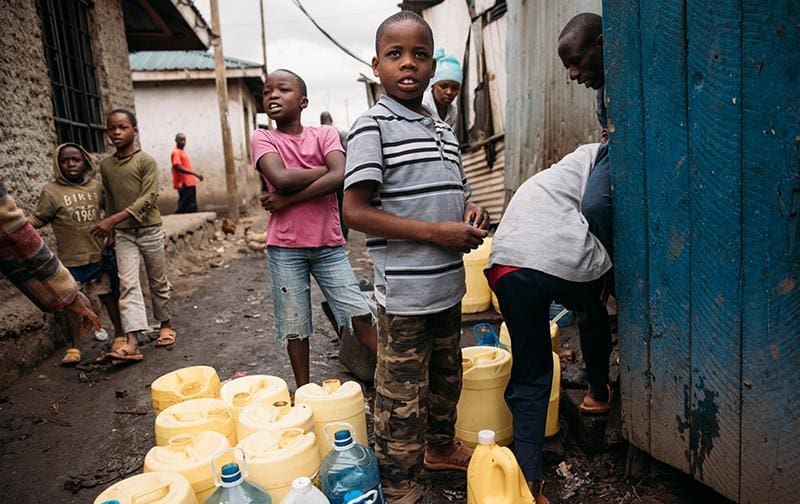
Poor water access directly affects food systems through irrigation instability, industrial production through unreliable utilities, healthcare delivery through disease burden, and education outcomes through time poverty and absenteeism.
In effect, water insecurity operates as a multiplier of other development constraints.
Gatete’s argument pushes this further: water is not just infrastructure to be funded, but an asset class that underpins industrialisation and regional integration.
It is also central to unlocking the blue economy fisheries, aquaculture, inland waterways, and coastal trade systems that remain underdeveloped across much of the continent.
The conclusion emerging from multilateral analysis is increasingly direct: Africa’s water challenge is no longer about awareness or policy design. It is about financing scale, execution capacity, and institutional alignment.
At current investment levels, the continent is effectively locked into a perpetual backlog where population growth outpaces infrastructure delivery, and climate pressures intensify demand faster than systems can respond.
The gap between $50 billion required annually and less than half that currently being mobilised is not merely a funding shortfall. It is the defining constraint shaping Africa’s development trajectory over the next decade.

Esther Ososanya is an investigative journalist with Pinnacle Daily, reporting across health, business, environment, metro, Fct and crime. Known for her bold, empathetic storytelling, she uncovers hidden truths, challenges broken systems, and gives voice to overlooked Nigerians. Her work drives national conversations and demands accountability one powerful story at a time.