
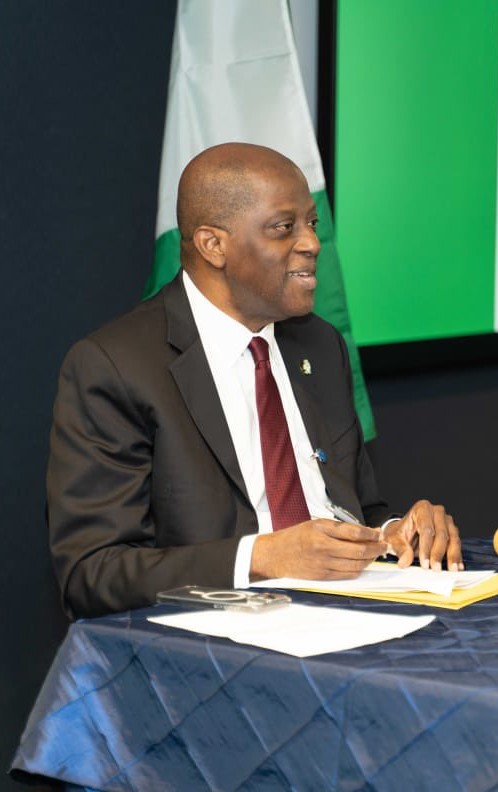
Central Bank of Nigeria (CBN) Governor Olayemi Cardoso says bold reforms embarked on by the Nigerian government over the last two years have laid a strong foundation for achieving economic sustainability in the country.
In an interview with journalists at the conclusion of the IMF/World Bank meetings in Washington, DC, United States, Cardoso highlighted the key takeaways for Nigeria from the meetings and the outcome of various economic reforms on the economy so far.
Here are the excerpts.
The 2025 IMF/World Bank annual meetings have just been concluded, what are the key take aways for Nigeria during these engagements?
It has been an active and forward-looking week for Nigeria at the 2025 Annual Meetings of the International Monetary Fund (IMF) and World Bank Group. These meetings took place amid global uncertainty marked by slowing growth, volatile markets, and persistent fiscal and financial pressures. For Nigeria, however, this was a defining moment—an opportunity to showcase the tangible progress of our reform agenda and reaffirm our commitment to macroeconomic stability, fiscal discipline, and inclusive growth.
READ ALSO: How Cement Giants Pass Energy Costs Burden to Consumers
A major highlight of the week was Nigeria’s assumption of the Chairmanship of the Intergovernmental Group of 24 (G-24), which coordinates the positions of developing countries on global monetary and developmental issues within the Bretton Woods system. Nigeria will formally assume this role on November 1, 2025, unveiling an ambitious agenda that reflects the priorities of developing nations. This milestone underscores international confidence in Nigeria’s leadership and growing influence in shaping the global financial architecture.
Throughout the meetings, the Nigerian delegation held extensive engagements with the IMF, World Bank, International Finance Corporation (IFC), global rating agencies, investors, and development partners. The tone of these discussions was one of confidence and constructive partnership. There is broad recognition that Nigeria’s reforms are delivering results. Inflation is moderating, the exchange rate has stabilized, and investor confidence is returning.
Inflation Easing Reflects Effective monetary Policy measure
Latest data from the National Bureau of Statistics show that headline inflation fell for the sixth consecutive month in September to 18.02 per cent, from 20.12 per cent in August, the lowest level in three years. Core and food inflation also eased during the period, reflecting the effects of disciplined monetary tightening, exchange rate unification, and improved market transparency. The naira continues to strengthen, with the spread between the official and parallel market rates now below 2 per cent. Foreign reserves stand above $43bn, providing more than 11 months of import cover supported by renewed investor participation and sustained inflows across asset classes.
On the fiscal side, reforms are improving revenue mobilization, reducing the cost of governance, and channeling expenditure toward infrastructure, education, and healthcare. The removal of fuel subsidies and expenditure rationalization have helped rebalance public finances and create fiscal space for productive investment. These bold reforms, undertaken over the past two years, have laid a strong foundation for Nigeria to pursue the next phase of its economic agenda—driving inclusive growth, job creation, and poverty reduction.
Public finances are in better shape, with rising non-oil revenues providing much-needed diversification and fiscal stability. Reduced insecurity in oil-producing areas and targeted incentives have boosted production and attracted over $8 billion in new energy investments.
On the monetary side, we have restored orthodoxy, relying on traditional instruments such as the monetary policy rate, cash reserve requirement, and liquidity ratio to manage liquidity and anchor expectations. These measures, coupled with close coordination with fiscal authorities, are delivering tangible outcomes. We are also leveraging advanced analytics and artificial intelligence to strengthen monetary operations, enhance forecasting, and improve policy transmission ensuring that decisions are data-driven and forward-looking.
READ ALSO: Cardoso Reflects on 5 Key Achievements of Nigeria’s Economic Reform
Financial system stability remains a central priority. The bank recapitalization programme is progressing steadily, making Nigerian banks stronger, more resilient, and globally competitive. In the foreign exchange market, reforms have enhanced transparency and efficiency, supporting the ongoing disinflation trend alongside stable exchange rates and improved food supply.
We also held a strategic session with Nigerian FinTech leaders under the theme “Shaping the Future of FinTech in Nigeria: Innovation, Inclusion, and Integrity.” The dialogue highlighted our shared commitment to ensuring that innovation and regulation progress together anchored in trust and responsible growth. Nigeria’s fintechs are ambassadors of our nation’s creativity, resilience, and global relevance, and engaging them as partners ensures that our digital financial future is built on innovation, integrity, and inclusion.
A recurring theme throughout the meetings was the rising prominence of stablecoins in the global financial system. Their potential to enhance payments inclusion and cross-border transactions is undeniable, but they also raise important questions around monetary sovereignty, exchange rate stability, and financial integrity. As global regulators work to define clear and consistent frameworks, Nigeria intends to play an active role in shaping this conversation, ensuring that innovation supports rather than undermines financial stability and economic sovereignty.
We also signed a Memorandum of Understanding with the Central Bank of Angola to deepen cooperation on monetary policy, promote financial stability, and strengthen regional economic ties.
Nigeria’s focus remains steadfast, strengthening fundamentals, advancing reforms, and unlocking opportunities for sustainable investment and inclusive growth. Fiscal and monetary authorities are working seamlessly to sustain stability, deepen reforms, and ensure that the benefits of policy actions translate into tangible improvements in the lives of Nigerians.
We return home encouraged by the confidence reaffirmed in our mission, and determined to sustain this trajectory of stability, discipline, and shared prosperity. Nigeria’s story is one of resilience, of a nation aligning courage with conviction to build a more competitive, innovative, and inclusive economy.