
By Esther Ososanya
The Executive Secretary of the National Sugar Development Council (NSDC), Mr Kamar Bakrin, has issued a clarion call to Nigerian farmers and private investors to take advantage of what he describes as a “golden window” for investment in the country’s sugar industry.
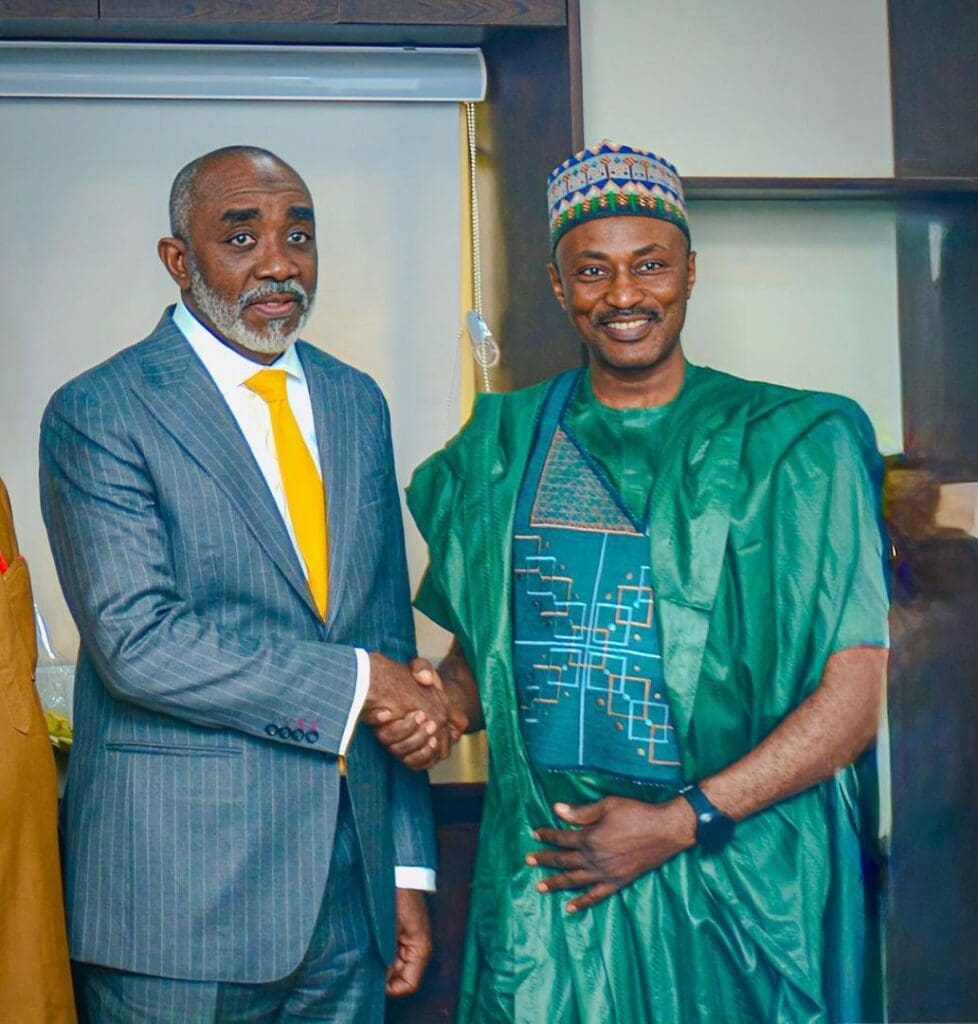
Speaking during a courtesy visit by the All Farmers Association of Nigeria (AFAN) to the Council’s headquarters, Mr Bakrin highlighted the vast untapped opportunities in local sugar production, an industry currently valued at over $2 billion with rising domestic and regional demand.
“This is the right time to invest,” Bakrin declared. “Nigeria’s sugar market is large, under-supplied, and supported by sound economics, favourable policies, and robust infrastructure planning.”
According to the NSDC boss, Nigeria’s continued dependence on imported raw sugar and its by-products poses a strategic economic vulnerability, especially in the face of foreign exchange challenges and global supply chain instability. He said local sugar production now offers higher returns on investment and long-term sustainability than ever before.
$7 Billion Regional Market, 150,000 Hectares Ready
Bakrin revealed that NSDC, after conducting land viability assessments, has secured a land bank of 150,000 hectares across secure, climate-friendly regions of the country. These lands are primed for sugarcane cultivation and are now available for allocation to new commercial investors.
To bridge Nigeria’s current production deficit, the Council plans to place at least 50,000 hectares under sugarcane cultivation under its Commercial Outgrower Initiative. Priority will be given to experienced farmers managing 50–200 hectare plots near sugar estates in Numan, Bacita, Sunti, and Lafiagi.
“Africa’s sugar market is worth over $7 billion, with a projected deficit of 13 million metric tonnes by 2030. This opens an export corridor for Nigerian producers under AfCFTA,” he said.
Robust Investment Support & Tax Incentives
To de-risk investment and attract serious players, Mr Bakrin announced a comprehensive incentive package under the Nigeria Sugar Master Plan Phase II (NSMP II). Highlights include:
- Access to Nigeria Sugar Industry Development Fund (NSIDF)
- Five-year tax holiday
- 30% tax credit on infrastructure development
- Concessional equipment import tariffs
- Land clearing and lease facilitation
- Seedlings, mechanisation, and input support
- Technical expertise via the Nigerian Sugar Institute
- Guaranteed offtake agreements with processors
“We’re not just inviting investors; we’re providing the tools, the capital, and the partnerships they need to succeed,” Bakrin emphasised.
Sugar By-products: A Hidden Goldmine
Beyond refined sugar, NSDC is spotlighting the lucrative by-product market estimated at $10 billion, including ethanol, animal feed, biogas, bioelectricity, and bioplastics. These derivatives make the sugar value chain a sustainable, future-proof sector.
“Sugarcane is no longer just about sweeteners; it’s about energy, industry, and innovation,” Bakrin said.
AFAN Commits to Mobilisation
In response, AFAN President, Dr Faruk Rabiu Mudi, acknowledged that Nigeria’s current sugar output is far below demand and pledged to mobilise members to actively engage in the Council’s commercial initiatives.
“Addressing the deficit is a shared responsibility. The NSDC cannot do it alone, and we are ready to bring our members into this drive for self-sufficiency,” Dr Mudi stated.
READ ALSO: Sugar Council Unveils Reforms to Revive Local Production
With Africa remaining a net importer despite having 19 sugar-producing countries, Nigeria’s ambition, according to NSDC, is to become the continent’s cost leader in sugar production.
“This is not just an investment opportunity; it is a national development imperative,” Bakrin said. “We call on commercial farmers, agribusinesses, and private financiers to join us in reshaping Nigeria’s sugar economy.”

Esther Ososanya is an investigative journalist with Pinnacle Daily, reporting across health, business, environment, metro, Fct and crime. Known for her bold, empathetic storytelling, she uncovers hidden truths, challenges broken systems, and gives voice to overlooked Nigerians. Her work drives national conversations and demands accountability one powerful story at a time.