

By Esther Ososanya
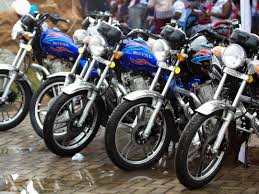
Nigeria imported N146.11 billion worth of motorcycles in the first quarter of 2025, a surprising 24.4% increase from the N117.4 billion spent in the same period of 2024, according to the latest Foreign Trade in Goods Statistics released by the National Bureau of Statistics (NBS).
The motorcycles, identified by the NBS as “cycles fitted with auxiliary petrol motors, capacity >50cc <250cc, CKD”, were mostly imported from India, Nigeria’s leading motorcycle source market.
What makes this figure more striking is that it comes at a time when motorcycles are banned or heavily restricted across large parts of the country, raising questions about the relevance of the imports, the logic of state-level bans, and the fate of local assembly plants.
Despite the federal government’s long-standing ambition to encourage local manufacturing, the NBS data suggests Nigeria remains deeply dependent on imported motorcycle components. This is happening even as local assembly lines exist and as several states have placed legal or practical limits on motorcycle use.
Ban vs. Demand
Security and public safety have driven repeated crackdowns on commercial motorcycles in Nigeria. In 2019, the Nigerian Army banned motorcycle movement in remote areas across seven northern states: Kano, Katsina, Zamfara, Sokoto, Kaduna, Kebbi, and Niger, following their use by insurgents and bandits.
In Lagos, bans have been enforced in waves since 1999, targeting commercial riders in key parts of the city. More recently, southeastern states like Enugu and Anambra have joined the list, placing restrictions on motorcycle operations within their urban centres.
Yet, in the face of these bans, imports continue to rise, a contradiction that highlights a policy disconnect between federal trade dynamics and state-level enforcement realities.
Trade Composition
The motorcycle imports were part of a larger NBS-reported trend in which spending on used vehicles, motorcycles, herbicides, polypropylene, and telecom equipment reached a staggering N7.8 trillion in Q1 2025, making up 21.67% of Nigeria’s total trade volume during the period.
While these categories include essential tools for industry, agriculture, and communication, the inclusion of motorcycles, largely viewed as a phased-out mode of urban mobility, invites scrutiny.
READ ALSO: SEC: CAC Registration Doesn’t Authorize Investment Deals
The current trend reflects a development paradox: Nigeria is spending heavily on motorcycle imports that may never legally hit the roads in many parts of the country, while local manufacturers struggle to compete with low-cost, CKD imports and borderline policy confusion.
With such a large import bill concentrated on a product class that faces legal rejection across most of Nigeria’s commercial and security-sensitive zones, the country’s trade policy appears out of step with its internal governance decisions.

Esther Ososanya is an investigative journalist with Pinnacle Daily, reporting across health, business, environment, metro, Fct and crime. Known for her bold, empathetic storytelling, she uncovers hidden truths, challenges broken systems, and gives voice to overlooked Nigerians. Her work drives national conversations and demands accountability one powerful story at a time.