
By Ososanya Esther
The Nigeria Customs Service (NCS) has officially launched the B’Odogwu clearance platform, marking a major shift in port operations.
The new system comes with a flat 4% Free On Board (FOB) charge, which replaces several older levies.
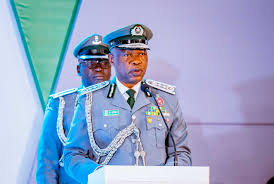
Comptroller-General of Customs, Adewale Adeniyi, announced the change during a high-level stakeholders’ town hall in Lagos on July 21. The meeting, themed “Enhancing Trade Compliance and System Optimisation Through Stakeholder Engagement”, drew freight agents, port users, and private sector leaders.
“Once the 4% FOB takes effect, the 1% CISS and 7% collection charges will be removed,” Adeniyi explained.
“This unified charge is paid upfront. After that, 100% of customs revenue goes into the Federation Account. It’s a win-win.”
A Shift Toward Transparency and Efficiency
The B’Odogwu platform aims to reduce bureaucracy, eliminate hidden fees, and promote faster cargo clearance. According to Adeniyi, Nigeria’s current leadership of the World Customs Organisation (WCO) presents a unique chance to lead by example.
“Now that Nigeria chairs the WCO, we want to prove we can build and run efficient systems locally,” he said.
While the transition hasn’t been without challenges, the CGC noted that most stakeholders have responded positively. In recent weeks, he and the ICT/modernisation team have held consultations to collect feedback and resolve technical concerns.
Stakeholder Collaboration at the Core
Deputy Comptroller-General Kikelomo Adeola, who oversees ICT and modernisation, stressed the value of joint engagement. She described the town hall as a strategic platform for Customs to update partners and hear their experiences firsthand.
“This isn’t just another meeting. It’s a chance to shape how the B’Odogwu system grows with your input,” she told participants.
Meanwhile, Saleh Ahmadu, Chairman of Trade Modernisation Project Limited (TMPL), said the digital rollout reflects Nigeria’s long-term trade vision. He assured stakeholders that TMPL would continue investing in reliable technologies and skilled personnel.
Addressing Concerns and Clarifying the Path Ahead
Participants raised questions about data migration, delays in bank amendments, and general adaptation challenges. Customs officials responded with updates on fixes underway. In addition, two panel sessions provided insights into importer challenges and digital optimisation.
In response to complaints, Adeniyi pledged that user feedback would directly inform ongoing system upgrades. He also confirmed that training and sensitisation programmes would expand in the coming weeks.
ALSO READ: Nigeria Foils Smuggling of Over 10,000 Donkey Genitals
What the 4% FOB Charge Means
Before now, importers had to pay various hidden and often confusing charges, such as the 1% Comprehensive Import Supervision Scheme (CISS) and the 7% cost of collection. Under the new policy, all these fees are rolled into one transparent 4% charge.
As a result, importers can now predict costs better and avoid unpleasant surprises during clearance. The simplified system is also expected to reduce corruption since it limits manual intervention.
“B’Odogwu is not just software. It’s a tool to create a modern, accountable customs process,” DCG Adeola noted.
Economic Impact: Lower Costs, Less Confusion
By reducing levies and streamlining clearance, the B’Odogwu system could help bring down the cost of imported goods. At the very least, it is expected to stop prices from rising too fast. This is good news for both businesses and consumers, especially at a time when inflation remains a key concern.
New vs Old Import Fees
| Old System | New System |
|---|---|
| 1% CISS | Removed |
| 7% Cost of Collection | Removed |
| Hidden/Informal Fees | Eliminated |
| 4% Unified FOB Charge | Transparent & Fixed |
“Now that Nigeria chairs the WCO, we want to show the world we can manage a home-grown system.” CGC Adewale Adeniyi
“B’Odogwu is not just software; it’s a symbol of a more accountable customs system.” DCG Kikelomo Adeola
“Importers can now plan with confidence – no more hidden levies.” Freight Forwarder, Lagos Port

Esther Ososanya is an investigative journalist with Pinnacle Daily, reporting across health, business, environment, metro, Fct and crime. Known for her bold, empathetic storytelling, she uncovers hidden truths, challenges broken systems, and gives voice to overlooked Nigerians. Her work drives national conversations and demands accountability one powerful story at a time.