

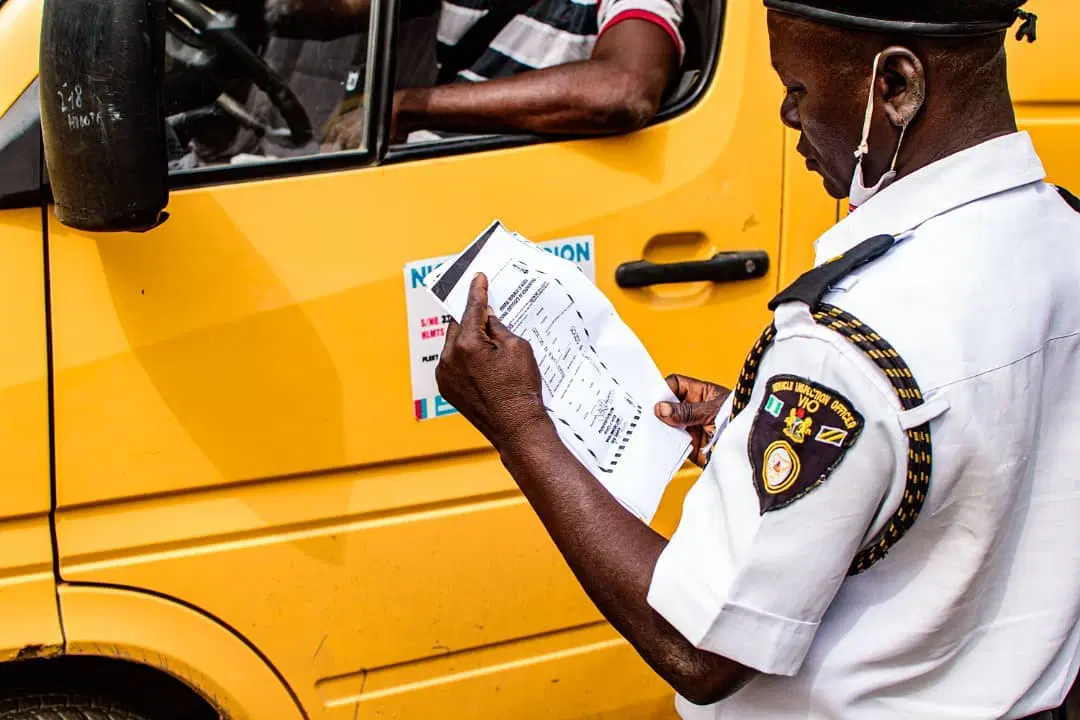
The Court of Appeal in Abuja on Thursday upheld a Federal High Court judgment barring the Directorate of Road Traffic Services (DRTS), also known as the Vehicle Inspection Office (VIO), from stopping motorists, impounding vehicles, or imposing fines.
The original ruling was delivered last year by Justice Evelyn Maha in a suit filed by human rights lawyer Marshal Abubakar.
The judge held that the VIO, which operates under the control of the Federal Capital Territory (FCT) Minister, has no legal authority to detain vehicles or impose fines on drivers.
Appeal Dismissed
A three-member panel of the Court of Appeal unanimously dismissed the VIO’s appeal, describing the agency’s actions as oppressive and unlawful.
The appellate court confirmed the earlier judgment, issuing a perpetual injunction restraining the VIO and its agents from further violations of motorists’ rights to freedom of movement, presumption of innocence, and ownership of property.
READ ALSO: FCTA Seizes 700 Cars in Abuja Crackdown
The court emphasized that only a court of competent jurisdiction can impose sanctions or fines.
It noted that the VIO violated constitutional rights under Section 42 of the 1999 Constitution and Article 14 of the African Charter on Human and Peoples’ Rights.
The respondents also lacked statutory powers to impound vehicles or impose fines, which breached motorists’ rights to a fair hearing and freedom of movement.
Damages Awarded
Marshal Abubakar, represented by a legal team led by Senior Advocate of Nigeria (SAN) Femi Falana, had sought N500 million in damages and an apology published in three national newspapers.
The court, however, awarded N2.5 million in damages.
The judgment reinforces the constitutional limits of the VIO’s powers and serves as a precedent to protect motorists against arbitrary enforcement actions.

Rafiyat Sadiq is a political, justice, and human rights reporter with Pinnacle Daily, known for fearless reporting and impactful storytelling. At Pinnacle Daily, she brings clarity and depth to issues shaping governance, democracy, and the protection of citizens’ rights.