

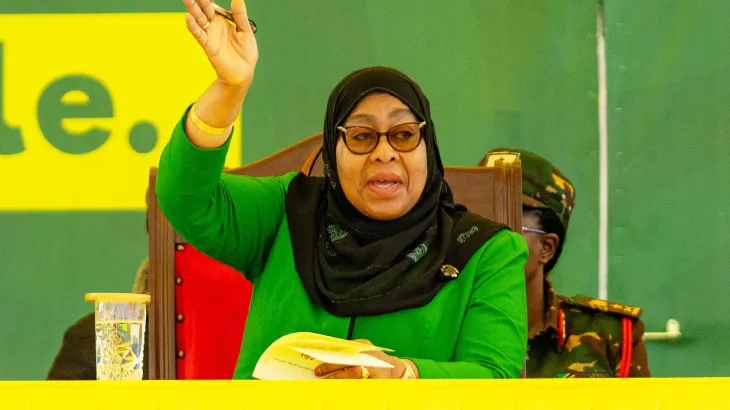
Tanzanian President Samia Suluhu Hassan is facing heightened international scrutiny as a coalition of regional and global civil society organisations has petitioned the International Criminal Court (ICC) to investigate alleged crimes against humanity linked to the country’s disputed October 29 presidential election.
The 82-page petition, submitted by groups including the Madrid Bar Association and the World Jurists Association, outlines allegations of state-sponsored murder, torture, enforced disappearances, sexual violence, and mass displacement of civilians.
Lawyers representing victims claim that President Suluhu, in her role as commander-in-chief, bears ultimate responsibility for authorising actions against civilians.
President Samia Defends Election Outcome
In response to the allegations and public outcry, the Tanzanian government cancelled its planned Independence Day celebrations.
Meanwhile, President Suluhu has defended the election results and proposed a limited reconciliation initiative, which critics argue falls short of addressing the scale of the alleged abuses.
READ ALSO: Tanzania Halts Independence Day Celebrations Amid Protest Calls
The ICC has not yet opened a formal investigation, but the petitioners are urging the court to act swiftly. Observers say the case marks a pivotal moment in Tanzania’s political history, with the international community closely monitoring developments in The Hague.
The October 29 election in Tanzania was marred by widespread reports of irregularities and post-election violence.
Civil society groups across East Africa have condemned the alleged human rights violations, calling for accountability and protection of democratic processes.

Rafiyat Sadiq is a political, justice, and human rights reporter with Pinnacle Daily, known for fearless reporting and impactful storytelling. At Pinnacle Daily, she brings clarity and depth to issues shaping governance, democracy, and the protection of citizens’ rights.